Archive
UK: Dead Fish Found in Stream Off River Usk Near Brecon

“An investigation is under way after more than 100 fish were found dead in a stream off the River Usk in Powys.
Environment Agency Wales made the discovery at around 13:30 GMT on Friday.
The fish and a large amount of silt were found in the stream, about a mile from Brecon, and officers are trying to establish the cause of death.
Anyone with information is being urged to contact the Environment Agency’s incident hotline on 0800 807060.” Source – BBC News.
‘Unusual Mortality Event’: More Dead Dolphins Wash Up On Southeast Louisiana Coast
 By Maya Rodriguez – “NEW ORLEANS– It’s been a busy few months for Suzanne Smith of the Audubon Aquarium of the Americas.
‘We keep all kinds of species here,’ she said.
Smith is also a part of the Louisiana Marine Mammal and Sea Turtle Rescue Program. Just last week alone, she conducted necropsies on three dead dolphins found near Grand Isle.
‘We’re finding, unfortunately, more dead dolphins than we normally would,’ Smith said. ‘So, the testing on the necropsies has gotten very strict and we are taking duplicate and triplicate samples on all parts, externally and internally on these animals, to try and find out what is happening out in the wild population.’
Since the beginning of the month, 14 marine mammals, including a dozen dolphins, have been found along the northern Gulf of Mexico. Half of the dead dolphins washed up on the Louisiana coast.
The National Oceanic and Atmospheric Administration (NOAA) calls it an ‘Unusual Mortality Event’ in the northern Gulf and next month will mark two years since it began. The tally so far: 630 dead.
The event started in February of 2010 – two months before the oil spill began. Still, the deaths raise a red flag with the Gulf Restoration Network.” Read more.
Worst Fish-Kill in Recent Times Discovered Off Guyana and Suriname
 Demerara Waves – “In what authorities believe is one of the worst fish-kills in recent times, a lot of Curiass is being washed up on the Guyanese and Surinamese foreshores, apparently due to murky Atlantic Ocean waters and the discharge of freshwater into the sea.
The Fisheries Department of the Ministry of Agriculture says mostly dead Cuirass have been sighted since January 9 and the situation peaked on January 20 when a ‘significant’ amount of dead fish was observed on the beaches in the area.
Consultations with Surinamese Fisheries Department officials have revealed that similar occurrences of dead fish have been observed in the vicinity of Nickerie and Coronie during the same period, the ministry here stated.
‘An on the spot observation conducted by the Regional Fisheries Officer revealed that the gills were heavily coated with sling mud and slime. This condition may have resulted in oxygen deprivation to the fish resulting in death,’ Guyana’s Fisheries Department added.
While the observance of dead fish is said to an annual occurrence by local fisherfolk in both countries, Guyana’s Fisheries Department believes that this year’s was ‘noticeably worse’ and may have resulted from one of or a combination of factors.
They include turbidity of the water in the area – caused by excessive rainfall in the general region resulting in excessive cloudiness of the water due to suspended particles from the rivers which flow into the ocean and reduced dissolved oxygen levels. The other major factor could have been a high fresh water discharge – the high discharge of fresh water from the rivers may have disrupted the salinity content of the water in the area which could adversely affect fish in the area.
The University of Guyana’s Biodiversity Centre is expected to conduct tests on samples collected on January 22 to determine the cause of death of the fish. Results will be available several weeks later.” Read more.
New Zealand: At Least 38 Pilot Whales Have Now Died After Nearly 100 Beach Themselves on South Island
Here’s an update on this story …
Update: All remaining 33 stranded pilot whales have been euthanized …
 By Dave Williams – “A final attempt will be made on Wednesday to refloat the 35 surviving pilot whales from a pod that has repeatedly stranded on Farewell Spit, near the top of New Zealand’s South Island.
About 100 whales stranded themselves near the base of the spit in Golden Bay on Monday and 34 of them died that night.
Others managed to free themselves while the rest were refloated on Tuesday with the help of dozens of volunteers. However, some stranded again later in the day.
Four died on Tuesday night leaving 35 survivors. Another attempt will be made to refloat them at high tide, which is about 11.40am on Wednesday.
Department of Conservation spokesman Nigel Mountford told AAP the whales lost condition each time they were stranded out of water on the low tide, and if they restranded again they would likely die.
‘The third day of stranding is pretty much crunch time for the whales,’ he said.
Project Jonah chief executive Kimberly Muncaster told NZ Newswire the restranded whales had moved seven or eight kilometres up the beach, which meant volunteers had to be taken by bus to look after them.” Read more.
Massachusetts: Researchers and Rescuers Baffled as 61 Dolphins Die on Cape Cod Coastline After Dozens of Strandings
 By JESS BIDGOOD – “WELLFLEET, Mass. — When a single dolphin washed up on Cape Cod on Jan. 12, it was nothing out of the ordinary.
But eight days later, 81 more had been found stranded on this craggy coastline, according to the International Fund for Animal Welfare, bringing the weekly count unusually close to the 120 animals the group typically responds to in high stranding season, which typically runs from January to April. By Jan. 23, the count was 85.
‘It’s just about as intense as I’ve ever experienced,’ said Katie Moore, the manager of the mammal rescue and research team at the nonprofit fund, which employs six scientists to rescue dolphins and whales that find themselves the unwitting occupants of Cape Cod’s empty winter beaches.
It is common for dolphins to be corralled by the cape’s U-shape and flummoxed by its shallow inlets and extreme tides. In fact, Cape Cod is, like parts of New Zealand and Australia, a world hotspot for dolphin strandings.
But so many dolphins washing up in less than two weeks — 61 of which were dead, killed by stress or injuries from the stranding — has baffled researchers, who have been working relentlessly with volunteers to rescue as many as possible.
Six of those dolphins turned up on Thursday in ‘The Gut’ of the Herring River, in Wellfleet, a waterway in the Cape Cod National Seashore that turns into a squelchy stretch of sticky mud at low tide. When researchers arrived, they found five live dolphins gulping for air with their blowholes, sounding like asthmatic humans. The sixth was dead. At the time, hundreds more dolphins were being coaxed out another part of Wellfleet Harbor by a small team of rescuers and its harbormaster.” Read more.
Australia: 5,000 Fish Found Dead in Perth’s Swan River
 “Low oxygen levels and hot weather are believed to have killed thousands of fish in Perth’s Swan River.
About 5,000 dead fish were discovered between the Middle Swan Bridge and the Ellen Brook in the upper reaches of the river.
Mark Cugley from the Swan River Trust says recent rain and hot weather have decreased oxygen levels in the waterway and that particular area is outside the reach of the river’s oxygenation plants.
‘Sudden rainfall often drags nutrient rich organic matter into the river and this typically causes oxygen levels to rapidly drop below levels suitable for fish and other aquatic fauna,’ he said.
‘It is something that is of a concern and although we believe that the cause was low oxygen levels in the water column, we are monitoring the water quality and sending off samples of those fish for that to be clarified.’
Mr Cugley says most of the fish appear to be juvenile black bream with the remainder being trumpeter.” Source – Seven News.
India: Hundreds of Crows, Storks, Pigeons and Mynahs Found Dead, Sparks Bird Flu Scare in Odisha
 “Malkangiri (Odisha), Jan 22 (PTI) The death of a large number of birds at several places in this tribal district of Odisha has triggered a bird flu scare, especialy with villagers throwing carcasses in the open. Hundreds of dead birds including crows, storks, pigeons and mynahs were seen in many villages under Malkangiri and Korkunda blocks during the last week. ‘We just received a report about death of birds. A team of veterinarians rushed to the area to initiate remedial measures,’ chief district veterinary officer Rabi Narayan Behera said. Meanwhile, due to lack of awareness, fear stricken people threw carcasses in the open which were then devoured by stray dogs and other animals. ‘No step has been taken by the district administration to create awareness among the people on dealing with bird carcasses. Ignorant villagers throw them here and there, causing health hazards in the area,’ said village president of MV-20 Subash Banarjee. Another village leader, Paritosh Ray, said that people have been advised not to eat the fowls, even as poultry business in the area came to a standstill. A member of the state bird-flu team Rajesh Kumar Kuanr, now on a tour of the district, said they were yet to get proper information about the incident. ‘We will rush to the spot once we get the information from the concerned authorities,’ Kuanr said.” Source – IBNLive.
New Zealand: 22 Beached Whales Die, 77 Remain Stranded
 By NAOMI ARNOLD and AAP – “Twenty-two pilot whales, from a pod of 99 that stranded in Golden Bay, have died and fears are mounting for the remaining 77.
Project Jonah chief executive Kimberly Muncaster said volunteers had tried desperately to save the whales, which became stranded just after midday.
‘It was very sad,’ she said.
‘But there was nothing more that we could have done.’
Volunteers had begun leaving the scene for the evening about 8.45pm on Monday for safety reasons.
Ms Muncaster said although there was only a small chance the remaining live whales would refloat at high tide about 11pm, she remained hopeful.
Volunteers had spent the afternoon trying to keep the whales cool and upright.
Project Jonah marine mammal medics have also been called to give the whales first aid.
Rescue efforts were due to resume at first light on Tuesday.
Project Jonah volunteer Jo Woods, of Motueka, said it was difficult to leave the whales to their fate this evening.
‘It’s hard to walk away. You get attached. My one had a big chunk behind his eye missing and every time we talked to him he’d would put his head up and shake it.’
She spent the day laying wet sheets on the whales to keep them cool and using sandbags to keep them upright. She trained as a volunteer after seeing a previous stranding on the Spit.
‘I realized I would have no idea what to do and I just want to be helpful rather than doing nothing,’ she said.” Read more.
New Zealand: MV Rena Oil Spill Kills an Estimated 20,000 Birds, Becomes NZ’s Worst Ever Maritime Environmental Disaster
 “An estimated 20,000 birds have now been killed by the wrecked container ship MV Rena, causing New Zealand’s worst ever maritime environmental disaster.
The wreck foundered off the Bay of Plenty coast, near Tauranga, North Island, last October, and more birds are being killed and harmed since the wreck broke up on January 8. No effort should be spared to clean up the oil and debris from the Rena as the toll on wildlife continues to rise, Forest and Bird (BirdLife in New Zealand) said this week.
‘We are deeply concerned about the effects on shorebirds, seabirds, and other marine life as oil and debris spread from the wreck,’ Forest and Bird Field Officer Al Fleming said. ‘It is vital that we continue working hard to clean up the Bay of Plenty coast and seas to minimise the damage to wildlife and the environment.’
At least 60 dead oiled birds have been collected since the beginning of last week. Overseas research suggests only around 10 per cent of all birds killed in an oil spill are ever recovered, with most sinking without trace at sea. Around a dozen oiled Little Blue Penguins have been recovered for treatment during the last week, as well as three Grey-faced Petrels and a New Zealand Dotterel. They are being cared for at the Oiled Wildlife Response Centre in Mt Maunganui, or at Massey University in Palmerston North.
Fleming said there are also concerns about the impact on wildlife of debris, particularly the translucent plastic beads that spilled from the Rena’s cargo. One bird recovering at the response centre has been seen vomiting plastic beads and birds on the beach have been spotted feeding on the beads.
‘Shorebirds, such as the threatened New Zealand Dotterel, feed on sandhoppers and fish eggs, which are also translucent and a similar size to the beads. Floating beads float also pose a threat to seabirds feeding on the water,’ he said. ‘A number of dead birds have been found on the beaches that have not been oiled. Autopsies will confirm whether they have eaten debris or died from other causes.'” Read more.
Somalia: 3 Tonnes of Dead Fish Wash Up on Bossaso Shore, Toxic Dumping Blamed
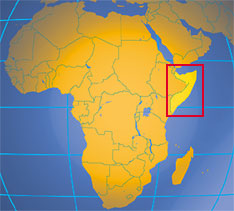 “BOSSASO, Somalia Jan 19 2012 (Garowe Online) – Three tonnes of dead fish washes up on Bossaso’s shore on Tuesday, Radio Garowe reports.
Abdiwahid Mohamed Jo’ar Director General of the Ministry of Fishery in Puntland who spoke to media stated that the dead fish that washed up on Bossaso’s shore is a result of toxic dumping in Somali waters.
Mr. Jo’ar who has been very outspoken against the toxic dumping in Somali waters told reporters that authorities are investigating this matter.
Reports about piracy suggest that toxic dumping along with illegal trawling in Somali waters has led many fisherman to join piracy due to a lack of work on the coast of Somalia.
Ahmedou Ould-Abdallah a Mauritanian diplomat and former UN special envoy to Somalia told AFP in July 2008 that illegal fishing and waste dumping in Somali waters is a disaster for the Somalia environment.
He added, ‘I am convinced there is dumping of solid waste, chemicals and probably nuclear waste.’
Somalia has the longest coast in Africa and has huge number of commercial fish species.” Source – Garowe Online.
‘Startling’: Up to 6.7 Million Bats Now Dead of ‘White-Nose’ Fungus in Canada and the United States
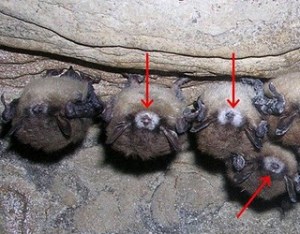 “U.S. scientists are estimating that between 5.7 million and 6.7 million bats in Canada and the United States have succumbed to white-nose syndrome, a fungus spreading in eastern North America.
The mortality figures were released Tuesday by the U.S. Fish and Wildlife Service.
‘White-nose syndrome has spread quickly through bat populations in eastern North America, and has caused significant mortality in many colonies,’ said Dr. Jeremy Coleman, co-ordinator of the U.S white-nose syndrome program. ‘Many bats were lost before we were able to establish pre-white-nose syndrome population estimates.’
U.S. Fish and Wildlife Service director Dan Ashe said the ‘startling ‘ figures illustrate the severity of the threat facing the animals.
‘Bats provide tremendous value to the U.S. economy as natural pest control for American farms and forests every year, while playing an essential role in helping to control insects that can spread disease to people,’ Ashe said.
White-nose syndrome was first detected in a cave west of Albany, N.Y., in 2006. It has since spread to 16 states, along with Ontario, Quebec, New Brunswick and Nova Scotia. Scientists expect the disease will continue to spread to other regions.
Bats with the syndrome exhibit unusual behavior during cold winter months, including flying outside during the day and clustering near the entrances of caves and mines where they hibernate. The disease is named for the white patches that appear on the muzzles and other body parts of hibernating bats.
Advocates says action is needed to protect bats.
‘Today’s new mortality estimates are a wake-up call that we need to do more, and fast,’ said Mollie Matteson with the Center for Biological Diversity.” Source – CBC.ca.
Massachusetts: At Least 20 Dolphins Found Dead in Cape Cod Area, Number of Dolphin Strandings Unusually High
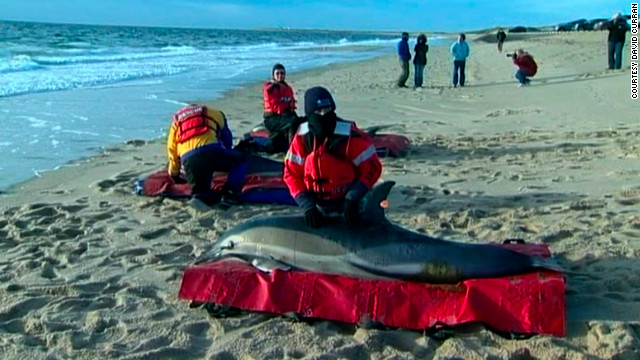 By Dominique Debucquoy-Dodley – “(CNN) — At least 20 dolphins have died after washing up near several Cape Cod towns, an International Fund for Animal Welfare spokeswoman said Monday.
Between 40 and 50 common and Atlantic white-sided dolphins have been found stranded close to the shore since Thursday, and the number will likely rise, said IFAW spokeswoman Kerry Branon. Some animals were released Monday near Provincetown, bringing the total number of animals saved to 19.
‘It may not sound like a high success rate, but when you consider that 27 were alive when they washed up, I think we’re doing pretty well.’ The remaining eight that were stranded alive died.
Stranded living animals are given full health assessments, including ultrasounds and hearing tests; dead animals are given CT scans and necropsies, Branon said. Five released dolphins have been equipped with satellite tags on their dorsal fins to track their location and to see if they’re surviving.
Despite January-April being ‘high season’ for dolphin stranding near Cape Cod, IFAW experts aren’t exactly sure why so many dolphins are appearing now.” Read more.
 Israel National News
- Photo: Missile shrapnel in Tel Aviv
- Sirens sounding in central Israel and Jerusalem area
- Additional missile launches detected towards southern Israel, Dead Sea, Judea and Samaria
- Missile launch detected towards central Israel and Jerusalem
- US official who criticized Israel under investigation
- Drones above US Secretary of State and Secretary of War
- How much longer will the entire West be defended by the United States and Israel?
- Iran International: IRGC to execute on Thursday three regime opponents arrested in January protests
- Reports of missile shrapnel in central Israel, damage to building suspected; no injuries reported
- Iranian missile falls in open area, explosions heard in central Israel
FrontPage Magazine
- 6 Squad Members, Including 2 Muslims, Lose in Illinois Dem Primaries
- Can Visa Bonds End Tourism Mass Migration?
- Joe Kent and Too Many Ex-CIAers in Politics
- Joe Kent Quit Because Iran ‘Posed No Imminent Threat to Our Nation’
- Mamdani Proposes ‘White Homes’ Estate Tax
- It’s Not Racist to be a “Culturist”
- The Feminists Who Hate MAGA More than They Hate the Mullahs
- Islam’s Classroom Takeover in Philly
- Jamie Glazov on The Shaun Thompson Show: United in Hate
- Establishing a Theocratic Totalitarian Rogue State
Gatestone Institute
- US Direct Talks with Hamas: Legitimizing and Empowering Terrorists
- Why Iran Was Always a Threat to the US
- Iran Picked a Fight with the Wrong President
- Iran's 'Doomsday Clock' Against Israel No Longer Ticking But Guess Who Is Waiting in the Wings
- Why Applying the 'Venezuela Method' to Iran Would Be a Terrible Mistake
- Hamas Crimes No One Talks About
- Trump's Iran War Ending Xi Jinping's 'China Dream'
- Iran Gets a New Supreme Guide
- 'Trump Derangement Syndrome': The Danger of Hatred Clouding Perception
- Spain's Pedro Sánchez and His Extremist Problem
Middle East – The Jerusalem Post
- IAF strikes, destroys IRGC helicopter stationed at airport in western Iran
- Iran escalates attacks on Gulf states, targeting key oil and gas facilities
- Iran demands compensation from UAE over alleged role in US strikes
- Drones spotted over base where Rubio, Hegseth live, raising security concerns - report
- Trump: Israel 'violently lashed out' at Iran, Gulf gas fields damaged, US eyes troop surge
- Saudi FM: Kingdom reserves right to military action following Iran attacks
- US weighs military reinforcements as Iran war enters possible new phase
- Three Palestinian women killed in Iranian missile attack near Hebron, Palestinian Red Crescent says
- Iranians mark Festival of Fire with rare public celebrations as Basij under pressure - analysis
- Syria unveils plan to rid country of Assad's chemical weapons stockpile
Earthquakes & Volcanic Activity
- World Earthquake Report for Thursday, 19 March 2026
- Volcanoes Today, 19 Mar 2026: Fuego volcano, Popocatépetl, Merapi, Semeru, Shiveluch, Ibu, Dukono, Marapi
- Lewotobi Volcano Volcanic Ash Advisory: VA TO FL090 REPORTED FM GND AT 19/0636Z MOV NNE to 9000 ft (2700 m)
- Piton de la Fournaise volcano (La Réunion): lava flow front continues to occupy shoreline by building new lava delta
- Aoba Volcano Volcanic Ash Advisory: ERUPTION AT 20260319/0500Z CONTINUOUS VA EMISSIONS to 15000 ft (4600 m)
- Fuego Volcano Volcanic Ash Advisory: VA EMS OBS IN WEBCAM
- Dukono Volcano (Indonesia) activity update Mar 18, 2026 - Continuing eruption
- Fuego Volcano (Guatemala) activity update Mar 18, 2026 - Continuing eruption
- Ibu Volcano (Indonesia) activity update Mar 18, 2026 - Continuing eruption
- Kanlaon Volcano (Philippines) activity update Mar 18, 2026 - Continuing eruption
Islamic Terrorist Network In America

Click For Larger Version


Click To Learn What Makes This An Idol

 MidnightWatcher - Prophecy in Motion
Recent Comments