Archive
Nevada: More Than 1,900 Birds Dead From Avian Botulism Near Stillwater, Starting to Get ‘Out of Control’
By Jeff DeLong – “Nearly 2,000 ducks and other birds are dead from avian botulism in one of Nevada’s more significant outbreaks of the disease.
Mallards, green-wing teals, redhead ducks and other birds including American avocets and white-faced ibis began dying at a private lake about 20 miles southwest of Stillwater National Wildlife Refuge on Aug. 30.
The number of bacteria-killed birds has been on a steady rise ever since and could make 2011 one of the 10 worst years for botulism outbreaks since state records started in 1949.
‘It’s starting to get a bit out of control,’ said Russell Woolstenhulme, a migratory game bird specialist with the Nevada Department of Wildlife.
The die-off is occurring at Six Man Club, a private hunting lake near Carson Lake south of Fallon. On Wednesday, crews working by air boat fished 398 dead birds out of the water and on Thursday, another 344, Woolstenhulme said. As of Friday, 1,942 birds have died.” Read more.
Australia: Sixteen Horses Die at Kooralbyn Property and Authorities Don’t Know Why
 “A mystery illness has killed 16 quarter horses on a property west of the Gold Coast, and vets and Biosecurity Queensland are trying to pinpoint why so many healthy animals died so quickly.
With Hendra virus ruled out as the cause on Friday, scientists and local vets are leaning towards the possibility the animals may have fallen victim to some type of toxic weed.
Devastated owner Steve Hogno says his horses started dropping dead on Thursday.
Mr Hogno, who was working at a mine site in Western Australia, returned to his home at Kooralbyn near Beaudesert on Friday morning.
‘They appear to have died quickly. They just dropped, and that was that,’ he told AAP.
‘The Hendra tests have come back clear. That still leaves it a mystery as to what caused the problem, but at least it does put the local community’s mind to rest a little bit, knowing there’s not Hendra in the area.’
Autopsies have been performed on some of the dead quarter horses, but Dr David Ahern from Scenic Rim Veterinary Service says results won’t be known until Monday or Tuesday.
‘Samples of brain, lungs, spleen and other organs have been taken, and they have to be fixed in formalin for a few days before thin slices can be taken and examined under a microscope to see if an infectious disease or a toxin has killed the horses,’ he said.
Queensland’s chief vet Rick Symons said there was no sign of foul play and the RSPCA has ruled out neglect.
Locals noticed five dead and three sick fillies and mares, which were infested with ticks, in a paddock near Kooralbyn on Thursday.
The three sick horses were euthanased, but the death toll increased to 12 on Friday morning. By late afternoon four more had been put down, lifting the death toll to 16 with only nine surviving.” Read more.
Philippines: Another Fishkill Hits Taal Lake Leaving At Least 45 Tons of Tilapia and Bangus Dead
 By Arnell Ozaeta – “BATANGAS, Philippines – A new fishkill has struck 2 barangays in Agoncillo town, Batangas, leaving at least 45 tons of tilapia and bangus dead, authorities said Thursday.
Jing Seguismundo, public information officer of the Batangas provincial government, said 6 cages in Taal lake located along Barangay Bilibinwang and Subic Ilaya were affected by the fish kill.
‘Nag-overstocking na naman ang mga negosyante sa nasabing lugar kaya kinulang na naman ang level ng dissolved oxygen na nagresulta ng fishkill,’ Seguismundo said, quoting officials of the Bureau of Fisheries.
Seguismundo said inspite of their repeated warning against fish cage owners on overstocking, ‘hindi pa rin sila nadadala.’
She said the owners dug at least 2 pit holes to bury the dead fish.
Early this year, the provincial task force on fish cages dismantled thousands of fish cages following a wide spread fishkill that hit the Taal lake.” Source.
Mystery Disease Killing Dogs Across the UK
By Mark Glenning – “An animal trust is investigating reports of a mystery illness that is killing dogs across several counties in the UK.
The Animal Health Trust (AHT), based in Newmarket, is following up reports of dogs suddenly falling ill and dying after being walked in woodlands.
The condition, dubbed Seasonal Canine Illness (SCI), has prompted the AHT to issue warnings to dog owners across Suffolk, Nottinghamshire and Norfolk.
Spokesman Richard Newton has said that the AHT was not aware of any cases so far in 2011, but were alerted to a flurry of incidents that occurred at the beginning of September. He added that they were able to pinpoint specific locations as both vets and dog owners had contacted them as soon as their dogs had fallen ill.
The symptoms of SCI include lethargy, diarrhoea and vomiting, and dog owners are advised to take them to a vet as soon as they become apparent.
Currently, Sherwood Forest and Clumber Park in Nottinghamshire, and Thetford Forest and Sandringham Estate in Norfolk are being studied for clues to the culprit.” Read more.
Indonesia: Dead Dolphins Again Found on Coast of Java
 “VIVAnews – Following the discovery of 17 dead dolphins in Ujung Kulon, residents of Parangtritis and Depok Beach, Yogyakarta witness the same phenomenon. A number of dolphins were found dead and stranded.
‘The officers discovered dead fish on the shore not far from the search and rescue (SAR) command post of Parangtritis,’ said Taufik M Faqi, Secretary of the SAR Parangtritis team, Bantul, Yogyakarta.
Taufik stated that as the dolphins were in terrible condition, the SAR officers buried them. ‘Last Sunday, around 9 a.m. we buried the dead dolphins,’ he said.
Last Friday, Jakarta Animal Aid Network Coordinator of Wildlife Research and Rehabilitation, Benvika, said there were 17 dead dolphins stranded in Ujung Kulon, western part of Java. He explained that the dolphins had been stranded since last Wednesday. First, 16 dead dolphins were found, and the next day another bottle-nose dolphin was found lifeless.” Read more.
Texas: Fish Kills Stretching Nearly 7 Miles Along Beach Coast Triggers Red Tide Alerts
 By Rod Santa Ana – “BROWNSVILLE – Acting on a tip from a constituent, Cameron County Commissioner Sofia Benavides recently drove out to a section of the Gulf Coast within her jurisdiction, Boca Chica Beach, between the mouth of the Rio Grande and the jetties at South Padre Island.
‘I was shocked to see a large fish kill stretching for almost 7 miles along the beach,’ she said. ‘Birds were pecking at the dead fish as the tide brought them in. I expected to see lots of different types of fish but there was only one. The stench was strong and my throat was hurting by the time I left.’
Fearing a possible red tide, Benavides reported the fish kill to several authorities, including Tony Reisinger, a Texas AgriLife Extension Service agent for coastal and marine resources based in San Benito.
Benavides and Reisinger set into motion a seasoned response team that investigates red tide. If cell counts in water samples warrant, the public is notified via the Cameron County Department of Health and Human Services.
‘A fish kill is one of the first indicators of a red tide bloom,’ said Yvette Salinas, the department’s health administrator. ‘It’s important to know the severity of a possible red tide event because many people are sensitive to the aerosol that red tide releases, especially people with respiratory problems such as asthma. Ingesting dead fish can also be fatal to pets, so we want to alert the public as soon as possible.'” Read more.
California: Hundreds of Mallard Duck Deaths Confounds Wildlife and Public Health Officials
 By ERIKA I. RITCHIE – “LAKE FOREST – Wildlife and public health officials are still mystified about what is killing hundreds of mallard ducks who live in some ponds, lakes and watersheds in the city.
According to results released Tuesday by the Orange County Vector Control District on tests run on duck carcasses, officials still can not decisively say whether botulism or salmonella is causing the ducks’ deaths. They have concluded, however, that none of the water fowl has died from a vector-borne disease like West Nile virus, said Jared Dever, a spokesman with the district. The dead ducks were taken to the district by officials from OC Animal Care and the Wetlands and Wildlife Center Care Center in Huntington Beach.
‘The duck die-off is inconclusive based on the samples we tested,’ Dever said. ‘Speculation in the lab is there may have not been enough bacteria in the bird. The window is still open on botulism pending the testing of a bird carcass with a higher level of toxin.’
Dever said the district’s role in the duck death puzzle is done.
‘It takes the die-off out of the arena for us because it’s not a vector-borne disease — something that can be transmitted by animals to humans,’ he said. ‘It will require further testing; only then will you have a clue about how to stop it.’
Exactly who is responsible for further testing is unclear. Officials from OC Animal Care and the city of Lake Forest said they believe Vector Control will continue to test samples brought in. There has also not been any testing of the area’s waters — something that would likely fall to the responsibility of the affected homeowner association of Lake I.
Michael Hearst, general manager of the Vector district, said his agency has exhausted its testing efforts.” Read more.
New Hampshire: Mystery Still Surrounds Deaths of Dozens of Seals and Seabirds Along New Hampshire Seacost
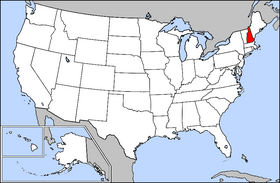 “HAMPTON BEACH, N.H. — Investigators said they still don’t know what caused the deaths of dozens of seals and seabirds that have been found along the New Hampshire seacoast in the past several days.
Marine biologist Ellen Goethel, vice chairwoman of Hampton’s Conservation Commission, said Tuesday that she first spotted multiple seals and seabirds dead on Hampton’s North Side Park Beach last Wednesday.
Goethel said she called the New England Aquarium, as well as state and federal officials. She said NOAA, the state Fish and Game Department and the Department of Environmental Services were investigating, along with the aquarium.
Goethel said NOAA and the state are testing the waters in the area.
The New England Aquarium said that as of Monday afternoon, 15 seals had been found dead along the New Hampshire coast since last week.
The aquarium said autopsies were performed on the three latest seal carcasses found, and samples of the animals have been sent out for testing, but it appeared the animals had ‘adequate blubber layers,’ and it did not appear that the animals died because of ‘a failure to thrive.’ Aquarium officials said the federal government is testing area waters for algae or bacteria, and they were testing the animals for any viruses.
Ten seals have been found dead in Rye, four in Hampton and one in Seabrook. Goethel said that in addition, less than a dozen dead seals have been found dead along the southern Maine coast.” Read more.
Australia: More Dead Marine Life Continues to Wash Ashore On Capricorn Coast Beaches
 By Kathryn Greensill – “WHILE the Queensland Government yesterday said it had no plans to extend the Gladstone fishing ban, dead marine life continued to wash up on Capricorn Coast beaches.
Adding to local concerns, Yeppoon’s Daniel Spyve told The Morning Bulletin he threw two fish he caught at Coorooman Creek on the weekend back in the water when he suspected they were unhealthy.
‘We caught two in one crab pot and that was up closer to the mouth of Coorooman Creek,’ Daniel said.
‘All were legal size and we were going to keep them, but then when we had a look at them and two of them had these really fluorescent green eyes and down underneath their eyes where the whites are, they were very milky.’
Daniel said there were also parts of the fish that appeared very red and looked like decaying flesh.
‘They didn’t look like a local cod that we’d caught in the creek before,’ Daniel said.
Daniel’s discovery comes as Fisheries Minister Craig Wallace refuted claims from LNP shadow minister Dr Mark Robinson that warnings from Gladstone and Yeppoon fishermen were initially swept under the carpet.
‘As soon as I was advised there were concerns around conditions affecting some locally-caught fish, I requested a full and urgent briefing from the Department of Employment, Economic Development and Innovation,’ Mr Wallace said yesterday.
‘At that meeting on September 15, the department advised me of its decision to immediately close the harbour to fishing.’
Mr Wallace said no consideration was being given to the geographical area of the closure being extended.
The Government is yet to decide whether a three-week ban on fishing – implemented after diseased fish were caught in Gladstone Harbour – will be lifted when it expires on Friday.
Meanwhile, more marine animals have washed up on beaches at the Capricorn Coast with a shark and a turtle discovered at Ritamada Beach at Emu Park on Monday.” Read more.
Fears fish disease spreading off central Queensland – “There is concern a sickness affecting fish in the Gladstone harbour off central Queensland has spread north to the Capricorn Coast. A fishing ban has been imposed in the Gladstone harbour after the discovery of fish with skin lesions and blindness in recent weeks. Tests are yet to determine the cause of the sick fish. Capricorn Conservation Council (CCC) spokesman Michael McCabe says he is worried about reports of dead stingrays with skin rashes found at Yeppoon, north-east of Rockhampton.” Read more.
Argentina: 500,000 Sheep Dead in Patagonia Because of Volcanic Ash From Chilean Volcano
 “Half a million sheep have already died in Argentine Patagonia as a result of the eruption of the Chilean volcano Puyehe, which has covered most fields in the province of Chubut with a film made of a mix of mineral ash.
The sheep die unable to find food and when they can the volcanic ash mix turns into a toxic grind for the animal.
‘We estimate over half a million sheep have been lost because of the ashes which continue to be spewed by the volcano’ said Ernesto Siguero president of the Chubut Rural Society.
Ashes also weigh on the sheep’s wool making it harder to move around with the extra burden and ‘once they sit it’s hard for them to stand up’. Likewise the continued ash in the air harms livestock’s sight.
But people living in the area are also suffering the consequences of the ashes in their daily lives. The constant ash blocks chimneys, gets into the water pipes, covers with dust light bulbs and when it’s windy, drivers guide themselves by the culverts because of the almost zero visibility.
In some areas the volcanic ash has accumulated almost a metre high making it even difficult for the 4 by 4 to vehicles to move around.” Read more.
New Hampshire: Dead Harbor Seals Pose Mystery on Beaches
 By Amanda Cedrone – “Biologists are working to find out why the corpses of young harbor seals have been washing up on New Hampshire beaches this week.
‘We’re now up to a dozen different dead seals from beaches in Seabrook to Rye,’ said Tony LaCasse, spokesperson for the New England Aquarium.
The carcasses range in their level of decomposition from fresh to a few weeks old, LaCasse said.
Staff members at the New England Aquarium are completing necropsies on a few of the seals today to try to determine whether they were killed by disease, LaCasse said. The results will not be available for a few days to a few weeks.
The seals are all the same age, around four months.
‘There is no evidence of any kind of human involvement in these deaths,’ LaCasse said, noting that the situation is different from the gray seals that were found shot to death on Cape Cod beaches earlier this summer.” Read more.
Florida: Mysterious South Brevard Bee Kill Confounds, Costs Keepers
 By JIM WAYMER – “Charles Smith last saw his bees alive early last week.
When the Fellsmere beekeeper checked them Monday, his heart dropped as he saw the mounds of dead bees spilling out of all 400 of his hives off Babcock Street, about a half-mile south of Micco Road near the Indian River County line.
Another beekeeper about a mile south found a similar amount of his bees dead, around the same time, Smith said.
‘This is a total wipeout,’ Smith said as he opened the green wooden hives to show the destroyed honey. ‘This is all no good. It’s been sprayed.’
He estimates he lost $150,000 in honey proceeds, the bees and their future generations.
The beekeepers aren’t accusing anyone, and Brevard County officials doubt recent mosquito control spraying in the area killed the bees.
But the die-off left behind the hallmarks of a pesticide kill, experts say, sparking a whodunit beehive mystery in South Brevard.
‘Right now it’s too early to start pointing fingers at anybody,’ said Bill Kern, an entomologist with the University of Florida’s Research and Education Center in Fort Lauderdale, who has been following the case. ‘The fact that it was so widespread and so rapid, I think you can pretty much rule out disease,’ Kern said. ‘It happened essentially almost in one day. Usually diseases affect adults or the brood, you don’t have something that kills them both.’
State agriculture officials gathered dead and dying bees from both hives Thursday to test for pesticides. Results could take several weeks.
‘Right now, we don’t know what pesticide, if any, was involved,’ Kern said. ‘If there’s a real high level, it’s going to be pretty obvious.'” Read more.
 Israel National News
- At least 1 missile intercepted
- Explosions hears in Jerusalem
- Sirens sound in Jerusalem
- Missile barrage from Iran detected, sirens expected in Jerusalem, central Israel
- Tucker Carlson defends infamous Fascist
- Trump demands recognition for America from NATO, but he should demand an pology to Israel
- Agent Qaani strikes again: Who is killing all the Iranian officials?
- Mother Of Fallen Soldier: 'We came to be part of history'
- Aerial infiltration in the western Galilee
- Suicide drone strikes Odessa synagogue
FrontPage Magazine
- Bring Me the Head of Cesar Chavez
- 6 Squad Members, Including 2 Muslims, Lose in Illinois Dem Primaries
- Can Visa Bonds End Tourism Mass Migration?
- Joe Kent and Too Many Ex-CIAers in Politics
- Joe Kent Quit Because Iran ‘Posed No Imminent Threat to Our Nation’
- Mamdani Proposes ‘White Homes’ Estate Tax
- It’s Not Racist to be a “Culturist”
- The Feminists Who Hate MAGA More than They Hate the Mullahs
- Islam’s Classroom Takeover in Philly
- Jamie Glazov on The Shaun Thompson Show: United in Hate
Gatestone Institute
- US Direct Talks with Hamas: Legitimizing and Empowering Terrorists
- Why Iran Was Always a Threat to the US
- Iran Picked a Fight with the Wrong President
- Iran's 'Doomsday Clock' Against Israel No Longer Ticking But Guess Who Is Waiting in the Wings
- Why Applying the 'Venezuela Method' to Iran Would Be a Terrible Mistake
- Hamas Crimes No One Talks About
- Trump's Iran War Ending Xi Jinping's 'China Dream'
- Iran Gets a New Supreme Guide
- 'Trump Derangement Syndrome': The Danger of Hatred Clouding Perception
- Spain's Pedro Sánchez and His Extremist Problem
Middle East – The Jerusalem Post
- Iran's Princess Noor Pahlavi to ‘Post’: ‘Iranians have chance to reclaim their country’ - interview
- How the air force broke down Iran's air defenses: Operation Roaring Lion vs. Operation Rising Lion
- US F-35 hit, forced to make emergency landing, IRGC takes credit
- War could leave Iran with a more radical, nuclear-ambitious regime, IDF sources say
- War by the numbers: How many strikes, targets, and missions has Israel carried out? - explainer
- IDF exploited Iran fallback plan, hit forces at stadiums in deadliest strikes of war - report
- WATCH: Kremlin news crew hit by Israeli strike in southern Lebanon after Israel provided warning
- US and Israeli war aims in Iran are not the same, Gabbard says
- ‘More than symbolic’: Doha’s expulsion of Iran’s military, security attache signals shift in Gulf
- Today will be most intense day of US strikes on Iran, Hegseth claims again
Earthquakes & Volcanic Activity
- Volcanic activity worldwide 19 Mar 2026: Fuego volcano, Popocatépetl, Merapi, Semeru, Shiveluch, Ib...
- World Earthquake Report for Thursday, 19 March 2026
- World Earthquake Report for March 2026
- Volcanoes Today, 19 Mar 2026: Fuego volcano, Popocatépetl, Merapi, Semeru, Shiveluch, Ibu, Dukono, Marapi
- Fuego Volcano Volcanic Ash Advisory: PSBL VA EMS
- Mayon Volcano Volcanic Ash Advisory: ERUPTION AT 20260319/1600Z FL090 REPORTED OBS VA DTG: 19/1620Z
- Sangay Volcano Volcanic Ash Advisory: ONGOING VA EMS to 21000 ft (6400 m)
- Aoba Volcano Volcanic Ash Advisory: UNKNOWN EST VA DTG: NOT PROVIDED
- Shiveluch Volcano Volcanic Ash Advisory: VA CONTINUOUSLY OBS IN SATELLITE IMAGERY OBS VA DTG: 19/1120Z to 36000 ft (11000 m)
- Ibu Volcano Volcanic Ash Advisory: ERUPTION LAST REPORTED AT 19/0633Z EST VA DTG: 19/1130Z
Islamic Terrorist Network In America

Click For Larger Version


Click To Learn What Makes This An Idol

 MidnightWatcher - Prophecy in Motion
Recent Comments