Archive
China: Roads Blocked, Houses Collapse, Farmland Destroyed As Violent Hailstorm Kills 40 In Northwest China
 ANN – “A brief but violent hailstorm in China’s north-west has killed 40 people.
The local government says in just one hour, the torrential downpour killed residents and left dozens more injured or missing.
Tens of thousands of people have been forced to flee from their homes after rain and hail battered Min county on Thursday.
Authorities have dispatched large numbers of tents and beds to the stricken area, but they have conceded many people still need relief supplies.
Xinhua news agency reported the storm ‘wreaked havoc’ on all of the county’s 18 townships and affected more than two-thirds of its 450,000 residents
“Roads were blocked, houses collapsed, farmland was destroyed, and the power supply and telecommunications services were disrupted by the extreme weather,” the agency said, quoting Xu Guangyao, a senior county official.
Bridge collapse
A bridge in Hunan province has also collapsed after days of torrential rain across the country.
It is not known how many people were on the bridge when it buckled and fell into the river.
Fire department official Su Tao told Xinhua that witnesses say they saw people falling into the water when the bridge collapsed.
He says firefighters have not rescued anyone yet but some people have managed to climb ashore.
Hailstorms in the central province of Hunan have killed six people and left one missing, according to statistics released by the Ministry of Civil Affairs.
Since May 8, hailstorms have struck across the province, affecting 3.42 million people, the ministry said.
About 64,000 people have been relocated to safer areas and 7,600 houses have collapsed.” Source – Australia Network News.
Limited Nuclear Exchange In One Of World’s Regions Would Trigger Mass Global Starvation From Long Lasting, Global Damage To Ecosystems
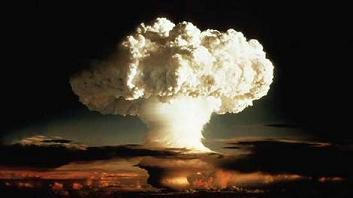 By The Wall Street Journal, Market Watch – “CHICAGO, April 24, 2012 /PRNewswire via COMTEX/ — Amidst Growing Tensions in Asia, India-Pakistan Confrontation Used to Show Dire Consequences Around the Globe; More Than A Billion People Would be at Risk Under ‘Nuclear Famine’ Scenario.
More than a billion people around the world would face starvation following a limited regional nuclear weapons exchange (such as a clash between India and Pakistan) that would cause major worldwide climate disruption driving down food production in China, the U.S. and other nations, according to a major new report released today by International Physicians for the Prevention of Nuclear War (IPPNW) and its U.S. affiliate, Physicians for Social Responsibility (PSR).
Dr. Ira Helfand, the author of ‘Nuclear Famine: A Billion People at Risk–Global Impacts of Limited Nuclear War on Agriculture, Food Supplies, and Human Nutrition,’ said: ‘The grim prospect of nuclear famine requires a fundamental change in our thinking about nuclear weapons. The new evidence that even the relatively small nuclear arsenals of countries such as India and Pakistan could cause long lasting, global damage to the Earth’s ecosystems and threaten hundreds of millions of already malnourished people demands that action be taken. The needless and preventable deaths of one billion people over a decade would be a disaster unprecedented in human history. It would not cause the extinction of the human race, but it would bring an end to modern civilization as we know it.’
The findings and the methodology on which the study is based will be published in a forthcoming issue of the peer-reviewed journal Climatic Change. Released during the World Summit of Nobel Laureates in Chicago April 23-25, 2012, the Helfand report was made possible with the financial support of the Swiss Federal Department of Foreign Affairs.” Read more.
California: Hailstorms, Lightning and Tornadoes Hammer San Joaquin Valley Crops
 By Steve Adler – “A series of freak April storms hammered the San Joaquin Valley last week, damaging vulnerable crops with a one-two-three punch of hail, lightning and tornados that caused millions of dollars of crop losses.
It will be several weeks before an accurate tabulation of losses can be made, but for some growers it amounted to 100 percent of this year’s production. A number of crops suffered damage from the unrelenting power of hailstones measuring 1.5 inches in diameter or larger.
Nature’s fury came in the form of ‘supercells’—large thunderstorms that moved slowly across the valley from Kings County, through parts of Tulare County, up to Merced County and all the way eastward to Mariposa County.
The most destructive storm brought torrents of hail across a six-to-eight mile-wide swath of farmland that extended some 30 miles, accompanied by thunderstorms and numerous lightning strikes.
The epicenter of the more significant of two supercells last Wednesday was in Tulare County near Traver. Grower Ed Needham, who was caught driving near Traver when the storm struck, described it as ‘the sound of someone hitting my truck with a hammer.’
Needham said he was in his truck with two other farmers and had pulled over to watch a huge storm cell to the south when the other cell struck from the north.
‘It started out small and was no big deal and then all of a sudden the side-view mirrors on my truck shattered and the road started getting covered with huge hailstones.'” Read more.
Nigeria Forecasts Famine in Islamist Boko Haram Areas in 2012
Revelation 6:8, “And I saw, and behold, a pale horse, and its rider’s name was Death, and Hades followed him; and they were given power over a fourth of the earth, to kill with sword and with famine and with pestilence and by wild beasts of the earth.”
“(AGI) Abuja – Nigeria has warned of a possible famine in the country, and especially in the North-East. The alert was given by the National Emergency Management Agency (NEMA), the country’s equivalent of Italy’s Disaster Relief Agency, in its 2012 ‘Report on Boko Haram Insurgency and Disasters in the North East’. ‘Nigeria may face famine by the end of this year, because most of the small-scale farmers and big-time farmers in the north are threatened by the Boko Haram attacks’, the report reads referring to the Islamist militant group whose attacks have left at least 1,200 people dead since 2009. According to NEMA, over the past three years ‘more than 65% of such farmers have already migrated to the southern parts of Nigeria, fearing that the insecurity to both lives and property, including their farmlands and livestock’. Productions of rice, beans, corn and onions have been the worst hit, but fishing in the Lake Chad area, one of the few options local populations have to integrate and vary their diet, was also affected. On the occasion of the presentation of this report, NEMA senior officials said they had been urged by Nigerian security forces to prepare, a humanitarian plan, working in coordination with the United Nations, in order not to be caught off-guard if the forecast turns out to be accurate.” Source – AGI.
Asia: Climate-Related Disasters Displaced At Least 42 Million Over Past Two Years
 “Climate-related disasters have displaced more than 42 million people in Asia over the past two years, the Asian Development Bank said Tuesday in a report calling for swift action to avert future crises.
‘Asia and the Pacific is the global area most prone to natural disasters, both in terms of the absolute number of disasters and of populations affected,’ said the report launched in Bangkok, which was itself affected by flooding last year.
About 31.8 million people in the region were displaced by climate-related disasters and extreme weather in 2010 — a particularly bad year — including more than 10 million in Pakistan owing to massive flooding.
A further 10.7 million were forced to flee their homes last year, it said, warning that such events will become more frequent with climate change.
‘While many of those displaced returned to their homes as conditions improved, others were less fortunate, struggling to build new lives elsewhere after incurring substantial personal losses,’ ADB vice president Bindu Lohani said in a foreword to the report, released at an Asian climate forum.” Read more.
Flashback: Millions Without Drinking Water As China’s Largest Inland Lake Dries Up; Half of Country’s Rice Fields Affected, 80% of Fish Stocks Die in Hubei Province – “The volume of water in Poyang lake in Jiangxi province, normally 100 miles-long and 10 miles-wide, is now a tenth of its normal level, according to Xinhua, the Chinese state news agency. Fishing boats and house boats have been left stranded on a vast stretch of the lake bed, now a lush grassland. The drought, which has seen no rainfall for two months, has struck the central Chinese provinces that are known as the country’s ‘home of rice and fish’. Almost half of all the country’s rice fields have been affected and four million people do not have access to drinking water.” Read more.
‘The Most Important and Destructive Banana Disease in the World’ is Spreading Around the Globe
 By Anna-Louise Taylor – “A banana and plantain fungus which has spread across the world originated in South East Asia, new research has found.
Black leaf streak disease (Mycosphaerella fijiensis) affects leaf photosynthesis, and causes premature ripening.
It also delays harvests and can affect banana quality, size and numbers.
A Molecular Ecology Journal study found ‘an original and unprecedented global scenario of invasion’.
It is the most important and destructive banana disease in the world, says one of the authors, Stephanie Robert.
‘It starts with small flecks and spreads to the whole banana leaves – the disease can totally destroy the whole banana plant,’ she says.
Using genetic markers, the team were able to map the streaks on 735 banana leaves from 37 different countries and identify genetic similarities.
‘The historical hypothesis was that it came from South East Asia,’ Ms Robert says.
Banana leaf with black leaf streak disease The fungus can cause bananas to ripen prematurely
While the fungus was first recorded in Fiji in 1963, it was initially thought that the centre of origin could have been Papua New Guinea or the Solomon Islands.
However, the study found the whole of South East Asia could be the centre of diversity – encompassing at least Malaysia, Philippines, Indonesia and Papua New Guinea…
Ms Robert says fungal spores cannot travel more than a few metres and are very sensitive to UV rays, but when travelling on the wind spores can be dispersed up to several hundred kilometres.
So this does not explain how the disease has travelled so far around the world, she says.” Read more.
Honeybee Populations — Responsible for 90% of All Commercial Pollination — Continue to Disappear, Will Impact Humans
 By Julia Rauchfuss – “Best known for prompting shrieks and swatting of air, bees rarely receive proper recognition for their contributions to humankind. But now that they are disappearing by the thousands, it will be up to humans to ensure their survival.
Over the past five years, about 30 percent of the yearly captive honeybee population has died every winter, according to CNN, and about 10 percent of bees simply vanish. While recent reports suggest that this may not cause significant damage to the U.S. agriculture industry due to better farming technologies, preservation of the species still deserves immediate attention.
Humans have always shared a close partnership with honeybees but if care is not taken soon human ignorance could twist this simple, symbiotic relationship into a form of parasitism. Bees are far more beneficial to humans than they are dangerous.
Honeybees are pollinators, and play a crucial role in the production of seeds, which are contained in the fruits, vegetables and grains that line grocery store shelves.
Though some crops such as wheat are pollinated by the wind, honeybees are responsible for the 90 percent of all commercial pollination, according to an article in Applied Microbiology and Biotechnology.
According to researchers, the shrinking honeybee population is the result of colony collapse disorder, the sudden and unexplained disappearance of all the worker bees in a hive. Agricultural insecticides are a prime suspect, as beekeeper accounts suggest certain insecticides negatively affect bees, according to an article in Issues in Science and Technology. However, the Environmental Protection Agency requires more scientific data to take products off the market.
The phenomenon also puts another population at risk.” Read more.
Vanishing of the Bees – Beekeeper Leaks EPA Document (Video)
‘Fish Dying in Rivers’: Drought Declared in the South East of England, Water Restrictions Expected Within Weeks
 By Matthew Holehouse – “Some reservoirs, rivers and groundwater aquifers in the South East well below normal levels after two dry winters.
The state of drought in the region was declared after the Environment Department (Defra) convened a summit of water companies, farmers and wildlife groups today to discuss potential water shortages in England.
Following the summit, Thames Water warned that there was a high chance of water restrictions such as hosepipe bans this summer, unless there was significant rainfall or customers used less water.
Some rivers and groundwater levels are lower than during the drought of 1976.
The RSPB is warning that if the drought situation continues, it could spell potential disaster for wildlife.
Birds, mammals and bugs could be struggling to survive into the summer if the rain doesn’t fall in the next few weeks as valuable wetlands dry up.
Charlie Kitchin, RSPB Site Manager for the area said: ‘The breeding season of 2011 was not good at all for this nature reserve. Winter flooding is essential to attract the large numbers of wild swans and other wildfowl that the washes are renowned for and this winter has been the quietest for many years, for example our wigeon numbers are down from 20,000 to 3,000.'” Read more.
Take an ‘egg timer’ into the shower say water companies – “Residents are being sent waterproof ‘egg timers’ so they don’t linger in the shower, in attempt to preserve dwindling waters stocks by reducing consumption. Caroline Spelman, the Environment Secretary, was forced to declare drought in the most populated area of Britain after two dry winters in a row left reservoirs dangerously low and fish dying in rivers. The Anglia region was already in drought, meaning more than half of the population of the UK faces hosepipe bans in a matter of weeks. There could even be restrictions in London – part of the South East region – where thousands of litres more water will be needed because of the Olympics.” Read more.
Drought, Famine Reach Crisis In West Africa’s Sahel Region, 10 Million at Risk
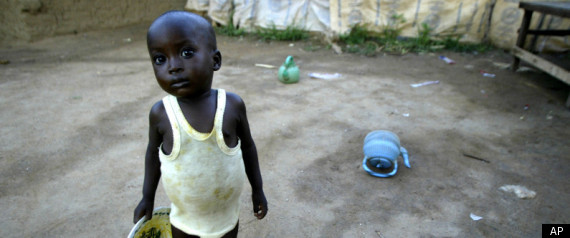
“NIAMEY, Niger — Top United Nations officials say 10 million people need help amid a food crisis in West Africa’s Sahel region.
U.N. Development and Humanitarian chiefs Helen Clark and Valerie Amos called Saturday for greater humanitarian response to the crisis that effects eight countries, including Niger.
During a visit, they commended Niger’s government for its agricultural projects that are building more resilience to nutrition crises.
The U.N. has previously said that more than 1 million children in the affected countries are expected to face life-threatening malnutrition this year.” Read more.
‘The Hungry Generation’: With Famines Sweeping Across Continents 300 Children Die of Malnutrition Every Hour, Situation Getting Worse
 By PAUL VALLELY – “A quarter of young children around the world are not getting enough nutrients to grow properly, and 300 die of malnutrition every hour, according to a new report that lays bare the effects of the global food crisis.
There are 170 million children aged under five whose development has been stunted by malnutrition because of lack of food for them and their breastfeeding mothers, and the situation is getting significantly worse, according to research by the charity Save the Children.
In Pakistan, Bangladesh, India, Peru and Nigeria – countries which are the home of half of the world’s stunted children – recent rises in global food prices are forcing the parents of malnourished children to cut back on food and pull children out of school to work.
According to the report, A Life Free from Hunger: Tackling Child Malnutrition, a third of parents surveyed said their children routinely complain they do not have enough to eat. One in six parents can never afford to buy meat, milk or vegetables. It suggests that six out of 10 children in Afghanistan are not getting enough nutrients to avoid stunted growth.
‘If no concerted action is taken,’ warns Justin Forsyth, the charity’s chief executive, ‘half a billion children will be physically and mentally stunted over the next 15 years’.
Over the past five years the price of food has soared across the globe, thanks to extreme weather conditions, diverting farmland to grow biofuels, speculative trading of food commodities and the global financial crisis. The poor, who spend the bulk of their income on food, are hit hardest.” Read more.
Somalia: Children Continue to Suffer from Hunger as Islamists Hinder Food Aid
Revelation 6:8, “And I looked, and behold a pale horse: and his name that sat on him was Death, and Hell followed with him. And power was given unto them over the fourth part of the earth, to kill with sword, and with hunger, and with death, and with the beasts of the earth.”
Foreign Policy Association – “Children in Somalia continue to suffer needlessly from hunger as politics hinder the much needed distribution of food aid. In Somalia, it is women and children who bear the brunt of the famine. Children are susceptible to malnutrition that decreases their ability to fight off disease, while women are unable to access the services they need and carry the responsibility of caring for their families. Malnutrition is the largest contributor to global child mortality and is the cause of one-third of child deaths, which amounts to some 15 million children dying of hunger each year. According to UNICEF, 21,000 children die everyday.
In October last year, I published the piece Are Politics to Blame for the Deaths of 30,000 Children in Somalia? The answer to the question remains the same. The famine was not only caused by drought and poor harvest, but was fueled by a lack of political will. In July, the UN declared a famine in two regions of Southern Somalia; however, Somalia continues to find itself gripped tightly by starvation in many regions. Many believe the famine is largely a political creation, due to factions that have actively prevented food and other aid from reaching drought victims. However, the political commitment to end the problem remains difficult. The largest areas of malnutrition and famine are centered in Southern Somalia, where a failing government sits idly by as al-Shabaab, a terrorist group with ties to al-Qa‘ida, controls parts of the country.
In November 2011, al-Shabaab banned 16 aid organizations distributing food, including several UN agencies, from their controlled areas, accusing them of ‘illicit activities and misconduct.’ This political curve ball only served to ensure that not only would the famine continue and the death toll mount, but al-Shabaab would retain their tight reign over the region.
Somalia continues to remain in a major food crisis, classified as famine in some regions, and once again politics are impacting the distribution of food aid. Al-Shabaab has now banned aid distributions by the International Committee of the Red Cross (ICRC), who was one of the last aid agencies operating in areas under al-Shabab’s control and the only agency bringing in food to those famine-hit areas on a large scale. In a statement issued by al-Shabaab, they accused ICRC of ‘repeated distribution of expired food and false accusations’ and thus stated that its Office for Supervising the Affairs of Foreign Agencies (OSAFA) ‘has decided to terminate the contract of ICRC permanently.’ The ICRC’s operations were formally suspended in al-Shabaab controlled areas on 12 January. This major political move has now placed innocent Somalians in the center of what continues to look like a loosing battle; with each gain in the fight against hunger by the international community, al-Shabaab seeks to take control back.” Read more.
Flashback: Somalia: Islamist Group Bans Samosas After Deciding They’re Too ‘Christian’ Because … – “Apparently triangles are not halal in Somalia. These exceptionally deep-thinking Islamists would rather see children starve to death than see them eat a three-sided snack food. It might remind somebody of the Trinity. Finally, I understand my addiction to Doritos. And thank goodness it never snows in Somalia, otherwise Jack Handey bin Laden would have to issue a fatwa against Jack Frost bin Chillin, and we’d never enjoy a White Christmas ever again …” Read more.
Australia: NSW Farmers Could Lose At Least $750 Million From Devasting Floods
 By Adam Bennett – “The agricultural industry is expected to suffer losses of at least $750 million as a result of the devastating NSW floods, with tens of thousands of livestock at risk.
As floodwaters from Queensland and northern NSW slowly flow towards western NSW townships such as Walgett and Bourke, farmers are already counting the cost of flooding around Moree and in the Brewarrina district.
Department of Primary Industries (DPI) Flood Incident Controller, Simon Oliver, said up 10,000 sheep had most likely been lost to the floodwaters, while extensive damage to crops, pastures and infrastructure was also being recorded.
A further 100,000 livestock in areas downstream were also at risk, and the DPI was now working to help farmers relocate animals to higher ground.
‘There is a conservative figure being thrown around from a preliminary estimate of $750 million, that includes all impacts on primary industries like damage to infrastructure, the cotton fields and roads, buildings and fodder storages, estimated stock losses, pasture losses and crop losses,’ Mr Oliver told AAP.
‘Obviously those figures are going to change significantly as we can get a better idea as the water clears.'” Read more.
 Israel National News
- When the siren sounds, the nation gathers
- Mossad in Farsi: 'Iran chose a dead man to lead it'
- IDF strikes bridge on the Litani River
- IDF launches wave of airstrikes in Tehran
- Oman announces two people killed in Iranian drone attack
- Military analyst: 'We crushed Hezbollah, now need to consolidate victory'
- President Trump should sever ties with Sánchez’s Spain
- MDA: No injuries in missile attack on Eilat
- The Iran-Brotherhood Nexus and the global threat to energy security
- Missile launch from Iran,, sirens expected in Eilat
FrontPage Magazine
- 2 Islamic Terrorist Attacks in 1 Day
- We the People Never Voted for Mass Islamic Immigration
- Did Islamic Polygamy Lead to Record $14M PPP Fraud?
- Jihad at Old Dominion University
- Ohio HS Teacher Delivers Bonkers Anti-Trump Rant in Class
- Iran’s President vs. The Revolutionary Guards
- Video: Jamie Glazov Delivers A Wake-Up Call on the Ideological War Waged Against American Values
- The Pope at War: Pius XII, Hitler, and the Enigma of Silence
- Islamic Call Invades England’s Biggest Soccer Stadium
- The Boy Scouts Must Reclaim its Original Mission
Gatestone Institute
- Before Pouring Billions into Gaza, Trump's 'Board of Peace' Needs To Ask A Few Hard Questions
- If Saudi Arabia Wants U.S. Alliance, It Must End Support for Sudanese Armed Forces — Aligned with Muslim Brotherhood and Iran — Not Fund It
- UN and EU Condemn the Strike, Not the Regime: Double Standards, Selective Outrage
- Why Fusion Energy Needs to Be American Born – Now More Than Ever
- To Defend the Abraham Accords, Trump Must First Defend the UAE
- A Dangerous Prelude to Trump's 'Board of Peace' in Gaza?
- Make or Break Time for Iran's Remaining Allies
- Tehran Chooses the Samson Option
- The Only Brave Leaders Standing Against Iran's Reign of Terror
- The Curious Case of 'Anti-Zionists'
Middle East – The Jerusalem Post
- A changing battlefield: Five takeaways from Israel's war with Iran, two weeks in
- Two killed in Oman following drone strike, Iranian missile reportedly targets Turkish NATO airbase
- WATCH: IDF strikes over 200 regime terror targets across central, western Iran
- Iran threatens region's oil facilities if Israel, US target its energy infrastructure - report
- US Navy strikes Iranian ship after it sailed near USS Abraham Lincoln - report
- French officer killed, at least five soldiers wounded in drone strike on base in Iraq’s Makhmour
- Errors in Mojtaba Khamenei's first message dictated by IRGC raise questions about his condition
- Iranian diplomats in Australia, Denmark seek asylum as war rages on in their home country - report
- UN resolution condemning Iran leaves the country unexpectedly isolated - analysis
- Netanyahu: Iran not the threat it used to be, even if regime doesn't fall
Earthquakes & Volcanic Activity
- Volcanoes Today, 13 Mar 2026: Semeru volcano, Shiveluch, Ibu, Mayon, Sangay, White Island, Sabancaya, Akan
- World Earthquake Report for Friday, 13 March 2026
- Ibu Volcano Volcanic Ash Advisory: ERUPTION LAST REPORTED AT 13/0615Z EST VA DTG: 13/0650Z
- Sangay Volcano Volcanic Ash Advisory: PSBL CONT VA EMS to 21000 ft (6400 m)
- Akan volcano (Hokkaido, Japan): minor eruption
- Aoba Volcano Volcanic Ash Advisory: ERUPTION AT 20260312/1900Z LOW LEVEL ERUPTION to 10000 ft (3000 m)
- Shiveluch Volcano Volcanic Ash Advisory: NOT PROVIDED
- Mayon Volcano Volcanic Ash Advisory: ERUPTION AT 20260313/0105Z VA CLD UNKNOWN REPORTED OBS VA DTG: 13/0110Z
- World Earthquake Report for Thursday, 12 March 2026
- White Island Volcano Volcanic Ash Advisory: ERUPTION AT 20260311/0255Z LOW LEVEL STEAM AND GAS PLUME WITH MINOR VA.
Islamic Terrorist Network In America

Click For Larger Version


Click To Learn What Makes This An Idol

 MidnightWatcher - Prophecy in Motion

Recent Comments