Archive
Wheat Fields Wilt in Drought as Parched Earth Spreads From China to Kansas, ‘We’re Concerned About the World’
By Luzi Ann Javier, Madelene Pearson and Whitney McFerron – “The worst droughts in decades are wilting wheat fields from China to the U.S. to the U.K., overwhelming Russia’s return to grain markets and driving prices to the highest levels since 2008.
Parts of China, the biggest grower, had the least rain in a century, some European regions are the driest in 50 years and almost half the winter-wheat crop in the U.S., the largest exporter, is rated poor or worse. Inventory is dropping 8.8 percent, the most in five years, Rabobank International says. Prices will advance 20 percent to as high as $9.25 a bushel by Dec. 31, a Bloomberg survey of 14 analysts and traders shows.
Wheat as much as doubled in the past year as crops failed, spurring Ukraine and Russia to curb shipments and increasing the U.S. share of global sales by the most since 2004. Russia ending its export ban on July 1 and Ukraine lifting quotas may not be enough as crops wither elsewhere, fuelling gains in food prices which the United Nations says are already near a record.
‘In 32 years, I’ve never seen so many problems in so many places,’ said Dan Basse, the president of AgResource Co., a farm researcher in Chicago. ‘We’re concerned about the world story now,’ said Basse, who has been studying agricultural markets since 1979 and expects prices as high as $10 this year.” Read more.
Hottest Spring in France on Record: French Wheat Harvest Will Suffer From Drought
 By Inti Landauro – “PARIS -(Dow Jones)- France’s worst drought on record is set to weigh heavily on its wheat harvest, French Agriculture Minister Bruno Le Maire said Tuesday, and that could further increase global wheat prices.
According to a report released by French government weather agency Meteo France, this spring has been both the warmest and the driest on record, with a higher average temperature and less rain than in 1976, which had the most severe drought since the agency began compiling the data.
The impact of the damage will depend on the weather in the coming weeks. A hot summer would make things worse and lead to an even lower yield from the wheat crop, while rain could improve the situation. Overall, some damage to France’s wheat crop is already unavoidable, Le Maire said.
‘It is impossible to know the loss of yield now, but we already know there will be a loss,’ Le Maire told reporters.
France is Western’s Europe’s largest producer of soft wheat: a low-protein variety used to make pastries and snack foods. It also can be used as a feed for animals, and already prices have been rising as the drought in France and parts of Germany has left farmland parched. About half of France is under water rationing, facing restrictions on watering gardens, filling private swimming pools and washing cars.” Read more.
Millions Without Drinking Water As China’s Largest Inland Lake Dries Up; Half of Country’s Rice Fields Affected, 80% of Fish Stocks Die in Hubei Province
 By Malcolm Moore – “The volume of water in Poyang lake in Jiangxi province, normally 100 miles-long and 10 miles-wide, is now a tenth of its normal level, according to Xinhua, the Chinese state news agency.
Fishing boats and house boats have been left stranded on a vast stretch of the lake bed, now a lush grassland.
The drought, which has seen no rainfall for two months, has struck the central Chinese provinces that are known as the country’s ‘home of rice and fish’.
Almost half of all the country’s rice fields have been affected and four million people do not have access to drinking water.
At Honghu Lake, in Hubei province, fish farmers have seen 80 per cent of their stocks die. ‘More than 20,000 acres of fish farms have been severely damaged,’ said Zou Haibin, the local Communist party secretary in Dianhe, to Xinhua.” Read more.
Uganda: Hailstorm Hits Namutumba, Hundreds of Acres of Crops Destroyed
 By Yazid Yolisigira – “Namutumba — About 40 houses had their roofs blown off and hundreds of acres of crops destroyed when a hailstorm hit Namutumba District. The two-hour hailstorm on Thursday hit 20 villages including Isegero A and B, Ndikitwamaila, Namukoge, Busene, Nabikenge, Bakudumira, Nawampiti, Kibaale and Kivule. Domestic animals and birds were also killed. Eight hours after the downpour, ice blocks were still visible on the ground.
In Nsinze Sub-county, several plantations under the Naads programme were destroyed. Mr Richard Kayingo, the sub-county NAADS coordinator, while touring the plantations, said the government should provide relief aid, including seeds, to farmers. ‘This is horrible. It is a total destruction and there is no hope for farmers to have any harvest this season,’ he said.
Most of the crops were left with two months to mature but farmers’ hope of a fruitful harvest has been dashed. ‘We have nothing to do right now. We don’t have seeds. The affected families should be given food aid for three months as they wait for the new season,’ Mr Kayingo said.” Read more.
Farmers Forced to Protect Livestock as Mice Plague Attacks Animals and Crops in Australia
 By Sarah Mennie – “WHEN farmer John Gregory entered his piggery he couldn’t believe what he saw – mice attacking his pigs.
Since he first saw them dining out on his prized stock in Wynarka, 130km east of Adelaide, the 50-year-old father of four has been at his wit’s end about how to get rid of them.
Now, as a desperate last resort, he’s resorted to covering his pigs in engine oil to protect them from the mice, which he says are turned off by the taste.
‘The mouse problem got really bad in April,’ Mr Gregory said.
‘We went away in the school holidays and when we came back we drove up the driveway and it looked like the ground was moving – there were hundreds of thousands of them.'” Read more.
‘Unprecedented’ mouse plague threatens crops – “A leading researcher in mouse control says the current plague could be four times worse than the farming industry has been preparing for. Linton Staples from the Invasive Animals Cooperative Research Centre says the current plague is unprecedented, in that it is affecting four states at the same time. There is mounting frustration from farmers in the middle of sowing that crops could potentially be lost …” Read more.
Devastating Thunderstorms, Hailstorms Destroys Crops in India
 “MANALI: Devastating thunderstorm and heavy rains coupled with hailstorm on Saturday destroyed agricultural and horticultural crops in many villages in Kullu and Mandi district of Himachal.
Preliminary estimates said that apple crop in Kullu district and high hills of Mandi has been severely damaged while dry wheat crop and vegetables in thousands of acres of land have considerably suffered. Hailstones, weighing about 25 to 40 grams, continued for 20 minutes and damaged apple, pear, peach and vegetables. The most affected villages in Mandi were Kelodhar, Baksial, Bada, Dharot, Gohar, Chachyot, Thunag and Janjahli. Lightning, hailstones and high velocity winds along with rains wreaked havoc in Haripur, Shaleen, Barod, Chhiyal, Poojan, Shangchar, Badagran and many other Kullu villages.
Apple growers are already facing hardships due to poor crop yield this year and the bad weather has added to their misery. ‘The intensity of the hailstorm was so severe that it knocked down fruits from the trees. The strong winds uprooted many trees and flattened wheat crop which was ready for harvesting,’ said Khem Singh Thakur, an orchardist in Kelodhar village.” Read more.
Locust Plague Ravages Northwestern China
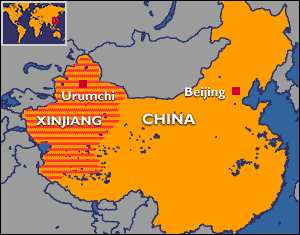 “URUMQI – Large swarms of locusts have laid waste to vast tracts of Northwest China’s Xinjiang Uygur autonomous region, with authorities expecting the plague to worsen as the weather heats up.
The locust plague began in the pastureland of the Ili River Valley and Taer Basin in late April, said Wang Xinchang, an official with the animal husbandry bureau in Tacheng Prefecture, on Tuesday.
“Locusts have infested nearly 100,000 hectares of pastureland in Tacheng Prefecture,” he said.
As the summer heat persists, the situation might still worsen next month. At least 400,000 hectares of pastureland could become infested, he said.
Xinjiang’s regional headquarters of locust and rodent control said an estimated 15.7 million hectares of pastureland would suffer from the locust plague this summer.” Read more.
U.S. Plagued by Stink Bug Epidemic, One-Fifth of Apple Harvest is Ruined
 “Brown stink bugs are causing millions of dollars in crop damage, with the apple industry being hit the hardest.
Growers in the mid-Atlantic region have reported the worst problems with about 18 per cent of the crop ruined.
The industry has reported $37million in damage to apple growers in Maryland, Pennsylvania, Virginia and West Virginia this spring.
The bug, a three-quarter-inch invader native to Asia, has a huge appetite and has no domestic natural predators.” Read more.
Mahmoud Ahmadinejad says Europe ‘Stealing Iran’s Rain’
Maybe he decided to claim that the West was to blame after reading Revelation 11:6, “They have the power to shut the sky, that no rain may fall during the days of their prophesying …”
 By Barney Henderson – “Moments after the Iranian president made the startling claim at the inauguration of a dam in a central province, it started to rain.
‘Western countries have designed plans to cause drought in certain areas of the world, including Iran,’ Mr Ahmadinejad said in the city of Arak in Markazi province.
‘According to reports on climate, whose accuracy has been verified, European countries are using special equipment to force clouds to dump’ their water on their continent, he said.
By doing so, ‘they prevent rain clouds from reaching regional countries, including Iran,’ Mr Ahmadinejad charged.
Iran has experienced several droughts in recent years.” Read more.
Flashback – Iran to import wheat due to drought – “Iran’s next wheat harvest will be 30 per cent less than forecast due to drought, forcing it to resume imports, the head of the national farmers` association was quoted as saying on Saturday.” Read more.
Drought in US, EU Stressing Crops and Farmers
 By Marie Maitre and Karl Plume – “PARIS/CHICAGO — Drought from Paris, France to Paris, Texas has farmers and grain dealers looking upwards. The farmers are looking to the skies for rain and the dealers are wondering where rising grain prices are going to stop.
U.S. wheat prices are on their way to their biggest weekly gain and European benchmark wheat futures have jumped just under 30 percent in the past nine weeks as wheat belts on both sides of the Atlantic show signs of irreversible drought damage.
‘We need Mother Nature’s help to save a crop, which whatever happens will be mediocre,’ said a senior European trader, referring to France, the EU’s biggest wheat producer.
An unusually dry and hot spring in top EU wheat producers and severe dryness in U.S. states Texas, Kansas and Oklahoma, have revived memories of the dry summer of 2010, which ravaged Russian and Ukrainian wheat harvests and choked off supplies from the key exporters.” Read more.
The Middle East’s Looming Hunger Crisis
 “When you can’t eat, nothing else matters.
And it is this side of the ‘Arab Spring’, the sweeping rise in food prices, which the international media appear to have underreported in their Middle East coverage this year. With the media’s focus on religion and politics, it is now almost forgotten that fear of hunger, perhaps more than unemployment and political oppression, brought people on to the streets in Tunisia, Egypt, Yemen and Syria, to topple rulers. More importantly, the crippling cost of food is continuing to increase the inability of the Middle East’s substantial number of poor to feed themselves and their families.
Rising food prices, a chief source of the Middle East’s spreading misery, are reaching record levels. According to one report, grain prices alone were 71 percent higher worldwide in April than they were for the same month last year. In the United States, corn and wheat have “roughly doubled” the past 12 months. This food inflation has had serious consequences for the Middle East’s poor and for the destitute in other developing countries as well. Besides threatening the well-being of those already leading marginal existences, the price hikes have increased the number of poverty-stricken by millions.” Read more.
‘Dustbowl Britain’ – Drought Will Lead to Crop Failures and Higher Food Prices
 By David Derbyshire – “The near-drought that has created dustbowl conditions in parts of Britain is expected to stretch into June and crop failures look set to drive up the price of food.
The Met Office forecasts a fortnight of warm, mostly dry weather from this weekend, scuppering the hopes of gardeners and farmers desperate for rain.
In East Anglia the soil is as hard as concrete, while in Essex some farmers have seen only half an inch of rain since February. The parched conditions have provoked fears of hosepipe bans, forest fires and food price rises.” Read more.
What will happen if there is a drought? – “Water agencies and authorities have been meeting the government to discuss plans for dealing with a drought in the UK. After the hottest April for over 100 years, and provisionally the warmest April in central England for more than 350 years, levels in many rivers and reservoirs are below average.” Read more.
 Israel National News
- Lebanese reports of an airstrike on a motorcycle in Chaqra, southern Lebanon
- Sirens sounding in Safed, surrounding area
- Sirens sounding in the upper Galilee
- Lebanese army to citizens: Do not scan QR code on Israeli leaflets
- Disconnect security cameras from Internet
- Herzog breaks silence amid pardon controversy for Netanyahu
- Hegseth: Iran's new leader likely disfigured
- Local leaders back Major General Avi Bluth, say 'this is a small gang of thugs'
- Hegseth: Iranian regime only sees two things the stars and stripes and the Star of David."
- Hegseth: 'US decimating the Iranian regime's military in a way the world has never seen before'
FrontPage Magazine
- 2 Islamic Terrorist Attacks in 1 Day
- House ‘Sharia-Free Caucus’ Turns 50
- We the People Never Voted for Mass Islamic Immigration
- Did Islamic Polygamy Lead to Record $14M PPP Fraud?
- Jihad at Old Dominion University
- Ohio HS Teacher Delivers Bonkers Anti-Trump Rant in Class
- Iran’s President vs. The Revolutionary Guards
- Video: Jamie Glazov Delivers A Wake-Up Call on the Ideological War Waged Against American Values
- The Pope at War: Pius XII, Hitler, and the Enigma of Silence
- Islamic Call Invades England’s Biggest Soccer Stadium
Gatestone Institute
- Spain's Pedro Sánchez and His Extremist Problem
- Before Pouring Billions into Gaza, Trump's 'Board of Peace' Needs To Ask A Few Hard Questions
- If Saudi Arabia Wants U.S. Alliance, It Must End Support for Sudanese Armed Forces — Aligned with Muslim Brotherhood and Iran — Not Fund It
- UN and EU Condemn the Strike, Not the Regime: Double Standards, Selective Outrage
- Why Fusion Energy Needs to Be American Born – Now More Than Ever
- To Defend the Abraham Accords, Trump Must First Defend the UAE
- A Dangerous Prelude to Trump's 'Board of Peace' in Gaza?
- Make or Break Time for Iran's Remaining Allies
- Tehran Chooses the Samson Option
- The Only Brave Leaders Standing Against Iran's Reign of Terror
Middle East – The Jerusalem Post
- Explosion rocks Tehran square during Quds Day march, Iranian state media says
- A changing battlefield: Five takeaways from Israel's war with Iran, two weeks in
- Two killed in Oman following drone strike, Iranian missile reportedly targets Turkish NATO airbase
- WATCH: IDF strikes over 200 regime terror targets across central, western Iran
- Iran threatens region's oil facilities if Israel, US target its energy infrastructure - report
- US Navy strikes Iranian ship after it sailed near USS Abraham Lincoln - report
- French officer killed, at least five soldiers wounded in drone strike on base in Iraq’s Makhmour
- Errors in Mojtaba Khamenei's first message dictated by IRGC raise questions about his condition
- Iranian diplomats in Australia, Denmark seek asylum as war rages on in their home country - report
- UN resolution condemning Iran leaves the country unexpectedly isolated - analysis
Earthquakes & Volcanic Activity
- World Earthquake Report for Friday, 13 March 2026
- Volcanoes Today, 13 Mar 2026: Fuego volcano, Popocatépetl, Soputan, Tangkubanparahu, Merapi, Semeru, Shiveluch, Lokon-Empung
- Sabancaya Volcano Volcanic Ash Advisory: NO VA EMISSIONS
- Mayon Volcano Volcanic Ash Advisory: ERUPTION AT 20260313/1036Z VA CLD UNKNOWN REPORTED OBS VA DTG: 13/1100Z
- Dukono Volcano (Indonesia) activity update Mar 12, 2026 - Continuing eruption
- Great Sitkin Volcano (United States) activity update Mar 12, 2026 - Continuing eruption
- Ibu Volcano (Indonesia) activity update Mar 12, 2026 - Continuing eruption
- Kilauea Volcano (United States) activity update Mar 12, 2026 - Continuing eruption
- Kanlaon Volcano (Philippines) activity update Mar 12, 2026 - Continuing eruption
- Lewotobi Volcano (Indonesia) activity update Mar 12, 2026 - Continuing eruption
Islamic Terrorist Network In America

Click For Larger Version


Click To Learn What Makes This An Idol

 MidnightWatcher - Prophecy in Motion
Recent Comments