Archive
BP Disaster Still Unfolding: New Data Confirming Fears That Fish, Wildlife and Millions of Gulf Coast Residents May Be Seriously Impacted for Decades
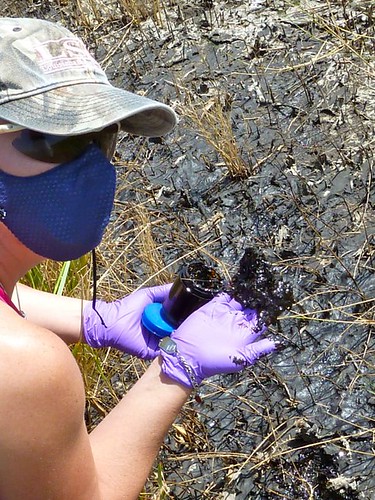 By Rocky Kistner – “In the Gulf, new information is confirming fears that fish and wildlife — and millions of people on the Coast — are being seriously impacted by the 4.9 million barrels of BP oil spewed from the ocean deep last year.
A new report from the Waterkeeper Alliance shows the BP disaster is still unfolding. The report points to ongoing public health problems, long-term damages to the environment, and a growing need for environmental monitoring and restoration programs to fight decades of petroleum industry assaults and the growing impacts of climate change.
According to the Waterkeeper State of the Gulf report, the effects are just beginning:
The oil is not gone, and long-term impacts are still unknown. If past oil spills are used as a barometer we can fully expect the Gulf Coast to suffer continued environmental degradation for decades. Leading scientific studies are showing that three fourths of the oil is still lingering on the bottom of the Gulf of Mexico, creating an unprecedented and unknown new environmental reality for the Gulf Coast. Oil is also still along the coastal areas in the form of tar balls, strings, and mats as well as in subsurface sandy beach areas. Our governmental and community leaders must work in concert to find long-term, sustainable solutions for recovery and restoration.
Although federal and state authorities continue to insist all is well with Gulf seafood, questions persist, especially among fishermen who are finding abnormalities in their catches. Experts also question whether FDA is adequately testing seafood and looking for certain toxic chemicals that are associated with crude. The Waterkeeper Alliance also has been sampling seafood in the Gulf and its findings have raised alarms in some circles that hazardous compounds are entering the seafood chain in increasing amounts.” Read more.
Shrimp Catches Are Down by 99% in Areas Hardest Hit by BP Oil Spill Disaster – “This year’s white shrimp harvest in the waters off Louisiana’s southeastern coast is significantly lower than in the past, forcing some people in the industry to look elsewhere for product and scale back operations while others blame the April 2010 Deepwater Horizon oil disaster. ‘I am talking to the guys, I am talking to the docks, and they are telling me that they are 80 percent off,’ said Clint Guidry, president of the Louisiana Shrimp Association. ‘We should have had a good year this year.’ … ‘Our Grand Isle beach is producing less than one percent of the shrimp it normally produces,’ he said. Many fishermen are blaming the lack of shrimp on the oil leak, said Guidry of the Louisiana Shrimp Association.” Read more.
Japan: Officials ‘Shocked’ After Extraordinarily High Level of Radiation Detected in Tokyo Neighborhood
Radiation readings just a few feet away from the contaminated ‘glass bottles in a cardboard box’ are ‘normal’, yet they found it? Source may not be from Fukushima? Something sounds fishy to me …
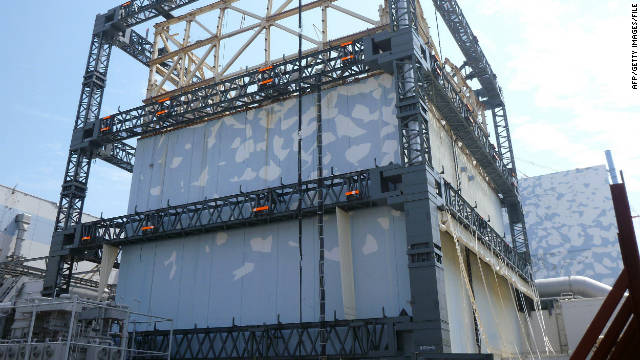 “Tokyo (CNN) — An extraordinarily high level of radiation was detected in one spot in a central Tokyo residential district Thursday, prompting the local government to cordon off the small area, local officials said.
Radiation levels were higher in Tokyo’s Setagaya ward than in the evacuation area around the badly damaged Fukushima Daiichi nuclear plant, according to ward Mayor Nobuto Hosaka.
‘We are shocked to see such high radiation level was detected in our neighborhood. We cannot leave it as is,’ Hosaka told reporters.
But the tsunami-struck Fukushima plant may not be the source of the radiation, Hosaka said later on state television.
Officials searching for the cause found ‘glass bottles in a cardboard box’ in the basement of a house in the neighborhood which sent radiation detectors off the charts, he said on NHK.
‘We suspect these bottles in basement could be the cause of the high radiation reading and we are hastily working to confirm it,’ he said.
Radiation experts are now checking what contaminated the bottles, a Setagaya ward official told CNN, declining to be named in line with policy.
They told the local government there are no immediate health hazards.
Radiation levels just a few feet from the contaminated spot are normal, Hosaka said.” Read more.
Radioactive Strontium Detected in Yokohama south of Tokyo – “Radioactive strontium exceeding normal quantities has been detected in sediment from atop an apartment building in Yokohama, south of Tokyo, and radiation levels as high as 2.707 microsieverts per hour have been detected on a local sidewalk in Tokyo’s Setagaya Ward, Japanese media reported. The strontium 90 was detected in Yokohama, some 250 kilometers from the damaged Fukushima Daiichi nuclear power plant, by a private agency that conducted the test upon the request of a resident. This is the first time strontium at a concentration of over 100 becquerels per kilogram has been found beyond 100 km from the Fukushima plant.” Read more.
European Central Bank President: Eurozone Crisis is Threat to Global Stability
 “Europe’s top financial watchdog warned on Tuesday that the eurozone’s sovereign debt crisis has become systemic and threatens global economic stability unless decisive action is taken urgently.
European Central Bank President Jean-Claude Trichet issued the dramatic warning as chairman of the European Systemic Risk Board, created to avoid a repeat of the 2008 financial crisis, amid growing fears that Greece will default on its massive debt.
‘The crisis is systemic and must be tackled decisively,’ Mr Trichet told a European Parliament committee in his final appearance before retiring at the end of the month.
‘The high interconnectedness in the EU financial system has led to a rapidly rising risk of significant contagion. It threatens financial stability in the EU as a whole and adversely impacts the real economy in Europe and beyond.’
European banking regulators meanwhile asked banks across the continent to provide updated data on their capital position and sovereign debt exposures to help reassess their need for recapitalisation.
Germany and France, the leading powers in the 17-nation euro zone, have promised to propose a comprehensive strategy to fight the debt crisis at an EU summit delayed until October 23.” Read more.
S&P downgrades Spain’s banking sector – “Standard & Poor’s Tuesday downgraded 10 Spanish banks by one notch, including giants Santander and BBVA, warning that the country’s banking sector will further deteriorate in the next 15 to 18 months. The outlook on all Spanish financial institutions S&P rates is now negative, reflecting the possibility of further downgrades if the economy slows down more than anticipated. The agency, which rates Spain at AA-minus with a negative outlook, forecast the level of troubled assets in the country’s banking system will continue to rise throughout 2012 and possibly into early 2013 given a sluggish real estate sector.” Read more.
Japan: Radioactive Strontium Found in Yokohama, 250 KM From Fukushima Plant
 “YOKOHAMA (Kyodo) — Radioactive strontium exceeding normal quantities has been detected in sediment from atop an apartment building in Yokohama, some 250 kilometers from the damaged Fukushima Daiichi nuclear power plant, city officials said Wednesday.
While the discovery of 195 becquerels of strontium 90 in the rooftop sediment has fueled concerns that leaked radiation may have spread further than the government had expected, the officials said the city office is carefully examining where the material came from.
This is the first time strontium at a concentration of over 100 becquerels per kilogram has been found beyond 100 km from the Fukushima plant. The strontium 90 was detected in Yokohama, south of Tokyo, by a private agency that conducted the test upon the request of a resident.
Strontium 90, with a half-life of 29 years, has been detected at concentrations roughly between 10 to 20 becquerels at various places across Japan prior to the nuclear crisis triggered by the March 11 earthquake and tsunami…
If inhaled or ingested, strontium tends to accumulate in bones just like calcium. It is believed to cause bone cancer and leukemia.” Read more.
Gov’t unveils plan to expand decontamination project areas – “The government has unveiled plans to sharply expand a government-funded decontamination project to areas with annual radiation emissions of 1 millisievert or more, prompting mixed reactions from local government officials and residents. Under the plan, the Environment Ministry is to designate those areas with annual radiation exposure of 1 millisievert or more as ‘priority contamination inspection areas’ by the end of November.” Read more.
Fitch Ratings Boss: Eurozone Crisis is ‘Getting Worse’
 “A boss at rating agency Fitch has told Sky News the eurozone crisis is ‘getting worse’ and could last for months.
David Riley, head of global sovereign ratings at Fitch Ratings, said the situation in Europe had become ‘systemic’.
‘The eurozone crisis keeps on getting worse,’ he said on Jeff Randall Live.
‘It’s now become a systemic crisis – not just in terms of spreading the contagion to Italy, which is deeply worrying – but it’s now become a systemic banking crisis.’
His comments follow Fitch’s downgrade of both Spanish and Italian government debt on Friday.
But Mr Riley stressed there was ‘broad recognition’ of what needs to be done to help the region.
He said the solution includes dealing with Greece’s debt, putting more money into banks and supporting weaker countries like Spain and Italy, which he described as ‘solvent but potentially illiquid’.
But when pressed by Randall on whether Germany would bankroll these measures, he admitted this was a problem.” Read more.
Slovakia votes down eurozone bailout expansion plans – “Slovakia’s parliament has voted against measures to bolster the powers of the eurozone bailout fund, seen as vital in combating the bloc’s debt crisis. The governing coalition had linked the vote to a confidence motion and as a result has effectively been toppled. Slovakia is the last of the eurozone’s 17 members to vote on expanding the European Financial Stability Facility.” Read more.
Report: Germany is Pushing Behind the Scenes for a ‘Hard’ Default in Greece
 By Ambrose Evans-Pritchard – “Germany is pushing behind the scenes for a ‘hard’ default in Greece with losses of up to 60pc for banks and pension funds, risking a chain-reaction across southern Europe unless credible defences are established first.
Officials in Berlin told The Telegraph it is ‘more likely than not’ that investors will suffer fresh losses on holdings of Greek debt, beyond the 21pc haircut agreed in July.
The exact level will depend on findings by the EU-IMF ‘Troika’ in Athens.
‘A lot has happened since July. Greece has fallen back on its commitments, so we have to assume that the 21pc cut is no longer enough,’ said one source.
Finance minister Wolfgang Schäuble told the Frankfurter Allgemeine that the original haircuts were ‘probably’ too low, saying banks must have ‘sufficient capital’ to cover greater losses if need be. Estimates near 60pc have been circulating in Berlin.
The shift in German policy has ominous echoes of last year when Chancellor Angela Merkel first called for bondholder haircuts, setting off investor flight from Ireland and a fresh spasm in the EU debt crisis.
‘This could set off a snowball effect,’ said Andrew Roberts, credit chief at RBS. ‘The markets will instantly switch attention to Portugal, where two-year yields are already 17pc’.” Read more.
Japan: ‘Unprecedented’ Thyroid Examinations Begin of All Fukushima Children, Fallout Ten Times More Than Reported
 By Steve Herman – “Japanese doctors on Sunday began checking the thyroids of 360,000 children in Fukushima Prefecture, site of a nuclear reactor meltdown during the days following Japan’s earthquake and tsunami in March. The examinations, on a scale medical officials are calling unprecedented, come amid concern that the cancer rate in the area could surge.
Children from the two towns closest to the Fukushima-1 Nuclear Power Plant were among the first to undergo ultrasonic thyroid examinations at the Fukushima Medical University.
The power plant was severely damaged after this year’s massive earthquake and tsunami which left 20,000 people dead or missing.
Dr. Shinichi Suzuki, of the university’s medical school, says it will take several years to carry out preliminary examinations of those 18 and under in the prefecture (state).
The physician says it can take a long time for any irregularities in the thyroid to manifest as cancer. While that was seen four or five years after the 1986 Chernobyl meltdown in Ukraine, he says some experts contend a longer period of vigilance will be needed here.” Read more.
Fukushima fallout was 10 times more than reported – “Ministry of Education, Culture, Sports, Science and Technology admitted that they have made a ‘mistake’ on the report about fall out in Fukushima. The data is about the amount of fallout and the rain, from 6/6/2011 ~ 8/4/2011. Having said that it was a simple error, it turned out that it was 10 times more than originally reported… ALL the data turned out to be way more than originally reported.” Read more.
Radiation fears send fish hauls spiraling – “Fish catches at eight major ports in the tsunami-hit Tohoku region have plunged since April in part because of the severe damage the fleet suffered in the March 11 disaster but mainly due to radiation fears amid the Fukushima nuclear crisis that are making hauls hard to sell… Compared with a year ago, catches are down by as much as 85 to 99 percent in volume in five Tohoku areas, as consumers continue to shun fish from the region, local officials and fishery cooperatives said Friday.” Read more.
Tokyo under illusion that things are normal while Fukushima remains a war zone – “We are well into autumn. And despite the growing sense in the Tokyo metropolitan area that things are now all right — with train services back to pre-disaster schedules and the regret we once felt over our wasteful consumption of electricity dissipating — Fukushima remains a war zone. It was reported on Oct. 7 that the Watari district of Fukushima was not designated by the government as a ‘specific evacuation recommendation spot.'” Read more.
Japan: Northwest Tip of Tokyo Tainted By Unusually High Amount of Fallout, Plant Mutations Continue To Be ‘Observed Everywhere’

By MIZUHO AOKI – “An aerial radiation survey of the capital and Kanagawa Prefecture has revealed the northwest tip of Tokyo was tainted by an unusually high amount of fallout, while most other areas showed normal levels, a science ministry official said Friday.
The results, released late Thursday, show that fallout from the Fukushima No. 1 power plant contaminated part of the mountainous Okutama region on Tokyo’s western fringe. Radiation readings in the area were the highest of the two prefectures at 100,000 to 300,000 becquerels of radioactive cesium per square meter.
The hourly radiation readings in the area hovered between 0.2 and 0.5 microsievert, but a few spots had higher levels between 0.5 and 1.0 microsieverts, science official Hirotaka Oku said.
Cesium ejected from the Fukushima plant was carried by winds in a southwestern direction through the northern parts of Tochigi and Gunma prefectures before heading south over eastern Gunma and western Saitama to reach Okutama, Oku said.
The geographic features of Okutama, notably its mountains and forests, made the area susceptible to catching radioactive materials, Oku added.
Contaminated areas were also spotted in eastern Tokyo, including Katsushika and Edogawa wards, which gave off hourly readings of between 0.2 and 0.5 microsievert per hour.
The highest levels of cesium-134 and -137 found in eastern Tokyo were between 60,000 and 100,000 becquerels per square meter in Katsushika, Oku said.” Read more.
Senior nuclear engineer calls the Fukashima catastrophe ‘endless’ – “Before the disaster, Hirono was best known for hosting J-Town, a soccer training centre used by Japan’s national team. Today, J-Town hosts 3,000 blue-uniformed nuclear workers, front-line troops in the ongoing effort to bring Fukushima Daiichi’s reactors under control. Their escorted convoys to and from the crippled reactors provide the bulk of the activity on Hirono’s otherwise empty streets. Those working inside the plant provide little reason for optimism. ‘It’s endless, endless. The task will never end,’ said a senior nuclear engineer who spends six hours a day, five days a week supervising the effort to make sure the reactor cores that partially melted down in March remain immersed in cooling water.” Read more.
Plants’ mutation are observed everywhere, and the cases are increasing – Source.
UK Prime Minister: Euro Has Just a Matter of Weeks to Avert Economic Disaster

The UK prime minister wants France and Germany to bury their differences and to adopt before the end of the year what he claims would be a decisive five-point plan to end the uncertainty, which was having a ‘chilling effect’ on the world economy.
Meanwhile, on Sunday, Angela Merkel, the German chancellor, and France’s President Nicolas Sarkozy spelt out their determination to defend the stability of the euro as they met for a bilateral summit in Berlin, though they refused to spell out details of their plans.” Read more.
Berlin, Paris vow new crisis plan as global pressure builds – “The leaders of Germany and France have promised to unveil new measures to solve the euro zone’s debt crisis by the end of the month, as international pressure builds for bold steps from Europe to avert an economic backlash of global proportions. German Chancellor Angela Merkel and French President Nicolas Sarkozy said after talks in Berlin on Sunday evening that their goal was to come up with a sustainable answer for Greece’s woes, agree how to recapitalise European banks and present a plan for accelerating economic coordination in the euro zone by a G20 summit in Cannes on November 3-4.” Read more.
Entire System of Global Trade At Risk, ‘The Difficulties of 2008 Were But a Foretaste’ of What’s Coming as Politicians and Economists Sense We’re Out of Options
 “Sir Mervyn King, the Governor of the Bank of England, this week called the current financial crisis ‘the most serious… since the 1930s, if ever’, in justification for a further £75 billion of ‘quantitative easing’. Since Sir Mervyn cited the chaos of the inter-war years, it seems appropriate to quote Winston Churchill: ‘Want of foresight, unwillingness to act when action would be simple and effective, lack of clear thinking, confusions of counsel, until the emergency comes, until self-preservation strikes its jarring gong – these are the features that constitute the endless repetition of history.’
We are at just such a moment again. Little more than two years ago, global leaders were happily congratulating themselves on having avoided the mistakes of the 1930s, thereby averting a depression. But now it appears that the difficulties of 2008 were but a foretaste of what was to come. With the European banking system again on the verge of collapse, there is a sense that politicians and economists are out of options, that governments and central banks are powerless before events. The best of the cavalry has been sent into battle, and it has come back in tatters. The fiscal armoury has been exhausted, the support offered by the boom in emerging markets such as China and India over the past two years seems to be on its last legs, and there is but the small rifle fire of the central bank printing presses left to defend us.
If it has been obvious for some time that we are caught up in an extreme financial crisis, the extent of its severity has acquired greater clarity in being described by the Governor of the Bank of England. Never before has the global financial system been so interlinked and integrated, which means that problems in one part of the world are capable of causing severe stress almost everywhere else. We once more face a perfect storm of cascading default, contracting credit and collapsing economic activity.” Read more.
Report: Food Crisis Grips North Korea
 “HAEJU, North Korea – In a pediatric hospital in North Korea’s most productive farming province, children lay two to a bed. All showed signs of severe malnutrition: skin infections, patchy hair, listless apathy.
‘Their mothers have to bring them here on bicycles,’ said duty doctor Jang Kum Son in the Yellow Sea port city of Haeju. ‘We used to have an ambulance but it’s completely broken down. One mother travelled 72 kilometers . By the time they get here, it’s often too late.’
It’s also getting late for North Korea to get the massive amount of food aid it claims to need before the harsh winter sets in. The country’s dysfunctional food-distribution system, rising global commodities prices and sanctions imposed over Pyongyang’s nuclear and missile programs had contributed to what appears to be a hunger crisis in the North, even before devastating summer floods and typhoons compounded the emergency.
The regime’s appeals for massive food aid have gone mostly unanswered by a skeptical international community. Only 30 percent of a United Nations food aid target for North Korea has been met so far. The United States and South Korea, the two biggest donors before sanctions, have said they won’t resume aid until they are satisfied the military-led communist regime won’t divert the aid for its own uses and progress is made on disarmament talks.
South Korea also says the North is exaggerating the severity of its food crisis. Visiting scholars, tourists and charity workers have sent out conflicting views about it.
The U.N.’s Food and Agricultural Organization (FAO), for instance, said last month after visiting the North that ‘the damage was not so significant.’ Another U.N. body, the World Food Programme, which has a regular presence in the North, warned in March of growing hunger. The sharp divergence of views is one reason why the U.N.’s emergency relief coordinator will visit this month to assess the situation.” Read more.
Fitch Slices Spain and Italy Credit Ratings As EU Crisis Deepens, Moody’s Downgrades Nine Portuguese Banks
“The ratings agencies are at it again. We have noted that the PIIGS will continue to see downgrades and that is what we are seeing today. Fitch downgraded both Italy and Spain. Shares of iShares MSCI Italy Index (NYSE: EWI) are still up 0.4% at $12.58 on the day but shares were up around $12.80 earlier today. Shares of iShares MSCI Spain Index (NYSE: EWP) are down only $0.02 at $33.65 but shares were above $34.00 earlier this morning.
Italy was cut to ‘A+’ from ‘AA-‘ today noting that the crisis is a significant financial and economic shock for Italy. It also notes that Italy has been hesitant to respond and it has eroded confidence.
Spain was downgraded to ‘AA-‘ with a negative outlook due to risks of fiscal consolidation efforts. It noted that it could go down to the ‘A-‘ range if the FROB costs are more than expected.” Read more.
Moody’s Downgrades Nine Portuguese Banks – “Moody’s Investors Service downgraded its ratings on nine Portuguese banks on Friday, citing the increased asset risk linked to their holdings of Portuguese government debt and the sovereign downgrade of Portugal in July. The ratings agency downgraded by one or two notches the senior debt and deposit ratings of nine banks and the standalone ratings of six of them. In early trading, Portugal’s top listed bank Millennium fell 1.7 percent.” Read more.
 Israel National News
- Live updates stopping in honor of Shabbat in N. America, will resume on Saturday night from Israel
- Shabbat Shalom!
- German Chancellor doubts success of US-Israel campaign against Iran
- Launches detected from Iran towards southern Israel
- Trump: We’re closer than ever to being free from Iran’s reign of terror
- Iranian hackers breach FBI Director Kash Patel's personal email
- Watch: Missile impact in Tel Aviv, meters from traveling vehicle
- MDA: Two people lightly injured in southern Israel and evacuated to Soroka Hospital
- Residents of Malkia permitted to leave shelters
- Residents of Upper Galilee may leave shelters
FrontPage Magazine
- The All Non-White X-Files is Coming
- Olympics Bans Men in Dresses From Competing Against Women
- Chinese Brother and Sister Planted Bomb at Air Force Base
- Rabbi Sentenced for ‘Vandalizing’ ‘Mural’ by Hamas Supporter
- The Jew-Hating Classroom
- Europe to Euthanize Girl Raped by Migrants
- Jews and Christians: United We Stand, Divided We Fall
- An Act of War From China?
- Supreme Court to Decide Definition of “In the United States”
- Video: Rare Moment of Truth at the UN
Gatestone Institute
- Finish the Job: Leaving Iran's Regime in Place Guarantees Endless Regional Instability
- Iran's Fantasy of Strength: When Bazaar Tactics Collide with Reality
- Arabs Did Not Help the Gulf States: What Do they See as the Central Source of Instability in the Middle East?
- Birthright Citizenship is National Suicide
- Disarming Hamas Must Remain Trump's Top Priority in Gaza
- Courage, Not Recklessness: Why Netanyahu and Trump Were Right on Iran
- The Quantum Giant That Will Demand Fusion Power
- China Is About to Lose Its Cuban Military Bases
- Begging Hamas to Disarm - The Misguided Approach of Trump's 'Board of Peace'
- 'What Do You Think Will Happen When They Are in the Majority?': The Persecution of Christians, December 2025
Middle East – The Jerusalem Post
- Iran risks renewed protests as citizens reach 'breaking point' amid war-stricken economy
- Why the Houthis waited until now to strike - analysis
- Israel scales back use of top missile interceptors as Iran barrages persist - report
- Pakistan to host talks with Saudi Arabia, Turkey, Egypt amid Iran war diplomacy
- Kuwait Airport attacked by several drones as Iran continues attacking Gulf
- IDF hits dozens of Hezbollah sites as troops wounded in southern Lebanon
- Who are the Houthis, Iran’s allies in Yemen? - explainer
- US using anti-tank land mines in Iran's Shiraz to neutralize ballistic missile launchers - report
- First Houthi launch toward Israel since war began triggers alerts across the Negev
- 'If Lebanon won't disarm Hezbollah, the IDF will': Effie Defrin warns against Hezbollah’s rearmamen
Earthquakes & Volcanic Activity
- World Earthquake Report for Saturday, 28 March 2026
- Volcanoes Today, 28 Mar 2026: Santiaguito volcano, Fuego, Semeru, Shiveluch, Ibu, Reventador, Mayon, Sangay
- Lewotobi Volcano Volcanic Ash Advisory: VA LAST REPORTED TO FL070 AT 28/0414Z MOV SW
- Semeru Volcano Volcanic Ash Advisory: VA TO FL150 RPT AT 28/0807Z MOV N EST VA DTG: 28/1030Z to 15000 ft (4600 m)
- Santiaguito Volcano Volcanic Ash Advisory: NEW VA EMS to 14000 ft (4300 m)
- Sangay Volcano Volcanic Ash Advisory: NEW VA EMS
- Fuego Volcano Volcanic Ash Advisory: ONGOING VA EMS
- Ibu Volcano Volcanic Ash Advisory: VA TO FL060 LAST GND RPT AT 27/2311Z OBS VA DTG: 28/0510Z to 6000 ft (1800 m)
- Lewotobi Volcano Volcanic Ash Advisory: VA REPORTED TO FL070 AT 28/0414Z MOV SW OBS VA DTG: 28/0414Z to 7000 ft (2100 m)
- Reventador Volcano Volcanic Ash Advisory: NEW VA EMS to 15000 ft (4600 m)
Islamic Terrorist Network In America

Click For Larger Version


Click To Learn What Makes This An Idol

 MidnightWatcher - Prophecy in Motion
Recent Comments