Archive
Cameroon: Cholera Epidemic Kills Nearly 500 People So Far Since Early August
 “MAROUA, CAMEROON (BNO NEWS) — A major cholera epidemic in parts of Cameroon has already claimed nearly 500 lives so far this month while more than 13,000 others have been sickened this year, CNN reported on Wednesday.
Public health officials said more than 50 people have died so far in August in the Far North region alone, the hardest-hit area. Residents in the Logone and Chari divisions of the region told CNN that the majority of people infected with the disease are children under the age of five and women.
Prof. Gervais Ondobo Andze, the director of disease control at the Ministry of Public Health, told journalists on Monday that nine of the country’s 10 regions are affected by cholera, an intestinal infection caused by ingestion of bacteria-contaminated food or water. According to the World Health Organization (WHO), about 80 percent of cases can be cured by rehydrating the patient.
In Maroua, the capital of the Far North region, 1,380 cases of cholera have been reported so far this year, according to officials. Dr. Valentine Ndikum, a senior public health official, said the number could double in the coming days due to poor sanitary and hygienic conditions because of what he said was a slow government response.” Read more.
Nepal: At Least 114 Cattle Killed As Mystery Disease Hits Makwanpur
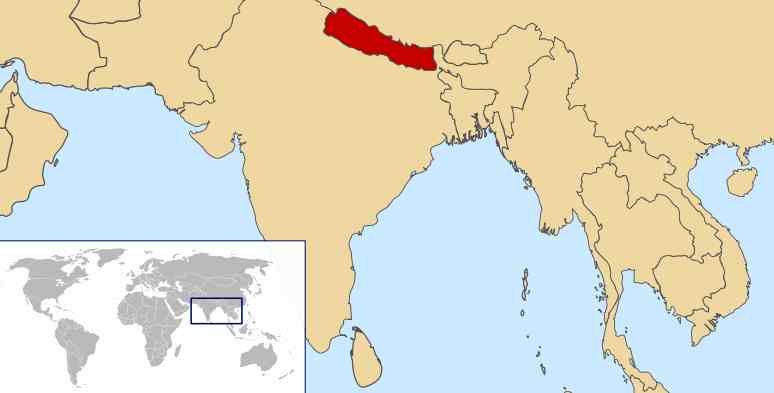 “MAKAWANPUR: As many as 114 cattle died of an unknown disease in the Kankada, a remote VDC of Makawanpur district within a week.
According to Sukbahadur Chepang, a local resident, a total of 11 buffaloes, 22 cows and oxen, 52 pigs and 29 goats died of the disease in Garling of the VDC by Tuesday.
Similarly, dozens of cattle fell sick due to the unknown disease in the village, said Nepal Chepang Association, Makawanpur secretary Mahesh Chepang.
The cattle get high fever, woes in saliva, and other problems at the beginning and die within 8-10 hours of their sickness.” Source.
Montana: Wildlife Officials Probe Deaths of Dozens of Deer
 “HELENA — Montana wildlife officials say dozens of white-tailed deer have been found dead or dying in northeastern Montana’s Milk River Valley and surrounding areas since the beginning of August.
Montana Fish, Wildlife and Parks officials say they don’t know what’s caused the deaths, but they suspect it may be epi-zootic hemorrhagic disease.
The disease, which affects white-tailed deer, is marked by hemorrhaging, fever, and an urge to be near fresh water to cool down.
FWP spokesman Ron Selden says samples sent to a state lab to determine the cause of the deaths won’t be returned until next week.
He says the agency is asking residents’ help in learning the extent of the outbreak locations by calling the FWP office in Glasgow at 406-228-3700 when they spot an affected animal.” Source.
Season’s First Outbreak of EHD Detected in Montana – “Mature bucks are dead. Does are dead. Yearlings are dead. Today I diagnosed why one of my irrigation turnouts wasn’t flowing as it should. It was blocked by the carcass of a fawn so young it still carried its spots. We haven’t heard an official diagnosis from Fish, Wildlife & Parks, but it has all the makings of an epidemic of epizootic hemorrhagic disease, or EHD. Sometimes mistakenly called blue-tongue, the disease strikes whitetails later in the summer in years like this when the temperature spikes, and the biting black midge that carries the disease has plenty of wet habitat in which to breed. I’m curious how widespread this outbreak is. Given the hot weather and above-average rainfall this year, I’m guessing conditions are ripe for an EHD outbreak all the way down the Missouri River basin.” Read more.
New Zealand: Airborne Kiwifruit Disease Spreads Beyond Contamination Zone
 By Tony Field – “The kiwifruit vine-killing disease PSA has spread beyond the initial contamination zone.
Pseudomonas syringae pv. Actinidiae has been found in 19 more properties in Te Puke and has spread to two vineyards in the previously-unaffected Tauranga region.
It has put more urgency on the research that is underway to combat the disease.
The scientists at Plant and Food Research are part of an international effort to develop new varieties of kiwifruit that are more resistant to PSA but that will take years, so for now they have more immediate goals.
Doctor Bruce Campbell says they are trying to buy time for the industry.
‘[What] we are doing right now is testing products that can be applied in orchards this coming season to slow the spread of the disease.’
170 orchards now have the more serious PSA strand of the disease.
John Burke of Kiwifruit Vine Health says the disease is airborne and is spread through weather events.
‘We have had weather over the summer period, and late autumn, that is not conducive to holding the disease.'” Read more.
Virginia: Red Tide Algae Blooms Hitting Chesapeake Bay
 By Scott Harper – “They have become sad summer rites in local waters that feed the Chesapeake Bay: algae blooms, also known as red tides or brown tides. And once again, they have arrived to stain creeks and rivers, frighten swimmers and threaten fish and oyster stocks.
On Friday, the blooms thrived in patches across much of the Lafayette River in Norfolk – great swaths of mahogany and brick-red streaks, looking like someone either spilled oil or dropped a huge load of paint overboard.
And then, suddenly, the unhealthy coloring stopped and the water again turned its normal shade of light green – healthy and sick, side by side, even touching.
From a boat piloted by Chris Moore, a scientist with the Chesapeake Bay Foundation, the Lafayette almost seemed its normal self on an August afternoon, with people out fishing, sailing and tending to their riverfront yards.
But Moore knows better.
‘This is a sign that we need to improve our water quality,’ Moore said after cruising through an especially red and thick blanket, just off Colonial Place, a low-lying waterfront neighborhood.
Blooms are modern phenomenons that typically occur in the lower Chesapeake in July or August, then hang around until fall, unwelcome and unpredictable. The state Health Department warns swimmers and fishermen to avoid darkly colored waters.” Read more.
Russia: Emergency Declared Over Swine Fever Outbreak
 “KRYLOVSKAYA, Russia, Aug. 8 (UPI) — A district in Russia’s southern Krasnodar Region has declared a state of emergency due to a swine fever outbreak, emergency response officials say.
The emergency was declared Sunday for the region after 50 pigs died because of the disease, RIA Novosti reported.
The virus was discovered near the village of Krylovskaya at a private farm where 15 pigs were found dead.
The area covered in the state of emergency is home to 11,839 pigs, the regional emergencies center said.” Read more.
Sweden: Discovery of Deadly, Incurable Bee Disease Prompts Warning From Agriculture Officials
 “The discovery of a deadly bee disease among several broods in western Sweden have prompted a warning from agriculture officials concerned about containing the contagious illness.
A number of bee broods outside Varberg in Halland County have been affected by American foulbrood (AFB), considered one the most common and damaging diseases affecting bees.
The disease has no known cure and can cause significant economic harm if not contained.
‘Beekeepers are urged to go through their hives and look for signs of the spores so to ensure the brood isn’t infected,’ the Halland County governing board said in a statement.
The disease affects new bee larvae up to three days old, which become infected by ingesting spores that are present in their food.
Spores germinate inside of and eventually kill the larvae, which can contain millions of new spores.
The only way to stop the disease from spreading is to burn hives in which it is discovered.” Read more.
Einstein was right – honey bee collapse threatens global food security – “Almost a third of global farm output depends on animal pollination, largely by honey bees. These foods provide 35pc of our calories, most of our minerals, vitamins, and anti-oxidants, and the foundations of gastronomy. Yet the bees are dying – or being killed – at a disturbing pace.” Read more.
Dominican Republic Cholera Death Toll Climbs to 87
 “SANTO DOMINGO – THE DOMINICAN Republic’s death toll in the cholera epidemic that spread from Haiti has risen to 87 out of more than 13,000 suspected cases, authorities said on Friday.
The country shares the island of Hispaniola with Haiti, where the epidemic has killed more than 5,500 people.
The Dominican health ministry reported that the death toll had risen by 16 since July 8 to 87.
According to the ministry, there have been 773 new cases in the past week, for a total of 13,200 since the beginning of the epidemic, which spread to the Dominican Republic from Haiti in November 2010.
An epidemiological study published at the end of June by the US Centers for Disease Control established that UN troops from Nepal were responsible for the epidemic.” Read more.
UN Reports Measles Outbreaks in Ethiopia and Kenya – Dozens of Children Killed, Thousands Sickened
 “GENEVA — United Nations officials say outbreaks of measles in Ethiopia and Kenya have killed dozens of children and sickened thousands of others.
UNICEF spokeswoman Marixie Mercado said Friday at least 17,584 measles cases, including 114 deaths, have been reported by Ethiopian health officials in the first half of the year.
World Health Organization spokesman Tarek Jasarevic says at least 462 cases of measles, including 11 deaths, have been confirmed in recent months among Somali refugee children in the Kenyan refugee complex known as Dadaab.
He says 2 million children in Ethiopia are at risk of contracting measles.” Read more.
Philippines: 81 Typhoid Cases in Cebu Town Puzzles Authorities
 “CEBU, Philippines – The 81 cases of typhoid fever reported in one barangay of the town of Alegria in the southwestern side of Cebu have puzzled health officials.
The Integrated Provincial Health Office (IPHO) is trying to find out what caused the outbreak in Barangay Valencia.
Alegria has a total of 9 barangays, but only residents of Valencia have been affected.
Provincial Health Officer Cristina Giango said that of the 81 cases, 27 are confined at the Badian District Hospital and in Reinhard Hospital in Alegria.
She said that their personnel are already in Alegria since last Saturday to distribute medicine and conduct health education.
Jen Lerio, head nurse of the Alegria Rural Health Unit, told The FREEMAN that typhoid fever is a waterborne disease which is usually acquired when one drinks contaminated water.
Octavios Acebo, the municipal sanitary inspector, said that they conducted a water test on July 5 and the result showed it was negative of Escherichia coli or Ecoli bacteria.
Ecoli bacteria are commonly found in the lower intestine of warm-blooded organisms including humans. These bacteria can cause serious illness, which eventually lead to death if not treated immediately.” Read more.
India: At Lease 50 Cows and Buffaloes Killed by Mysterious Disease in Senapati District, Manipur
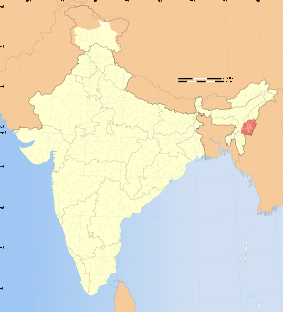 “Imphal, July 11 (NNN): A mysterious animal disease which broke out less than two weeks ago in Senapati district in Manipur has reportedly claimed more than fifty cows and buffaloes, said a source.
The epidemic continues to claim the lives of about 6-7 animals in and around Makhan village in Tadubi block of Senapati district, a villager informed Newmai News Network today while adding that the symptoms of the mysterious animal disease include excessive urinating and saliva. Animals that show signs of infection and symptom do not live for more than three days, he added.
The villagers are aggrieved that despite complaints being made before Maram and Senapati vet departments no one from the departments has turned up quoting lack of medicine and equipment to handle such eventuality.
The villagers of the areas and its vicinity have appealed to concerned authorities and departments and other concern agencies, societies, companies and individuals who might be able to help in reversing the situation. The villagers also feared that the disease might be transferable onto human if not addressed forthwith.” Source.
Scientists Alarmed by Discovery of a Completely New Antibiotic-Resistant Gonorrhea Strain
 “A team of researchers announced Monday it has discovered a completely new strain of gonorrhea that is resistant to all currently available antibiotics.
The international research team has dubbed the superbug strain of Neisseria gonorrhoeae H041. They say the strain could transform gonorrhea from what was once an easily treatable sexually transmitted infection into a serious public health threat.
‘This is both an alarming and a predictable discovery’ said Swedish researcher Dr. Magnus Unemo of the Swedish Reference Laboratory for Pathogenic Neisseria in a statement.
He and his team announced the discovery Monday, at the International Society for Sexually Transmitted Disease Research conference in Quebec City.
The researchers say H041 is highly resistant to cephalosporin antibiotics — the only class of drugs that are still effective in killing off gonorrhea bacteria, analysis shows.
Unemo says the development of a fully resistant strain was predictable because gonorrhea has shown a remarkable ability to adapt.
‘Since antibiotics became the standard treatment for gonorrhea in the 1940s, this bacterium has shown a remarkable capacity to develop resistance mechanisms to all drugs introduced to control it,’ said Unemo.” Read more.
 Israel National News
- Explosions heard in Jerusalem
- Sirens in Jerusalem
- Iran launches misssile attack against Israel
- Netanyahu reveals: “There are many more surprises"
- Watch: Projectile impact in Rishon Lezion
- Minister Sa'ar: US had $10 million prize on Larijani's head, we did it for free
- Sirens sounding in Galilee panhandle due to aerial infiltration
- Journalist faces death threats over missile strike report linked to online bets
- Photo: Scene of missile impact on Route 1 near Ben Shemen Interchange
- IRGC: We targeted Nahariya, Beit Shemesh, Tel Aviv, and Jerusalem in latest barrage
FrontPage Magazine
- Iranian Leader Who Threatened Trump Would Disappear Taken Out
- California May Add 2 Muslim State Holidays While Christians Have Only One
- Zombie Jesse Jackson May Endorse After Death
- Trump Gets 200,000 Illegal Alien Truck Drivers Off the Road
- What Are You Doing on the ‘International Day to Combat Islamophobia’?
- Iran Could Have 8000 Ballistic Missiles by the End of 2027
- Halal Pressure in London
- The Heartland in Reprieve
- Ending the Ayatollahs’ 47-Year War on the World
- UN Human Rights Council Refuses to Defend Female Victims of Sharia
Gatestone Institute
- Why Applying the 'Venezuela Method' to Iran Would Be a Terrible Mistake
- Hamas Crimes No One Talks About
- Trump's Iran War Ending Xi Jinping's 'China Dream'
- Iran Gets a New Supreme Guide
- 'Trump Derangement Syndrome': The Danger of Hatred Clouding Perception
- Spain's Pedro Sánchez and His Extremist Problem
- Before Pouring Billions into Gaza, Trump's 'Board of Peace' Needs To Ask A Few Hard Questions
- If Saudi Arabia Wants U.S. Alliance, It Must End Support for Sudanese Armed Forces — Aligned with Muslim Brotherhood and Iran — Not Fund It
- UN and EU Condemn the Strike, Not the Regime: Double Standards, Selective Outrage
- Why Fusion Energy Needs to Be American Born – Now More Than Ever
Middle East – The Jerusalem Post
- Hezbollah monitors Israel as limited ground operations expand in southern Lebanon - analysis
- Israel's number one target: How the IDF assassinated Iran’s ‘de-facto leader’ Ali Larijani
- UN warns Israeli airstrikes in Lebanon may violate international law, displace civilians
- Will death of Larijani and other Iranian regime officials lead to change? - analysis
- Iran’s new supreme leader rejects peace talks, demands US, Israel 'brought to knees'
- Jordan’s careful war calculus in balance as Islamic regime’s future unknown
- Iran can't beat US military, so it's targeting your wallet instead - analysis
- Iraq becomes new battleground as Iranian proxies intensify nationwide strikes - analysis
- Who was Ali Larijani, Iran's top security official killed in IDF strike? - explainer
- Killing Larijani sends message to surviving Iran leadership: Compromise or die - analysis
Earthquakes & Volcanic Activity
- World Earthquake Report for Tuesday, 17 March 2026
- Ibu Volcano Volcanic Ash Advisory: VA TO FL070 LAST REP AT 17/1104Z EST VA DTG: 17/1130Z to 7000 ft (2100 m)
- Volcanoes Today, 17 Mar 2026: Fuego volcano, Shiveluch, Reventador, Mayon, Piton de la Fournaise, Sangay, Lewotolo, Aoba
- Mayon Volcano Volcanic Ash Advisory: ERUPTION AT 20260317/1120Z VA CLD UNKNOWN REPORTED OBS VA DTG: 17/1110Z
- Shiveluch Volcano Volcanic Ash Advisory: REMNANT VA to 24000 ft (7300 m)
- Fuego Volcano Volcanic Ash Advisory: FQT VA EM to 16000 ft (4900 m)
- Sangay Volcano Volcanic Ash Advisory: ONGOING VA EM LKLY
- Piton de la Fournaise volcano (La Réunion): lava flows continue to feed lava delta
- Reventador Volcano Volcanic Ash Advisory: CONT VA EM LKLY
- Mayon Volcano Volcanic Ash Advisory: ERUPTION AT 20260317/0400Z VA CLD UNKNOWN REPORTED OBS VA DTG: 17/0410Z
Islamic Terrorist Network In America

Click For Larger Version


Click To Learn What Makes This An Idol

 MidnightWatcher - Prophecy in Motion
Recent Comments