Archive
Affirming The Righteous Judgments Of Messiah Jesus
Isaiah 5:20a, “Woe to those who call evil good, and good evil; Who put darkness for light, and light for darkness …”

By Joel Richardson – “The following post contains a handful of Biblical passages describing the nature of the Day of the Lord and the return of Jesus, emphasizing the wrath, judgment and violence that He will use as He executes justice against the wicked. I’ve also juxtaposed some comments by neo-liberal Brian Mclaren concerning his views on the return of Jesus. Mclaren’s comments are instructive. First, Mclaren’s derogatory comments about Jesus are deeply offensive to me as a follower, worshipper and lover of Jesus. Second, Mclaren’s arrogance, hubris and confrontational approach toward those who hold to a historical, conservative, literalist hermeneutic should be noted by all who care about preserving orthodoxy. And finally, it is the sharp contrast between Mclaren’s comments and the Scriptures that should be noted again, by all who desire to be men and woman of the Scriptures and not men and woman whose faith-system is dictated by the spirit of the age. As Paul so aptly warned (my paraphrase), ‘Do not allow yourself to be conformed to this world, rather be transformed [into the image of the living Word of God], by the renewing of your mind, so that you may prove what the will of God is, that which is good and acceptable and perfect.’ (Romans 12:2)
The eyes of the arrogant man will be humbled and the pride of men brought low, the LORD alone will be exalted in that day… The LORD Almighty has a day in store for all the proud and lofty, for all that is exalted. And they will be humbled. —Isaiah 2:11,13
The LORD says to my Lord: “Sit at my right hand until I make your enemies a footstool for your feet.” The LORD will extend your mighty scepter from Zion… The Lord is at your right hand; he will crush kings on the day of his wrath. He will judge the nations, heaping up the dead and crushing the rulers of the whole earth. —Psalm 110:,1-2,4-6
Who is this coming from Edom, from Bozrah, with his garments stained crimson? Who is this, robed in splendor, striding forward in the greatness of his strength? “It is I, speaking in righteousness, mighty to save.” Why are your garments red, like those of one treading the winepress? “I have trodden the winepress alone; from the nations no one was with me. I trampled them in my anger and trod them down in my wrath; their blood spattered my garments, and I stained all my clothing. For the day of vengeance was in my heart, and the year of my redemption has come. —Isaiah 63:1-4
Come near, you nations, and listen; pay attention, you peoples! Let the earth hear, and all that is in it, the world, and all that comes out of it! The LORD is angry with all nations; his wrath is upon all their armies. He will totally destroy them, he will give them over to slaughter… My sword has Read more…
Diving Into Scripture: The Pre-Tribulation Paradox
Proverbs 10:30, “The righteous will never be removed, But the wicked will not inhabit the earth.”
The Apostle Paul was very careful to explain to us that at Christ’s return those who have died in Him are resurrected first, and then we who are alive and remain will be caught up together with them. The obvious question that we must therefore ask is, “When does the resurrection of the dead in Christ happen?” The answer, which many refuse to acknowledge, is given to us by John in Revelation 20:4-5: The dead in Christ who rise first are caught up in the First Resurrection … after the tribulation. The logical implications of the plain and straightforward teaching of the text are therefore undeniable: If the First Resurrection is after the tribulation then there can be no resurrection before the end of the tribulation, and if there is no resurrection before the end of the tribulation then there is therefore no rapture before the end of the tribulation. It is impossible. Many teachers try to get around this dilemma by somehow imposing “phases” to the First Resurrection, an eisegetical addition which does not even exist in the text and a teaching that — when drawn out to its logical conclusion — essentially contradicts Scripture itself by implying that the rapture takes place before the First Resurrection is even completed, despite the fact that Paul explicitly writes that we who are alive and remain will by no means precede those who are asleep in Christ (1 Thess. 4:15). Obviously, many die in Christ during great tribulation. According to Scripture, the rapture of those who are alive and remain can only happen after tribulation. We will be present upon the earth right up until the Second Coming of Jesus Christ, often referred to in Scripture as The Day of the Lord …
Recommended: The Revelation of Jesus Christ and the Rapture of the Church
Recommended: The 144,000 and the Great Multitude – It’s Not What You May Think
Recommended: Daniel 9:27 And The Confirmation Of The Covenant – A Peace Treaty?
Recommended: Antichrist: Leader of a One-World Government?
Recommended: Lost in Translation: ‘Not Appointed Unto Wrath’ – What Scripture Is Really Saying
What Does The Bible Say About A Future Palestinian State?

By Joel Richardson – “On November 29, 2012, 138 nations passed U.N. Resolution 67/19 on ‘The Question of Palestine’. The resolution expresses support for the right of ‘the Palestinian people… to their independent State of Palestine’.
In light of this deeply profound and historical event, and in light of the overwhelming emerging global bias against the Nation of Israel, it is essential that all students of the Bible stop to consider what the it says about the future of both the nation of Israel and ‘Palestine’.
When one surveys the many Biblical passages that speak of the return of the Messiah, it quickly becomes apparent that among the primary issues that Jesus returns to confront, is the persecution, marginalization and unjust treatment of Israel by the nations of the earth. Despite the fact that the anti-Semitic and anti-Zionist propaganda of the age are widely embraced even by large segments of the Christian Church, the Bible is clear that when Jesus returns, he will specifically execute judgment against the enemies of Israel.
According to the prophet Joel, just prior to the return of Jesus, a vast number of nations will invade Israel and surround the city of Jerusalem. Joel tells us that Jesus will execute judgment against all parties involved in this invasion as well as any who force the dividing of His land:
I will gather all the nations and bring them down to the valley of Jehoshaphat. Then I will enter into judgment with them there on behalf of My people and My inheritance, Israel, whom they have scattered among the nations; and they have divided up My land. —Joel 3:2
It is clear from this prophecy that a distinct Palestinian State will become reality. The prophet goes on to speak of the Lord executing vengeance against Read more…
Is Prophecy Being Fulfilled In Egypt?

By Joel Richardson – “On February 11, 2011, addressing the success of Egypt’s revolution that he himself had enthusiastically supported, President Barack Obama stood in the Grand Foyer of the White House and triumphantly declared, ‘The people of Egypt have spoken, their voices have been heard, and Egypt will never be the same.’
But the fruit of this change quickly became bitter to the Egyptian people. It has now become clear that the Egyptian people traded a more secular autocrat for an Islamist dictator.
As Americans everywhere stopped to celebrate Thanksgiving Day, 2012, President Muhammad Morsi appeared on Egyptian television and shocked the nation, issuing a presidential decree effectively banning all challenges to his decrees, laws and decisions. The decree stated,
“The president can issue any decision or measure to protect the revolution… The constitutional declarations, decisions and laws issued by the president are final and not subject to appeal.”
The decree also stated that the courts have no authority to dissolve the country’s Constituent Assembly, which is now rewriting the constitution.
Disparate groups within and outside of Egypt have expressed their alarm and rage.
Within Egypt’s Constituent Assembly, various secularist opponents to Morsi quit, including Coptic Christians and representatives of the April 6 Youth Movement, the very group which initiated the revolution in Egypt.
Mohamed ElBaradei, an opponent of Morsi, accused the president of establishing himself as ‘a new Pharaoh.’
In a typically toothless statement, the European Union ‘urged’ Morsi to ‘respect the democratic process’.
Now, in Tahrir Square, and throughout the country, thousands have gathered to protest what many are referring to as a ‘coup’. Reacting to the cry for genuine freedom, Islamist supporters of Morsi are Read more…
Gog As Antichrist: A Historical Survey
Ezekiel 38:2, “Son of man, set thy face against Gog, the land of Magog, the chief prince of Meshech and Tubal, and prophesy against him …”
Recommended: What Is The War Of Gog-Magog?
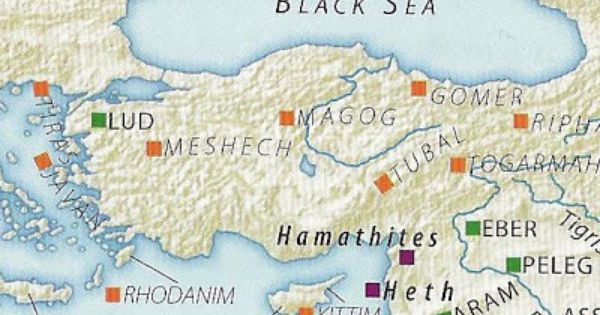
By Joel Richardson – “The primary purpose of this article is to catalogue a partial list of historians, Bible scholars, commentators and teachers, both Jewish, Christian, and secular, whose interpretations of ‘Gog of Magog’ of Ezekiel 38-39 support the view that Gog is one and the same with the Antichrist / Beast of the New Testament. We will also identify the scholars who identify Gog and his hordes as coming from the region of modern day Turkey or just over the border in Syria, as opposed to in modern day Russia. In this survey, it will become apparent that the popular modern view of Gog as an eschatological character distinct from the Antichrist who comes from Russia is largely a modern novelty, representing a significant minority position within Church history.
Pliny the Elder was a first-century Roman military commander, author, naturalist, and philosopher. He spoke of a city called, ‘Bambyce, otherwise called Hierapolis; but of the Syrians, Magog [or Mabog].’ Ancient Heirapolis sat on the border of modern-day Turkey and Syria; thus, according to Pliny, so did Magog, the home of Gog.
Hippolytus of Rome, (170—235), an early Christian theologian, in his Chronicon, written in the early third century, rejected the now well-known claim by Josephus, identifying Magog with the Scythians north of the Black Sea. Instead, Hippolytus connected Magog with the Galatians in Asia Minor or modern-day Turkey.
Moses Ben Maimonides, (aka., Rambam) (1135—1204), the revered Jewish sage, in Hichot Terumot, along with Hippolytus and Pliny, identified Magog as being on the border of Syria and modern day Turkey.
Rabbi David Kimchi, (aka., Radak) (1160–1235), another famous medieval Jewish rabbi, commenting on Zechariah 14, says this portion of Scripture—which virtually all Christians affirm refers to the Antichrist—is a reference to the war of Gog of Magog.
Nicholas of Lyra (1270—1349), a Franciscan scholar of Hebrew, and renowned Biblical exegete from the University of Paris. Lyra’s works were greatly influential among the reformers. Lyra believed that Gog was another title of the Antichrist. Lyra argued that Gog means ‘covered’ which is a reference to the Antichrist as Satan covering himself with the shape of a man. According to 17th century exegete John Mayer, Lyra’s view of Gog as the Antichrist ‘is most generally received’. Lyra also affirmed that the religion of the ‘Turks’, a term used to refer to Muslims in general, was the religion of the Antichrist.
Martin Luther (1483—1546), the German monk, priest and iconic reformer, understood Gog to be a reference to the Turks, whom God had sent as a scourge to chastise Christians.
Franciscus Junius (1545—1602), a French Huguenot scholar and theologian. Junius saw Gog as
Read more…Ezekiel 38 & 39: The Need For A Consistent Hermeneutic
By Joel Richardson – “The purpose of this paper is to discuss a common exegetical error made in the interpretation and identification of the peoples and places mentioned within various Biblical prophecies. While this error is common in the interpretation of many Biblical prophecies, it is most pronounced in the popular exegesis of Ezekiel 38 & 39. The problem, as we will discuss below, is the use an improper or inconsistent method of interpretation. Let us begin by identifying the two methods of interpretation most commonly employed by conservative evangelical, futurist exegetes.
The Historical-Grammatical Method
The first method of interpretation is the historical-grammatical approach. This approach simply seeks to understand the original context of any given passage according to how the earthly author of that passage and his immediate audience—the original hearers of the prophecy—would have understood it. This is done by carefully considering the historical context, as well as the grammar and structure of the passage in its original language. This method of interpretation is thoroughly context-driven. This method is the recognized hermeneutic used today by most trained, conservative, evangelical exegetes. In the case of Biblical prophecy, what this means is that if, for instance, Ezekiel mentions Gomer, the effort is made to identify how Ezekiel and his audience would have understood this term in their day (the early 6th Century BC). Once this is determined, the futurist exegete determines which region, modern nation, or nations correlate to the Gomer of that time. If Gomer is determined to have been understood as relating to Asia Minor of Ezekiel’s day, then it is understood that the modern nation of Turkey, which now occupies Asia Minor is the ultimate last-days fulfillment of Ezekiel’s reference to Gomer.
In the case of identifying the last days relevance of various peoples and names within ancient Biblical prophecies, this method could be called ‘the geographic-correlation-method.’ Gleason L. Archer, scholar of Old Testament and semitic languages, and one of the fathers of the doctrine of Biblical inerrancy, in The Expositor’s Bible Commentary on Daniel, champions the historic-geographic-correlation method:
Likewise, the ancient names of countries or states occupying the region where the final conflict will be carried on are used in the prediction, though most of those political units will no longer bear these names in the last days. Thus Edom, Moab, Ammon, Assyria, and Babylon which are mentioned in eschatological passages, have long since ceased to exist as political entities, their places having been taken by later peoples occupying their territories.
Dr. Thomas Ice of the Pre-Tribulation Research Center also Read more…
Rick Wiles Interviews Walid Shoebat And Joel Richardson On ‘TruNews’

Both Walid Shoebat and Joel Richardson have been interviewed recently by TruNews to share Biblical eschatology from an Islamic-paradigm perspective.
Click here to listen to the 10/24/2012 interview with Walid Shoebat.
Click here to listen to the 10/30/2012 interview with Joel Richardson.
Kerby Anderson Interviews Joel Richardson For His ‘Point Of View’

Joel Richardson: “I had the opportunity today to visit with Kerby Anderson of the Point of View Radio Talk Show. Click here to listen to the full interview.”
David Wood On The Corruption Of Islam And The Inferiority Of Its Prophet
David Wood’s latest video below ties into the logical dilemma that was pointed out in the “A Few Simple Questions For Muslim Visitors” page above. Archaeological discoveries have repeatedly confirmed what Christians have already believed, that Biblical manuscripts and fragments dated even hundreds of years before Mohammed are virtually identical to the canonized Biblical texts we have today. The same cannot be said for the Qur’an, however, where even Muslim archaeologists acknowledge that many aberrations exist in old Qur’anic texts, a forthright admission that runs counter to the Islamic claim that the Qur’an is unchanged and eternal. Yet when Muhammad recited the Qur’an, he clearly stated that he did not believe the Bible was corrupt at that time and called upon Christians to therefore adhere to the Scriptures that they possessed. But this begs the following question that all intellectually honest Muslims must ask themselves: Since the Scriptures that Christians have today are the same Scriptures that Christians had even well before the time of Mohammed, when could the Bible have possibly been corrupted, who corrupted it, and how was it corrupted? …
Description: “According to the Qur’an, Christians must judge by the Gospel (Qur’an 5:47). But the Gospel says that Jesus owns everything (Matthew 11:27; John 16:15). Since Jesus owns everything, he also owns Muhammad. If Muslims don’t want us to conclude that Jesus owns Muhammad, they have to tell us not to judge by the Gospel. But why would Muslims contradict Allah?” Source – Answering Muslims.
Gog Of Magog: Does ‘Rosh’ Mean ‘Russia’ or ‘Chief’? Understanding The Hebrew Text Gives Us The Answer …
Ezekiel 38:2, “Son of man, set thy face against Gog, the land of Magog, the chief prince of Meshech and Tubal, and prophesy against him …”
Recommended: What Is The War Of Gog-Magog?
Recommended: Gog As Antichrist – A Historical Survey
By Joel Richardson – “For centuries, controversy and debate has swirled amongst Biblical scholars concerning how to properly translate and interpret the Hebrew word rosh as found in the Oracle of Gog of Magog, Ezekiel 38 & 39. Some scholars have argued that rosh should be translated as an adjective—meaning chief—and others have argued that it should be translated as a proper noun, referring to a place. The effect of this controversy on various translations is quite apparent when we compare a handful of today’s most popular translations. As we see below, The King James Version, The New International Version and The English Standard Versions all translate rosh as an adjective:
“Son of man, set thy face against Gog, the land of Magog, the chief prince of Meshech and Tubal…” —KJV
“Son of man, set your face against Gog, of the land of Magog, the chief prince of Meshech and Tubal…” —NIV
“Son of man, set your face toward Gog, of the land of Magog, the chief prince of Meshech and Tubal…” —ESV
On the other hand, the New American Standard Bible and the New King James Version both translate rosh as a proper noun:
“Son of man, set your face toward Gog of the land of Magog, the prince of Rosh, Meshech and Tubal…” —NASB
“Son of man, set your face against Gog, of the land of Magog, the prince of Rosh, Meshech, and Tubal…” —NKJV
Adhering to the idea that rosh should be translated as a proper noun referring to a place, many prophecy teachers have argued that Ezekiel was speaking here of Russia. In support of this view, virtually all popular prophecy teachers have looked to two renowned scholars of Hebrew, Wilhelm Gesenius and C.F. Keil.
The problem with relying entirely on Gesenius and Keil is that scholars of ancient Biblical Hebrew, just like any other field of study, are constantly growing and discovering gaining new insights and understanding in their fields. While Gesenius (1786-1842) and Keil (1807-1888) were great Hebrew scholars of their day, advances in the field of Biblical Hebrew since the 19th century have shed much new light on this subject and causing the majority of Hebrew scholars today to reject the translation of rosh as a proper noun. Beyond this, if one reads Gesenius’ efforts to link Rosh to Russia, he relies not primarily on
Read more…A Critique Of The Preterist Interpretation Of Daniel 2 & 7

By Joel Richardson – “In the second chapter of the Book of the Prophet Daniel, we are introduced to King Nebuchadnezzar’s dream of a massive metallic statue:
“You saw, O king, and behold, a great image. This image, mighty and of exceeding brightness, stood before you, and its appearance was frightening. The head of this image was of fine gold, its chest and arms of silver, its middle and thighs of bronze, its legs of iron, its feet partly of iron and partly of clay.” —Daniel 2:31-33
The statue, we are then told, represents a series of historical kingdoms or empires. Daniel informs the king that the first component of the statue, that of gold, represents the historical Babylonian Empire, which Nebuchadnezzar ruled over. Scholars and commentators are in general agreement that the next three empires represented by the respective metals of silver, bronze, and Iron are the Medo-Persian, Greek and Roman empires. Though this is the majority position, in my book, Mideast Beast, I demonstrate that the descriptions of the kingdom of Iron laid out within the text align perfectly with the historical Islamic Caliphate, and not with the Roman Empire. Though this view will likely be met with skepticism by those who have not yet considered the exegetical and historical arguments in support of this view, what is unarguable is that during the final days of the fourth kingdom of iron, a stone suddenly appears and strikes the feet of the statue, causing the entire statue to shatter:
As you looked, a stone was cut out by no human hand, and it struck the image on its feet of iron and clay, and broke them in pieces. —Daniel 2:34
Commentators of all persuasions identify the stone as representing the Messianic Kingdom of God here on the earth. As the stone shatters the statue, the fragments are seen to blow away as dry chaff in the Autumn winds. The stone however, is seen to grow and spread, until
Read more…Pastor Carl Gallups: We May Be Much Closer To The Revealing Of Antichrist Than Many People Have Previously Thought
On the heels of the article I posted last week regarding the Iranian President’s speech at the United Nations General Assembly comes the video below today by Pastor Carl Gallups. More and more are connecting the dots …
Pastor Carl Gallups: “By calling Mahdi the Ultimate Savior, of course, the Divinity, Deity and Saving Grace of Jesus Christ is denied and that title is transferred to the Islamic Mahdi. In other words, the Islamic Mahdi is the Antichrist, the one who sets himself up as the Christ and blasphemes all that is holy. One bit of truth that Ahmadinejad may have spoken: the world may very well be on the edge of the appearance of the Biblical Antichrist. We may be much closer to that Biblical fulfilment of prophecy than many people have previously thought.”
 Israel National News
- Live updates stopping in honor of Seventh Day of Passover in North America
- Chag Sameach!
- Trump agrees to two-week ceasefire in Iran
- UN probe: Israeli tank killed one Lebanon peacekeeper, Hezbollah IED killed two
- NYC teen arrested for threatening to murder Jewish children in Brooklyn
- Middle East official: 'Good news coming' in US-Iran talks
- Iran-backed militia in Iraq releases kidnapped US journalist
- Pakistan PM urges Trump to extend Iran deadline by two weeks
- IDF says there may be an increase in fire toward Israel in the coming hours
- Report: Iran calls off US talks hours before Trump deadline
FrontPage Magazine
- A Tale of Two Rescues
- Why California Budgets Rise Even as Populations Drop
- Jamie Glazov on The Josh Hammer Show: United in Hate
- France: Muslim is ‘Seized by a Momentary Fit of Madness’
- Soleimani’s Niece and Grand-Niece to Be Deported
- India: Muslim Tries Twice to Open the Emergency Door Mid-Flight
- A Soldier of Allah in the U.S. Army
- War on the Cartel Front Continues
- PBS Smears All Republicans as ‘White With Fear’
- The Tucker Carlson We Thought We Knew Never Existed
Gatestone Institute
- Germany's 'National Interest' and Fragile Support for Israel
- The 'New Syria': Same Old
- Same Regime, Different Face: The West's Recurring Mistake in Iran
- A War That Went Awry
- Trump Is Preventing the Nightmare of Nuclear-Armed Iran
- With Friends Like These: America and Its Fake Allies
- Islamic State Weaponising Social Media for Radicalisation: Exploding Threat in the Indo-Pacific
- Egypt's Dangerous Muslim Brotherhood Organization
- A Free World Opportunity
- Syria: Christians, Other Minorities Under Genocidal Attack During Leadership of Ahmed Al-Sharaa
Middle East – The Jerusalem Post
- Lebanon to be included in Iran ceasefire deal, Pakistani PM says
- Iran violates ceasefire agreement hours after Trump announces truce
- Trump announces 'double-sided ceasefire' between US, Iran following Pakistani proposal
- Preliminary UN probe blames Israel and likely Hezbollah for peacekeeper deaths
- Kuwait, Bahrain push preemptive measures, close bridges as Iran threatens transport infrastructure
- Iraq's Kataib Hezbollah to release abducted American journalist Shelly Kittleson
- Two IDF officers, civilian face indictment in alleged Gaza aid-truck smuggling scheme
- Houthis hold Gulf states from joining US attacks with Bab el-Mandeb Strait trump card - interview
- Iran attacked Saudi Arabia's Jubail petrochemical complex, IRGC says
- US strikes Kharg Island military targets, American official confirms to 'Post'
Earthquakes & Volcanic Activity
- Volcanoes Today, 8 Apr 2026: Semeru volcano, Reventador, Mayon, Sabancaya
- Sabancaya Volcano Volcanic Ash Advisory: SPORADIC PUFF to 22000 ft (6700 m)
- Reventador Volcano Volcanic Ash Advisory: CONT VA EMS to 14000 ft (4300 m)
- Mayon Volcano Volcanic Ash Advisory: ERUPTION AT 20260408/0115Z FL080 EXTD SW REPORTED OBS VA DTG: 08/0120Z
- Semeru Volcano Volcanic Ash Advisory: VA TO FL150 REPORTED FROM GROUND AT 08/0004Z to 15000 ft (4600 m)
- World Earthquake Report for Tuesday, 7 April 2026
- Volcanic activity worldwide 7 Apr 2026: Fuego volcano, Semeru, Shiveluch, Ibu, Dukono, Dempo, Revent...
- Dukono Volcano Volcanic Ash Advisory: VA TO FL100 OBS AT 07/1940Z, EXT E OBS VA DTG: 07/1940Z to 10000 ft (3000 m)
- Mayon Volcano Volcanic Ash Advisory: ERUPTION AT 20260407/1821Z VA CLD UNKNOWN REPORTED OBS VA DTG: 07/1820Z
- World Earthquake Report for April 2026
Islamic Terrorist Network In America

Click For Larger Version

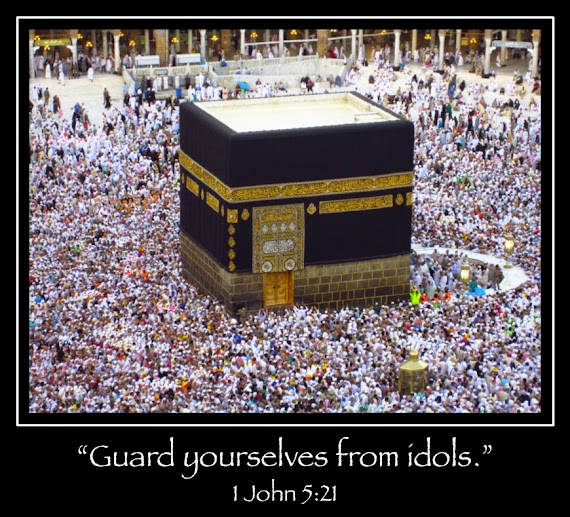
Click To Learn What Makes This An Idol

 MidnightWatcher - Prophecy in Motion
Recent Comments