Hamas & The End Times (Is Jesus About to Return?)
I have to say that Pastor Mark Driscoll of RealFaith ministries pretty much nails it here …
Recommended: Canada: Muslim Cops In Toronto Cheer On Hamas
Recommended: Canada: Protesters Support Hamas, ‘Everything They Do Is Justified’
Recommended: University Of North Carolina At Chapel Hill: ‘All Of Us Are Hamas’
Recommended: Australia: Hamas Supporters In Sydney Shout ‘Gas The Jews’
Flashback: Canadian Mosque Teaches Little Children How To Behead
Flashback: Hamas: Killing Jews Is Worship That Draws Us Close To Allah
Flashback: ‘We Move Closer To Allah Through Blood, Body Parts, And Martyrs’
Flashback: Muslim Group: ‘Christianity Should Be Destroyed And Wiped From The Face Of The Earth’
Genesis 6:13, “And God said to Noah, ‘The end of all flesh has come before Me, for the earth is filled with [חָמָס – ‘ḥāmās’] …”
Matthew 24:37, “But as the days of Noah were, so also will the coming of the Son of Man be …”
Zechariah 5:3a, 8a, “… This is the curse [אָלָה – ‘alah’] that goes out over the face of the whole earth … This is Wickedness …”
Mark Driscoll – “This sermon is more prophetic than anything I’ve ever preached! Stay tuned for a mind-melt on Israel, Hamas, and the battle that’s being waged in the Middle East.”
The opinions expressed do not necessarily reflect those of MidnightWatcher's Blogspot. Although differences of opinion are welcomed, please refrain from personal attacks and inappropriate language. This blog reserves the right to edit or delete any comments that fail to do so.
 Israel National News
- Gmar Chatima Tova!
- UEFA rejects Ireland request to keep Israel out of future draws
- Iran vows to keep Strait of Hormuz closed until US meets its conditions
- Report: Trump administration preparing sweeping sanctions against ICC
- North Korea launches projectile as Pyongyang reaffirms nuclear status
- Mamdani to meet Trump at Gracie Mansion
- UK Chief Rabbi issues special Yom Kippur prayer for Manchester synagogue victims
- Germany: AfD scores another victory as Merz suffers historic defeat
- Pezeshkian: We don’t want war but will not yield to pressure
- Ben Gvir demands: Execute the terrorist
American Thinker
- A Discussion About the True Nature of Woman
- The Long Con: How America Was Trapped by the ‘Free Trial’ Grift
- America 250 Proves That Patriotism Is Vanishing
- Election 2028: Perhaps Gavin Newsom Has a Chance?
- Will We See Western Capitals Fall?
- Do COVID And AI Rhyme?
- Tough Love For Blue Cities?
- Greenland Bases Forever
- I Am Woman, Hear Me Roar—But Blame It On The Boogeyman
- The Case Against Surrender
Gatestone Institute
- How Hamas Controls the Story Coming Out of Gaza
- The Muslim Brotherhood: Follow the Money
- The Hamas Guarantor Problem: Turkey and Qatar
- Iraq Gets a 'Yes, But' from Europe
- President Trump and Prime Minister Netanyahu: Trying to Prevent the Takeover of Western Civilization
- Three Things that Concern Israelis – No, It Is Not Iran, Hamas and Hezbollah
- Why Allowing Hamas to Participate in the Upcoming Elections Would Be a Catastrophic Mistake
- Stealth Jihad in the West: A Conversation with Robert Spencer
- Protecting America's Future: President Trump's AI Strategy
- China's Proxy Conflicts: Is World War III Upon Us?
Middle East – The Jerusalem Post
- Russia or the US? Post-Assad Syria tries to keep both powers in play - analysis
- Six French Islamic State suspects could face death penalty as Iraqi court opens trial
- Iran claims US preparing to resume attacks, threatens bases, supporting regional countries
- Israeli-Saudi security coordination remains 'limited and pragmatic,' Saudi analyst cautions
- UAE official denies Abu Dhabi's MBZ warned Netanyahu of large-scale attack ahead of Oct. 7 - report
- Pahlavi: Iran regime continues to erode from within as defections grow
- Thousands of IRGC, Basij volunteers march through Tehran in show of defiance against US, Israel
- Palestinian officials accuse US of ignoring reforms after Abbas barred from UN visit
- Qatar denies funding Hamas after Israeli report claims Netanyahu ignored warnings over Gaza aid
- Turkey says it could help meet Saudi military needs under defense pact
Earthquakes & Volcanic Activity
- World Earthquake Report for Monday, 21 September 2026
- Santiaguito Volcanic Ash Advisory: ash plume to 14,000 ft (4,300 m) as of Sep 21, 14:10 UTC
- Volcanoes Today, 21 Sep 2026: Santiaguito volcano, Fuego, Popocatépetl, Semeru, Ibu, Reventador, Mayon, Sangay
- Chikurachki Volcanic Ash Advisory: ash plume to 9,000 ft (2,700 m) as of Sep 21, 14:00 UTC
- Mayon Volcanic Ash Advisory: ash plume height unknown as of 21 Sep 2026, 11:40 UTC
- Reventador Volcanic Ash Advisory: ash plume to 14,000 ft (4,300 m) as of Sep 21, 10:40 UTC
- Sakurajima Volcanic Ash Advisory: no ash plume observed as of 10:50 UTC
- Lewotolo Volcanic Ash Advisory: ash plume to 7,000 ft (2,100 m) as of Sep 21, 10:30 UTC
- Ibu Volcanic Ash Advisory
- Semeru Volcanic Ash Advisory: ash plume to 15,000 ft (4,600 m) as of Sep 21, 09:20 UTC
Islamic Terrorist Network In America

Click For Larger Version
Recent Comments
 | Anonymous on Memorandum Of Misunderstanding… |
 | ICA on Messiah 2030 ~ The Prophetic M… |
 | FX Merco on Messiah 2030 ~ The Prophetic M… |
| Anonymous on Messiah 2030 ~ The Prophetic M… |
| Anonymous on What Is The War Of Gog-Ma… |
| ICA on Babylonian Bubbly NYC: Islamis… |
 | Mike Merkel on Babylonian Bubbly NYC: Islamis… |
| Anonymous on The Lion Roars: Israel And Ame… |
 | S simba on Former Israeli PM: Turkey Is T… |
| ICA on Will Iran Fall? Islamic Republ… |
| ICA on Will Iran Fall? Islamic Republ… |
| Anonymous on Will Iran Fall? Islamic Republ… |
| Anonymous on Will Iran Fall? Islamic Republ… |
| ICA on Will Iran Fall? Islamic Republ… |
| ICA on Will Iran Fall? Islamic Republ… |

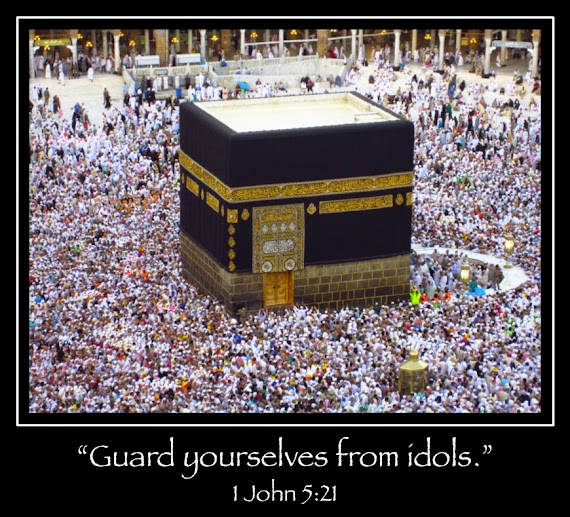
Click To Learn What Makes This An Idol

 MidnightWatcher - Prophecy in Motion
Utter and complete silliness. Reading modern day events into a biblical context that is long gone and that doesn’t involve people today is the epitome of eisegesis.
LikeLike
Please explain. I look forward to your reply.
LikeLike
The context and audience relevance of end-of-the-age / judgment / end times scriptures is an Israelite context with a 1st century Israelite audience relevance. Reading present day Israel’s new war against Hamas as if it is some sign of the end before Jesus returns is just more futurist fantasizing. If you look back in recent history, you’ll see futurists always changing the narrative as new world events happen. In the 70’s it was the Late Great Planet Earth myth. Then in the late 80’s, it was the computer chip being the antichrist. Then it was the Y2K bug. Then it was a Greek/European statesman seeking control of the entire world. Now it is Islam. This type of futurist fantasizing conveniently keeps Jesus’ return in the future. In reality, Jesus already returned.
The context of all of Matthew 24 is a 1st century Israelite context, as is Luke 13 and Mark 21. And the Revelation is the book with the most old testament references, around 500… that pertain to ancient Israel, not pagan nations. When the Revelation says…
Rev 1:7 Behold, he is coming with the clouds, and every eye will see him, even those who pierced him, and all tribes of the earth will wail on account of him. Even so. Amen.
…clouds in the Old Testament (where John got his apocalyptic imagery from) were symbolic of the presence and judgment of God. Every eye of those who pierced Him would see His return (who pierced Him and when?). All “tribes” of the earth were tribes of those who wailed in mourning, Jews in judgment as their nation was destroyed in 70AD. The “earth” was not the entire globe but the GK “ge”, the land of Israel.
Jesus already returned in judgement in the first century. It was not a bodily return, but a return interpreted through events perceived to be a judgement on unrepentant Jews and the end of the old covenant religious system, temple and people, a return consistent with how Israel’s god had always appeared on earth, unseen.
LikeLike
Addendum: There is no ‘church’ and no genuine ‘Christians’ today. Christians were people who had been dead under the law and its curse, had transitioned out of the old covenant and were restored to eternal life (a restored covenant relationship with their god) via Christ’s new covenant (Rom 11:26-27, Heb 8:8). They were descendants of the twelve tribes of Israel who were being gathered into Christ before the end of the age of the old covenant religious system and temple community. That’s not anyone today.
Some were referred to as gentiles because they had stopped being Torah observant and had stopped practicing circumcision. Whether circumcised Jews or uncircumcised Israelites (gentiles), they were told to remain in the same condition they were called (1 Corinthians 7:18-20) because the time of the end of the age of the old covenant religious system and temple community was near. That in a nutshell is what the entire New Testament is about.
After the need for the gospel ended in AD70, Greek so-called ‘church fathers’ hijacked bits and pieces of ancient Israel’s redemptive narrative and adapted it to their Greek culture. Theirs was just one of many competing faux versions of what would later become an institutionalized, non-Israelite faux Christian cult that excluded Jews from its version of salvation. The ‘church fathers’ were the preeminent fake Christians and racists. Today’s faux Christianity is the result of their error.
People today who believe they’re Christians are sincere but highly indoctrinated to believe they are someone they are not, that they’re heading for a judgement (that is purely imaginary) and need a salvation and redemption that according to the story, only old covenant Israelites needed.
Once I discovered for myself that today’s Christianity is powerless, Godless, a complete fraud and that people today aren’t part of the bible story, aren’t sinners on the way to a judgement and don’t need Jesus and salvation, I got out and have no regrets.
LikeLike
I’m going to reply to the gist of your argument because it is apparent that you’ve refused to recognize metaphors / figures of speech and therefore completely miss the intent of the text in a profound way.
Tell me, when Jesus said in Matthew 23 that “this generation” was responsible for “all the righteous blood shed upon the earth, from the blood of righteous Abel unto the blood of Zacharias” (23:35) was Jesus telling the truth, or was He lying given the fact that “this generation” didn’t even exist at those times? Jesus is obviously referring metaphorically to a spiritually blinded and perverse condition that has perpetually existed since the fall in the garden and likened it to a “generation” in a negative metaphorical sense. Similarly, Revelation 1:7 is intended to be understood not in a wooden literal sense but rather with the understanding that every single person on Earth will see Him — not only those who believe in Him — but those who love and believe in Him as well as the spiritually blinded “generation” that crucified Him (cf. Zechariah 12:10, “They will look on Me whom they pierced” and Matthew 24:34, “This generation shall not pass, till all these things be fulfilled.”)
Romans 11:25, “For I do not desire, brethren, that you should be ignorant of this mystery, lest you should be wise in your own opinion, that blindness in part has happened to Israel until the fullness of the Gentiles has come in.”
That being said, even if it were to mean specifically those who literally nailed Him to the Cross would be no issue for an Almighty God who can grant every single soul — in Him and outside of Him, alive or dead — the witness of His Coming in power and great glory. Then they who nailed Him to the Cross will indeed mourn in anguish for even in their first death they will now know that their ultimate judgment is at hand (cf. Revelation 20:3-4).
LikeLike
The term “this generation” was not referring to a time of people but to a type of people. Genea can also refer to a particular people or race, and in this case, Jews. In reality there was no literal Adam, Eve, Cain etc They are part of a marriage covenant metaphor symbolizing ancient Israel decline due to disobedience to the law.
The creation account in Genesis is a recapitulation (retelling) of ancient Israel’s history of decline, beginning with their entry and subsequent expulsion from the “promised land” and ending with them in Babylonian captivity, where Genesis was penned. The author(s) of the creation narrative borrowed concepts from creation myths that predated Genesis, and terms from other Old Testament texts penned hundreds of years earlier that pertained to Israel. For example, the oldest occurrence of the term “heaven and earth” is found in Isaiah, which was penned a couple hundred years before Genesis. There and in many other places, the term “heaven and earth” referred to the old covenant religious system and temple community.
The creation of “heaven and earth” (Gen 1:1) was the creation of a primitive covenant community. The garden was another way of describing the “promised land”. The land God prepared in Gen 1:2-2:4 was the same land that was prepared in Gen 2:5-14, land that was promised to Abraham’s descendants. Genesis 1:1-2:4 serve as the introduction to the rest of the Genesis narrative involving covenant people, not all humanity. For example, we see in Genesis 2:4 that the heavens and earth had generations.
Gen 2:4 These are the generations of the heavens and the earth when they were created, in the day that the LORD God made the earth and the heavens.
The Hebrew word for generations is תּוֹלְדָה and means physical descent, familial generations. Does the earth and sky have physical descendants? Of course not. The heavens and earth in Genesis can only be referring to people.
When the Genesis creation account informs us that the earth was without form and void (Gen 1:2), we can look elsewhere to discover exactly what earth it’s talking about.
Jer 4:23 I looked on the earth, and behold, it was without form and void; and to the heavens, and they had no light.
Jeremiah 4:23 is part of a description of Judah’s desolation. Also…
Jer 4:27 For thus says the LORD, “The whole land shall be a desolation; yet I will not make a full end.
The “earth” and “heavens” was a people group, not the dirt we stand on. Jeremiah was penned before Genesis, which proves that terms like “heaven and earth” and “earth” were used to describe the old covenant religious system and temple community.
We also see amazing parallels in the scriptures that show Adam and the fall narrative is actually describing Israel. These parallels are too many and too exact to be mere coincidences.
Israeli Prof. Tvi Erlich, in his “The Story Of The Garden Of Eden in Comparison to the Position of Mt Sinai and The Tabernacle”, makes the following astute observations that…
Adam was placed in a location once desolate, dark and chaotic but later, to a lush garden.
Israel was moved from a desolate desert to the promised land. (Gen 2:15, Deut 3:20, 30:3-4, Josh 1:13,15, Jer 27:11; Ezek 36:34, 37:14,21; Isaiah 14:1)
Adam commits spiritual adultery by departing from Yahweh’s commandment and believing Eve.
Israel commits spiritual adultery with pagan nations, foreign gods, and animals.
Adam’s sin involved a relationship with a woman.
Israel’s sins often involved relationships with seductive women (Solomon’s wives- Kings 11:4-13, Jezebel -16:31-33, Delilah- Judges 16:4-14, the whore of Babylon- Rev 17:1-18).
God commanded Adam to conquer / subdue the land (Gen 1:28)
God commanded Israel to conquer / subdue the land of Canaan (Num 32:22, 29, Josh 18:1).*
Adam is banished from the land and his relationship with Yahweh suffers.
Israel returns to the land and her relationship is restored with Yahweh through Christ.
Adam had a covenant relationship with God (Gen 2-3)
Israel had a covenant relationship with God (Exod 19-34)
Similarities between Adam and Israel at Mt Sinai
Adam marries Eve, a marriage covenant.
Israel makes a marriage covenant at Mt Sinai.
Adam – God gives commands directly to Adam, who in turn communicates those instructions to his wife.
Israel – God gives direct instructions to Moses at Mt Sinai and he communicates those instructions to Israel (who was also the bride).
Adam – Commandments of do and do not do are transgressed (Gen 2:16-17).
Israel- Commandments of do and do-not-do are transgressed (Exod 20:3).
Adam – Adam was unable to hear God’s voice after sinning, was distanced from God and he decided to hide (Gen 3:8, 10).
Israel – Israel was unable to hear God’s voice, was distanced from the Shekinah and requested a mediator (Moses) to hear on their behalf. (Exod 20:14-15, Deut 5:19-20).
Adam – Adam lost connection with God after a woman led him to sin (Gen 3:17,23)
Israel – When Israelites wanted to draw near to God, they had to separate themselves from women first. (Exod 19:15).
Adam – Adam aspired to reach an imaginary good, but when he transgressed the commandment, God guarded the way of life (Gen 3:24).
Israel – Keeping the commandments led Israelites on the way to true life (Deut 20:14-15).
Adam – Adam goes away from the shekinah and the garden is guarded by cherubim and a flaming sword (Gen 3:24).
Israel – Israelites are able to draw near to the shekinah and the glory of God dwells on Mt Sinai in view of Israel (Exod 24:16-17).
Adam – Adam returned to the dust of the ground (Gen 3:17) which constituted part of his atonement for sin.
Israel – The ground from which Adam was fashioned atones for Israel’s sins (Exod 20:24).
Adam – Adam was given the command to subdue and manage the land (Gen 1:26,28)
Israel – Israel was given the command to subdue and manage the land of Canaan (Ex 23)
Source: Israeli Prof. Tvi Erlich,
The Story Of The Garden Of Eden in Comparison to the Position of Mt Sinai and The Tabernacle, Alon Shuvat for Graduates of the Har Eztion Yeshiva 11 (1988) pgg 20-34
There are also parallels between Adam’s sin and the incident with the golden calf.
Adam – Adam’s transgression of the do-not-do commandment was done by eating.
Israel – Transgression of the first do-not-do commandment involves eating (Exod 32:6)
Adam – God inquired about Adam’s sin (Gen 3:13)
Israel – Moses inquired about Israel’s sin (Exod 32:21).
Adam – Adam is condemned to death for his sin and a sword guards the tree of life from a sinful man (Gen 3:24).
Israel – The Israelites rectify their sin by putting sinners to death with a sword (Exod 32:27).
Source: Israeli Prof. Tvi Erlich,
The Story Of The Garden Of Eden in Comparison to the Position of Mt Sinai and The Tabernacle, Alon Shuvat for Graduates of the Har Eztion Yeshiva 11 (1988) pgg 20-34
And finally, in the beginning of Israel’s story, the way of life is guarded by a flaming sword. At the end of the story, Christ is pictured returning in flaming fire (2 Thess 1:8) with a sword in his mouth (Rev 2:16, 19:15) in judgement on the twelve tribes of Israel (Luke 22:30). Literally from start to finish, the bible is about Israel.
The implications should be evident. Adam wasn’t a real person created from dirt in a garden. Eve was not a real first woman created from one of Adam’s ribs. There was no literal talking snake. Nobody today is guilty of any sin of Adam. The creation was not the universe and planet but of a covenant community of Israelites.
————————————————————————
We can see Israel in the story of Abraham.
John Sailhamer, in his book Genesis Unbound, on pgg 106-108, illustrates a remarkable similarity between Israel and the story of Abraham. For example…
Gen 16:2a “so she (Sarai) said to…” compared to
Gen 3:2 “the woman said to…”
Gen 16:2b “Abram listened to Sarai” compared to
Gen 3:17 “you listened to your wife”
Gen 16:3a “Sarai ….took” compared to
Gen 3:6a “she took some”
Gen 16:3a “and she gave to her husband [Abram]” compared to
Gen 3:6b “she also gave some to her husband”
The story of Abraham is the beginning of a restored, garden-like state of fellowship with their god. Abraham is called out of Babylon (Ur), and so begins a recapitulated narrative that involves going back to a promised land and eventually, a spiritual country with a New Jerusalem.
As described in Seth Postell’s book “Adam as Israel”, pg 91, both Adam and Abram experience a deep sleep (Gen 2:21, 15:12). Both the garden of Eden and the land covenant with Abraham provide geographic information about the boundaries of the land. And in both narratives involving a deep sleep, it is followed by a moral failure. Adam sinned. Abraham sinned.
Adam Representing Israel In The Sinai Covenant
The creation narrative is also prototypical of the Sinai covenant. (Seth Postell, Adam Ad Israel, pg. 115-16)
Postell shows that the pattern of creation, fall and restoration in Genesis 1-3 “anticipates the preparation of the tabernacle” in Exod 25-31 and the fall and restoration of Israel after the golden calf incident (Exod 32-34). Second, the structure of the curses and their effects on the serpent (animal; Gen 3:14-15), the woman (Gen 3:-16) and the man (Gen 3:17-19) anticipate the structure of and rationale for Purity Code in Leviticus 11-15. Third, the language used to describe the appearance (theophany) of God in the garden for Adam and Eve’s “trial” and their fearful retreat suggest this passage was composed in light of God’s appearance to Israel on Mt. Sinai and Israel’s fearful retreat. And finally, the description of Eve’s temptation, Adam and Eve’s fearful retreat and the provision of covering for their nakedness also anticipate the structure of the Sinai pericope. Adam and Eve’s violation of the commandment is depicted as an infraction against the tenth commandment (compare Gen 3:6 and Exod 20:17).
Israel is commanded to not covet.
Adam and Eve were commanded to not covet.
Israel violated the law.
Adam violated the law.
Israel distances itself from the promised land.
Adam and Eve distance themselves from the garden.
God appears to Israel at Mt Sinai. The people retreat and are commanded to cover their nakedness (Exod 20:26)
God appears to Adam and Eve in the garden, they retreat and God covers them.
The commands given to Adam as prohibitions are characteristic of the Sinai covenant.
And lastly, the motif of “eating” and “food” within the Sinai covenant is comparable to the commandment given to Adam and Eve to not eat and is seen throughout Genesis 1-3 as well as the dietary restrictions given to Israel. When Eve says…
(Gen 3:3 ESV) but God said, ‘You shall not eat of the fruit of the tree that is in the midst of the garden, neither shall you touch it, lest you die.’”
We see this later in the New Testament as part of Israel’s legal requirements that those in Christ were free from….
(Col 2:20 ESV) If with Christ you died to the elements of the [covenant] world, why, as if you were still alive in the world, do you submit to regulations—
(Col 2:21 ESV) Do not handle, Do not taste, Do not touch”
Throughout Israel’s redemptive narrative there is a preoccupation with dietary restrictions and what a person can touch.
In the list of animals created, the serpent is last to be mentioned (Gen 3:14). In Leviticus 11:42, the serpent is also listed last. In fact, the language used in Leviticus 11 to describe animals is similar to that used in Genesis.
There was the command of what animals Israelites were allowed to eat.
(Lev 11:2 ESV) Speak to the people of Israel, saying, These are the living things that you may eat among all the animals that are on the earth.
And there was the command to Adam and Eve about what they could and could not eat.
(Gen 2:16 ESV) And the LORD God commanded the man, saying, “You may surely eat of every tree of the garden,
(Gen 2:17 ESV) but of the tree of the knowledge of good and evil you shall not eat, for in the day that you eat of it you shall surely die.”
And Eve’s addition that included touching….
(Gen 3:3 ESV) but God said, ‘You shall not eat of the fruit of the tree that is in the midst of the garden, neither shall you touch it, lest you die.’”
There was the prohibition on touching given to Israelites.
(Lev 11:8 ESV) You shall not eat any of their flesh, and you shall not touch their carcasses; they are unclean to you.
And there was the prohibition on touching according to Eve.
(Gen 3:3 ESV) …..neither shall you touch it, lest you die.’”
Israel’s remaining in the land is contingent on them being obedient to the terms of the Sinai covenant (Exod 20:12; Deut 30:15-20), failure of which is death.
Adam’s remaining in the land is contingent on him obeying God’s commandments, failure of which results in banishment from the land (Gen 3:24), away from God’s presence.
Adam’s disobedience results in curses (Gen 3:14-19), exile (Gen 3:24) and death (Gen 2:17).
Israel’s disobedience results in curses (Deut 28:15-68), exile (Deut 28:36, 41, 64, 68) and death (Deut 28:45, 48, 53-57, 63). Source for this portion (Seth Postell, Adam Ad Israel, pg. 118).
Israel was considered naked when their sin was exposed (Duet 28:48)
Adam was saw that he was naked when his sin exposed. (Gen 3:17).
In all of the examples thus far, we have seen the author(s) of the Adamic narrative borrow from other writers and other narratives, using creation language predating the Genesis creation narrative. And we have seen Adam as Israel in a multitude of scriptures. It follows that Adam was a personification of Israel with the creation narrative being a recapitulation of Israel’s story.
LikeLike
Anonymous, “The term ‘this generation’ was not referring to a time of people but to a type of people. Genea can also refer to a particular people or race, and in this case, Jews.”
Agree, but more specifically, disbelieving/unfaithful Jews.
Anonymous, “In reality there was no literal Adam, Eve, Cain etc …”
Jesus disagrees with Prof. Tvi Erlich and referred directly to Adam and Even in Matthew 19:3-6 when He answered the Pharisees’ question about divorce, even quoting from Genesis 1 and 2. Furthermore, in Luke 3:23-38 we’re told about Jesus’ genealogy. Luke traces the ancestry of Jesus all the way back to King David, Abraham, Noah and to Adam. If Jesus, David, Abraham, and Noah are all historical personages then Adam — the father of the human race — was a real historical personage as well. It’s laughable to use real people in a lineage and then a figurative man. Jesus quoting Moses about Adam’s creation and marriage to Eve and Luke’s clear genealogical recording back to Adam is proof positive that Adam is a literal man.
John 5:46-47, “For if you believed Moses, you would believe Me, for he wrote about Me. But if you do not believe his writings, how will you believe My words?”
I’ll stick with the authority of Jesus, not the authority of an unbeliever.
LikeLike