Archive
The Qur’anic Con: How Revelation’s Predictive Biblical Prophecy Foresaw Islamic Teachings
By ICA
Revelation 1:1, “The revelation from Jesus Christ, which God gave him to show his servants what must soon take place …”
- Recommended: Islam And ‘The Four Horsemen Of The Apocalypse’
- Recommended: The Mark Of The Beast: What Your Church May Not Be Telling You
- Recommended: Christians Experiencing Worst Persecution In Centuries, Many Now Unable To Buy Or Sell
Prophecy. Unlike the self-fulfilling Islamic “predictions” that are contingent upon its own believers to manufacture, maneuver and manipulate events in an effort to somehow render “Islamic prophecy” as genuine, the Bible is filled with true predictive prophecy of human behavior, demonstrably independent of any effort to facilitate its fulfillment. For nearly two-thousand years Christians have shuddered at some of the most frightening predictions described in the Book of Revelation, a sister-book to the texts of Daniel and filled with eschatological language that has inspired end-of-days folklore for nearly two millennia. Though filled with metaphor and symbolism, many aspects of Revelation’s predatory, beast-like kingdom as it relates to the conduct of its adherents are not. Beheading and forced conversion, for example, are understood as the literal conduct of a kingdom that would rear its ugly head prior to the Second Coming of Christ. Christians would be one of its primary targets. Decapitation would be one of its preferred methods of execution. And all, regardless of race, tribe, language or social status, would be forced to submit to its religious dictates on pain of death. It’s the stuff of nightmares.
As the article “Unsealed: A Closer Look At Revelation 6 And ‘The Four Horsemen Of The Apocalypse’” explains, the seals of Revelation depict separate progressive, compound stages to an end-of-days beast kingdom that would one day expand to become the largest, most deceptive and violent politico-religious system the world has ever known, the kingdom of Islam. Though much of the following will overlap with other articles on this site, the intent here is to briefly compare the conduct of those who follow after the Beast of Revelation with the conduct expected by the teachings of Islam. After all, logic only dictates that if the seals describe the rise (and subsequent fall) of an Islamic Beast, then Islamic teachings would need to necessitate that those who follow the “prophet” of Islam therefore engage in precisely the sort of key behaviors typified by the Beast’s followers we read in Revelation.
Read more…
Islamic State: Our Caliphate Will Take Over Entire World And Behead Everyone Who Does Not Worship Allah
For peaceful purposes. It’s just the sort of thing that every good Muslim must do. If this isn’t precisely what the Book of Revelation warned us about, then I have no idea what it was …
Revelation 13:15, “The second beast was given power to give breath to the image of the first beast, so that the image could speak and cause all who refused to worship the image to be killed.”
Qur’an Sura 8:12, “… terrorize and behead those who believe in scriptures other than the Qur’an …”
Qur’an Sura 8:39, “And fight them until there is no more Fitnah (disbelief and polytheism: i.e. worshipping others besides Allah) and the religion (worship) will all be for Allah Alone [in the whole of the world ].”
- Recommended: How Revelation’s Predictive Biblical Prophecy Foresaw Islamic Teachings
- Recommended: Unsealed: A Closer Look At Revelation 6 And ‘The Four Horsemen Of The Apocalypse’

And What It Says Is Anything But Peaceful
USA Today – “An apparent Islamic State recruitment document found in Pakistan’s lawless tribal lands reveals that the extremist group has grand ambitions of building a new terrorist army in Afghanistan and Pakistan, and triggering a war in India to provoke an Armageddon-like ‘end of the world.’
The 32-page Urdu-language document obtained by American Media Institute (AMI) and reviewed by USA TODAY details a plot to attack U.S. soldiers as they withdraw from Afghanistan and target American diplomats and Pakistani officials.
AMI obtained the document from a Pakistani citizen with connections inside the Pakistani Taliban and had it independently translated from Urdu by Harvard researcher and translator Mustafa Samdani. The Pakistani’s identity was shared with USA TODAY, which has agreed not to identify him publicly because of concerns for his safety.
The document was reviewed by three U.S. intelligence officials, who said they believe the document is authentic based on its unique markings and the fact that language used to describe leaders, the writing style and religious wording match other documents from the Islamic State, also known as ISIL and ISIS. They asked to remain anonymous because they are not authorized to discuss the matter publicly.
The undated document, titled ‘A Brief History of the Islamic State Caliphate (ISC), The Caliphate According to the Prophet,’ seeks to unite dozens of factions of the Pakistani and Afghan Taliban into a single army of terror. It includes a never-before-seen history of the Islamic State, details chilling future battle plans, urges al-Qaeda to join the group and says the Islamic State’s leader should be recognized as the sole ruler of the world’s 1 billion Muslims under a religious empire called a ‘caliphate.’
‘Accept the fact that this caliphate will survive and prosper until it takes over the entire world and beheads every last person that rebels against Allah,’ it proclaims. ‘This is the bitter truth, swallow it.’
Retired Defense Intelligence Agency Director Lt. Gen. Michael Flynn, who also reviewed the document, said it ‘represents the Islamic State’s campaign plan and is something, as an intelligence officer, I would not only want to capture, but fully exploit. It lays out their intent, their goals and objectives, a red flag to which we must pay attention.’
Alistair Baskey, deputy spokesman for the White House’s National Security Council, told AMI, ‘we are aware of the presence of ISIL-affiliated militants in Afghanistan, and we are monitoring closely to see whether their emergence will have a meaningful impact on the threat environment in the region.'” Read more.
Qur’an Sura 24:2, “Let not compassion move you from carrying out [Allah’s] law …”
Flashback: Saudi Arabia ‘Justice’ Minister: Beheading Is Enshrined In Divine Islamic Laws, ‘We Cannot Change Them’ – “Saudi Arabia’s Justice Minister has defended tough Sharia punishments such as beheading, cutting off hands and lashing, claiming they ‘cannot be changed’ because they are enshrined in Islamic law. ‘These punishments are based on divine religious texts and we cannot change them,’ Mohammed Al Eissa reportedly said during a recent speech in Washington… ‘Islam is a religion of wisdom that calls for dialogue with other religious faiths and peaceful coexistence with other communities. [Edit ICA: Then why is there not one single Christian church in all of Saudi Arabia?]” Read more.
Flashback: Decapitation 101: Saudi Training Session Teaches Students ‘How To Enjoy Beheading Procedure’ – “In a recently-released video footage a Wahhabi Takfiri sheikh demonstrates for his students how to perform beheading and ‘enjoy’ the horrific act. The video release of the appalling training session on ‘how to enjoy beheading procedure’ comes amid growing reports about unimaginable levels of brutality and violence practiced by extremist terrorist groups, such as the ISIL, particularly in Syria and Iraq… The Wahhabi preacher further emphasizes in the video piece that beheading a sheep is different from beheading a [human] captive and that the beheading of captives should not be done ‘indifferently’ as in the sheep’s case, rather it should be conducted with harshness along with pleasure.” Read more.
Daniel 9:27 Redux: Will Antichrist Make A False 7-Year Peace Treaty With Israel?
By ICA
Proverbs 27:17, “As iron sharpens iron, so a friend sharpens a friend.”
Also see the complementary article titled “Daniel 9:27 And The Confirmation Of The Covenant – A Peace Treaty?” for an in-depth examination of Daniel’s 70th week …
 One of the most commonly held positions by many premillennial Christians today asserts that the time leading up to the Second Coming of Christ will be immediately preceded by a seven-year “peace treaty” signed between Antichrist and Israel. While I had at one time held to this position myself, subsequent studies have lead me to conclude that there is no solid Biblical basis for this view, only interpretative assumptions. Years of personal study as it relates to Biblical eschatology has also made it apparent to me that, even though we’d all love to believe we have every aspect of the prophetic texts completely figured out, we still continue to see as through a glass darkly. With as many opinions regarding secondary doctrines as there are Christian denominations, one obvious reality is that there is not a single pastor or teacher or author who has a complete and perfect understanding of Scripture or that is free from error, myself included, indicating that one interpretative method or hermeneutical approach alone cannot provide all the answers that we so often seek as students of Scripture.
As brothers and sisters in Christ, we can vigorously debate secondary doctrines (these must never be allowed to divide us) yet remain united on the essentials of our faith. Recently, I had the pleasure of engaging in a spirited debate regarding the prophecy of Daniel 9:24-27 with Joel Richardson, author of “Mideast Beast” (which I highly recommend) and a brother in Christ whom I esteem highly. Following our debate, Joel felt it was necessary to defend the view which posits an upcoming seven-year peace treaty between Israel and Antichrist by writing a subsequent article titled “The Antichrist’s False Peace Treaty” and offering a number of reasons why he believed it to be a sound, tenable position. What I present to you, however, are reasons why I believe it is not. Read more…
What Is The War Of Gog-Magog?
By ICA
Ezekiel 38:1-3a, “And the word of the LORD came unto me, saying, Son of man, set thy face against Gog, the land of Magog, the chief prince of Meshech and Tubal, and prophesy against him, And say, Thus saith the Lord GOD; Behold, I am against thee, O Gog …”
Recommended: Gog As Antichrist: A Historical Survey
Recommended: Gog Of Magog: Does ‘Rosh’ Mean ‘Russia’ or ‘Chief’? Understanding The Hebrew Text Gives Us The Answer …

When it comes to the war described by the Prophet Ezekiel in the 38th and 39th chapters of his book — often referred to as the War of Gog-Magog — there often seems to be a circle of Bible prophecy teachers that keep repeating the same general theories over and over in an effort to impose a specific preconceived idea or timeline into the battle. Instead of allowing the full counsel of Scripture to provide the timing of this war for us, Gog-Magog is characterized as a war that will happen either just before or immediately after the start of “Daniel’s 70th week.” All too often, students of Biblical eschatology who study the positions of a particular author or teacher may then refer to a couple of others who say essentially the same thing for “inquisitive” reinforcement. These students are subsequently conditioned to conclude that these authors and teachers must be correct because they have “all” come to the same conclusion from the text, one that is further strengthened in the student’s mind when the very same teachers also echo similar rebuttals outlining why any opposing position cannot be correct. But as the Bereans in the Book of Acts were called noble because they searched the Scriptures daily to see if what they were being taught was so, we too also need to mimic the Berean example.
Instead of repeating the common misconception outlined above, authors and teachers such as Joel Richardson (read his position here) and Dave Hunt & T. A. McMahon from The Berean Call radio ministry (read their position here) have presented serious, if not devastating, challenges to the more “mainstream” position of Evangelical Christians by offering compelling reasons why Ezekiel’s Gog-Magog war does not describe a “pre-Armageddon” battle. Upon a much closer and careful examination of Ezekiel’s text, it becomes increasingly clear that we can ascertain — simply by comparing Scripture with Scripture — why Gog-Magog is a battle that will, without a doubt, culminate in the war of all wars itself: Armageddon.
What Is Gog, And Who Is Gog?

To understand why, however, we first need to determine what Gog is, and who Gog is, from a Biblical perspective. Ezekiel refers to Gog as “the chief prince” of Meshech and Tubal three times (38:2, 38:3 and 39:1). The Hebrew word for chief is rosh, which also means the head (like the Jewish New Year “Rosh Hashanah“, which means “Head of the Year”), and the word for prince is nasiy which also means captain or leader. According to the text, Gog is a very important leading figure of some sort whom the Lord tells Ezekiel to prophecy against.
Another significant clue regarding the identity of Gog is given for us again a few verses later. In Ezekiel 38:17, God identifies Gog as the one whom the prophets foretold that the Lord would bring up against Israel in the last days to reveal Himself to the nations and to make His holy name known in the midst of His people (cf 39:7). To drive home this point, here are a number of different translations of Ezekiel 38:17:
KJV: “Thus saith the Lord GOD; [Art] thou he of whom I have spoken in old time by my servants the prophets of Israel, which prophesied in those days [many] years that I would bring thee against them?”
NLT: “This is what the Sovereign LORD says: You are the one I was talking about long ago, when I announced through Israel’s prophets that in future days I would bring you against my people.”
DBY: “Thus saith the Lord Jehovah: Art thou not he of whom I have spoken in old time through my servants the prophets of Israel, who prophesied in those days, for [many] years, that I would bring thee against them?”
LXX: “Thus saith the Lord God, to Gog; Thou art he concerning whom I spoke in former times, by the hand of my servants the prophets of Israel, in those days and years, that I would bring thee up against them.”
The Message: “A Message of God, the Master: Years ago when I spoke through my servants, the prophets of Israel, wasn’t it you I was talking about? Year after year they prophesied that I would bring you against them. And when the day comes, Gog, you will attack that land of Israel.”
CEV: “The LORD said to Gog: Long ago, I had my prophets warn the people of Israel that someday I would send an enemy to attack them. You, Gog, are that enemy, and that day is coming.”
NCV: “‘This is what the Lord God says: You are the one about whom I spoke in past days. I spoke through my servants, the prophets of Israel, who prophesied for many years that I would bring you against them.”
TNIV: “‘This is what the Sovereign LORD says: You are the one I spoke of in former days by my servants the prophets of Israel. At that time they prophesied for years that I would bring you against them.”
We’ve already identified what Gog is, which is a very important leader. To determine who Gog is, what must not be lost here is the fact that all other prophets only spoke of one figure similarly elsewhere that would come up against Israel in the last days, and that figure is the one whom we would now identify as Antichrist. If the Lord refers to Gog as the one whom the prophets spoke of previously that would come up against Israel in the last days, which He does, then there is therefore only one possible conclusion that can be drawn: Gog is somehow referring directly to Antichrist.
Similarities Between The Battle of Gog-Magog and Armageddon
If Gog is synonymous with Antichrist, then we should be able to correlate events surrounding the battle of Gog-Magog with events surrounding the battle of Armageddon. Naturally, however, when two or more witnesses describe the same event, they will sometimes express certain aspects of the event differently, or emphasize and delineate specific details over others. And the same is true with Biblical prophets. When the sum of all details are considered, however, there are too many astounding similarities between the battle of Gog-Magog and the battle of Armageddon to ignore, and any “differences” that some try to point out between Gog-Magog and Armageddon are easily resolved once the whole of Scripture is compared hermeneutically using not just the book of Revelation, but Isaiah, Daniel, Joel and Zechariah as well. In a nutshell:
- Both Gog and Antichrist come from the North (Dan 11:40-42, Joel 2:19-20; Ezel 38:14-16; Eze 39:1-3)
- Both Gog and Antichrist come suddenly, breaking Israel’s false sense of security (Dan 11:24, Eze 38:11-13)
- Both Gog and Antichrist have the same coalition of nations (Dan 11:43, Zech 14:14, Joel 3:11-12; Eze 38:5-6 – and many people [nations] with thee)
- Both Gog and Antichrist take spoil, loot and plunder (Isa 10:5-7, Dan 11:24; Ezekiel 38:10-13)
- Both Gog and Antichrist are destroyed at the end of the battle (Eze 39:11; Dan 7:11)
- In both the Gog-Magog and Armageddon battles, the armies are confused and attack each other (Eze 38:21-22; Zech 14:12-13)
- Both Gog-Magog and Armageddon end with a great earthquake (Eze 38:19-20; Rev 16:18-20)
- Both Gog-Magog and Armageddon experience great hailstones (Rev 16:16-21, Eze 38:22)
- Both Gog-Magog and Armageddon are followed by “The Feast Of God” (Eze 39:17-20; Rev 19:17)
- After both battles weapons of war are destroyed (Eze 39:9; Isa 2:4)
- After both battles God’s name will no longer be profaned, (Eze 39:22, Eze 39:7-8, Zech 12:9-10, Eze 38:23), because …
- After both battles Christ is physically present in Israel (Eze 39:7, Zech 12:9-10) and …
- After both battles God pours out His Spirit upon Israel (Eze 39:29; Zech 12:10) and …
- After both battles God declares “It is done” (Eze 39:8; Rev 16:17)
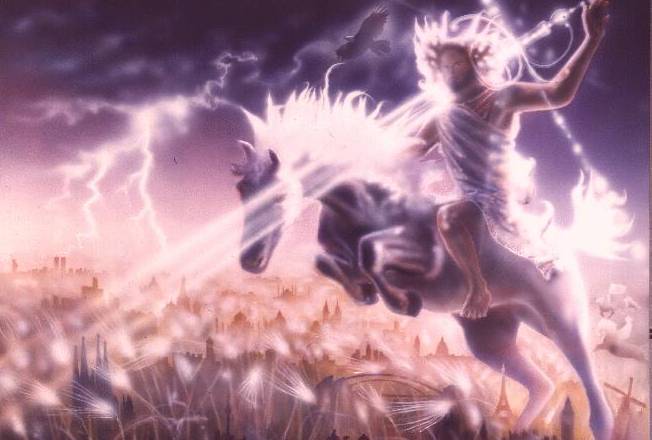
Notice the three last points emphasized above. Ezekiel 39:7 and 39:22 both say that God’s name will be known in the midst of Israel and that Israel will know their God from that day forward. The only way that Israel can know God is if they know their true Messiah. Galatians 5:4 makes it clear that those who simply try to be justified by the Law are estranged/separated from Christ (and therefore God), so if Israel is to truly know the Lord their God “from that day forward” they must recognize Jesus (Yeshua) as their Messiah (Ha-Mashiach). Contextually, Ezekiel 39:29 tells us that the Lord pours out His spirit upon the house of Israel and Zechariah 12:10 gives us the timing regarding when this will happen: After the Second Coming of Christ. Ezekiel 39:7 reinforces Zechariah’s timing by showing us that Christ is now physically present in Israel:
Ezekiel 39:29, “Neither will I hide my face any more from them: for I have poured out my spirit upon the house of Israel, saith the Lord GOD.”
Zechariah 12:10, “And I will pour upon the house of David, and upon the inhabitants of Jerusalem, the spirit of grace and of supplications: and they shall look upon me whom they have pierced, and they shall mourn for him, as one mourneth for [his] only [son], and shall be in bitterness for him, as one that is in bitterness for [his] firstborn.”
Ezekiel 39:7, “So will I make my holy name known in the midst of my people Israel; and I will not [let them] pollute my holy name any more: and the heathen shall know that I [am] the LORD, the Holy One in Israel.”
If that weren’t enough, God Himself declares in Ezekiel 39:8, “Behold, it is come, and it is done … this [is] the day whereof I have spoken.” He has revealed Himself to Israel and to the nations. How can God say “It is done” when, according to the pop-eschatology position of many Western prophecy teachers today, it is not done until about seven years later at Armageddon? Moreover, if God had declared that He spoke of any “pre-Armageddon” battle before, where is it mentioned in Scripture? The only day in the eschaton that the Lord and the prophets spoke of previously is the Day of the Lord — Armageddon. The view that many of today’s teachers support, however, suggests that all of the Magog nations that Christ destroys — nations that the text tells us in no uncertain terms will know from that point forward that the God of Israel is God (Ezekiel 38:16, 23; 39:7, 21, 23) — suddenly and conveniently all develop a case of collective amnesia to yet again form another coalition in order to yet again gather against Jerusalem, only to be destroyed yet again by Christ a few short years later. Such a position is a highly tenuous, to say the least.
Of course, there’s even more that could be said, but for the sake of brevity I’ll refer to Dake’s Annotated Reference Bible, which is also a good reference for this particular topic as well. Although I do not agree with everything provided in many reference Bibles (nor should we), I will acknowledge that Dake’s Annotated Reference Bible does provide a well-researched analysis comparing the battle of Gog-Magog and the battle of Armageddon by listing the following fourteen proofs why Armageddon is referred to in Ezekiel 38 and 39:
- Not one statement in these two chapters (Ez: 38-39) mention a war in Israel before Armageddon [or after].
- The battle of Armageddon is the only war predicted by the prophets that could possibly be referred to in these chapters (Ezek. 38:17). Armageddon is mentioned many times by Isaiah, Jeremiah, Micah, and other prophets before the days of Ezekiel (Isa. 1:25-31; 3:25-26; 13:1-16; 24:21; 63:1-6; Jer. 25:30-33; 30:11,20-24; Joel 2-3; Oba. 1:15-21; Mic. 1:3-4; 2:12-13; 5:5-15; etc.).
- The destruction of Gog and his armies (Ezek. 38:18-23; 39:1-6,17-20) compares with similar statements about Armageddon in Joel 3; Zech. 14; Rev. 19:11-21.
- Gog will not fall upon the open field until Armageddon (Ezek. 39:3-5; Rev. 19:11-21).
- The great supper for the fowls and beasts will only be at Armageddon (Ezek. 39:4,17-20 with Mt. 24:27-28; Rev. 19:17-21).
- The presence of God (as pictured in Ezek. 38:18-21; 39:1-6,17-24) will not be until Armageddon (Isa. 63:1-6; Zech. 14:1-5; Rev. 19:11-21).
- The supernatural destruction of Gog and his armies (as described in Ezek. 38:21-23) will not be until Armageddon (Isa. 63:1-6; Joel 2-3; Zech. 14; Rev. 19:11-21).
- God will not magnify and sanctify Himself and set His glory among the heathen (as stated in Ezek. 38:23; 39:21-24) until He comes at the second coming of Christ — at Armageddon (Zech. 14:1-21; Mt. 24:29-31; Rev. 19:11-21).
- Gog will not bring the many armies of the nations into Israel to be destroyed until the time of the second coming of Christ, at Armageddon, as referred to in Ezek. 38:18-23; 39:1-7 and proved in Zech. 14:1-5; Rev. 16:13-16; 19:11-21.
- The great earthquake of Ezek. 38:20 will not take place until the seventh vial and the second coming (Zech. 14:1-5; Rev. 16:17-21; 19:11-21).
- God’s presence will not destroy Gog and his army until the second coming, at Armageddon (Ezek. 38:20; 39:2-7 with Zech. 14:1-5; Rev. 19:11-21).
- Gog and his army cannot be destroyed in a war in Israel before the second coming, at Armageddon, to fulfill Ezek. 38:18-23; 39:1-7,17-20, and then be destroyed again at Armageddon to fulfill Isa. 63; Joel 2-3; Zech. 14. We must therefore recognize all these passages as referring to the same destruction — at Armageddon (Rev. 19:11-21).
- The burial of Gog and all his armies destroyed in the fulfillment of Ezek. 38-39 will be at the second coming of Christ (Ezek. 39:11-16 with Dan. 7:11; 2Th. 2:8-12; Rev. 19:11-21).
- It is at the second coming of Christ that God’s glory will be set among the heathen and Israel will be completely gathered and blessed (Ezek. 39:21-29; Zech. 14; Mt. 24:29-31; Rom. 11:24-29; Rev. 19:11-21).
The Identity of Gog – An Alternative Explanation
Ezekiel 39:4, 11, “You shall fall upon the mountains of Israel, you and all your troops and the peoples who [are] with you; I will give you to birds of prey of every sort and [to] the beasts of the field to be devoured… I will give Gog a burial place there in Israel, the valley of those who pass by east of the sea; and it will obstruct travelers, because there they will bury Gog and all his multitude…”
If all of that wasn’t enough to chew on, here is one more item worthy of further consideration. Although Gog sounds like a person and is spoken of in anthropomorphic / personified terms as being given over to ravenous birds and animals (Ezekial 39:4) who will be buried in Israel (39:11), let us not ignore the possibility that Ezekiel may not be describing a man, but rather the leading spiritual entity behind Antichrist or the political-religious system that exercises authority over this region, similar to how Daniel describes the spiritual forces exercising authority over Iran and Greece as “the prince of Persia (Iran)” and “the prince of Javan (Grecia)” in Daniel 10:20. Ezekiel calls Gog “the chief prince of Meshech and Tubal” in 38:2, 38:3 and 39:1, which is the region north of Israel in modern day Turkey. Incidentally, in Revelation 2:13 Jesus says that the region of modern day Turkey (which is where Gog is “the chief prince” of) is “where Satan’s throne is” and “where Satan dwells.” It is therefore conceivable that Gog could simply be referring to Satan himself, which would help to explain why we suddenly read of another Gog-Magog battle immediately after Satan is released following his 1,000 years of captivity in Revelation 20:7-8.

There is obviously much more going on behind the curtain of this physical world than meets the eye. Since the casting down of Satan is also described in physical terms by the prophet Isaiah whereby Satan is “brought down to the grave, to the depths of the pit” (Isaiah 14:15) even though Satan is non-corporeal, as is his being bound by “chains” and being thrown down into the abyss (Revelation 20:1-3), the “chief prince” being given over to the animals and buried in the land of Israel at the first battle of Gog-Magog could simply be referring to the physical destruction of the armies of the surrounding Islamic nations (cf. 38:5-6) that he brings against Israel through deceptive means. Knowing that Satan is also referred to elsewhere as the “prince of the power of the air” (Ephesians 2:2), the “prince of this world” (John 12:31) and the “prince of demons” (Matthew 12:24) who “deceives the whole world” (Revelation 12:9), to be called the “chief prince” who leads nations to wage war against Israel is entirely consistent with the titles and tasks of the adversary described elsewhere throughout the Biblical texts.
Furthermore, although we have generally understood Antichrist in terms of a man, we should not dismiss nor discount the possibility that Antichrist may not be a man per se at all, but rather the Islamic “system” itself that we see manifest today. Just as the Church (Ekklesia) is the Body of Christ, Satan’s counterfeit of the Church — the Ummah of Islam — would be the “Body of Antichrist” that is given its power and authority by Satan himself (cf Revelation 13:2-4). Although Antichrist could be a literal man who will soon be revealed, the “embodiment” of the religious-political-militant system of Islam (the multitude of a man, Mohammed) that is given its power by “the chief prince” or spiritual force who exercises authority over Meshech and Tubal may be what is truly in view here, even though it is often referred to anthropomorphically as a “man” in Scripture much like the Church (the multitude of the Lamb, Messiah) is referred to as “one new man” in Ephesians 2:15. Either way, Gog is Antichrist.
In Conclusion – One Battle, Different Perspectives
Without any doubt in my mind, the battle of Gog-Magog and the battle of Armageddon are essentially separate descriptions of the same event. More specifically, the Gog-Magog description as outlined by the prophet Ezekiel provides is a broader overview of a conflict that simply leads up to and ends at Armageddon, not simply “Armageddon” itself per se when the armies of the surrounding Islamic nations gather themselves in the “valley of decision” in a final effort to destroy Israel once and for all. It is a broader view of a conflict that comes to a definitive conclusion at Armageddon when Christ Himself destroys the surrounding armies directly, enemies who will have already been fighting against Israel and waging wars for quite some time — months, perhaps a few short years. Ezekiel 38-39 describes this extended campaign, providing us with a broader wide-angle view of a conflict that could last for a good portion of Antichrist’s persecution of Israel and her children, and coming to a climactic end with the Seventh Trumpet and the return of Yeshua Ha-Mashiach, Jesus Christ, in power and great glory, whose presence will be made known all throughout Israel. And the earth.
Revelation 6:15-17, “And the kings of the earth, and the great men, and the rich men, and the chief captains, and the mighty men, and every bondman, and every free man, hid themselves in the dens and in the rocks of the mountains; And said to the mountains and rocks, Fall on us, and hide us from the face of him that sitteth on the throne, and from the wrath of the Lamb: For the great day of his wrath is come; and who shall be able to stand?”
Originally Posted 3/16/2011, Revised 6/1/2013
Unsealed: A Closer Look At Revelation 6 And “The Four Horsemen Of The Apocalypse”
By ICA
Revelation 6:1, “And I saw when the Lamb opened one of the seals, and I heard, as it were the noise of thunder, one of the four beasts saying, Come and see…”
Recommended: See How The Book Of Revelation Foresaw Islamic Teachings

Were John’s apocalyptic snapshots and descriptions of the “Four Horsemen of the Apocalypse” in the Book of Revelation pointing to events that would only take place nearly 2000 years after the visions were first revealed? All too often, many of today’s Christian teachers and Bible prophecy experts have repeated the belief that the entirety of the Book of Revelation, with the exception of the first three chapters, are to be understood in futuristic terms only. I have done this myself in the past. Whether it be the Seven Seals or the Seven Trumpets or the Seven Bowls of wrath, everything contained therein and described by John from Revelation 4:1 onward must be treated as little more than a description of apocalyptic earth-shattering events that we, as Christians, will never witness taking place upon the world in which we live, events that can only begin to come to fruition after an imminent rapture has suddenly removed all followers of Christ from the face of the earth to deliver them from the impending wrath of God and the last-days Beast of Revelation. If we take the time to engage in a careful examination of the text, however, we may begin to see that some of the events often understood as yet to come, are events that are already taking place today.
An Overview Of History: The Islamic Beast Of Revelation – The Past And The Present
After careful study, I have come to the conclusion that, judging from the description of events and their sequence provided for us in Scripture, the “Four Horsemen of the Apocalypse” described in the first four Seals of Revelation 6 are four separate
Read more…The People of the Prince to Come: A Roman-European Antichrist?
By ICA
Daniel 9:26, “And after threescore and two weeks shall Messiah be cut off, but not for himself: and the people of the prince that shall come shall destroy the city and the sanctuary; and the end thereof [shall be] with a flood, and unto the end of the war desolations are determined.”

Many have traditionally believed that since the army that destroyed the city and the sanctuary in 70 AD was considered Roman then this, therefore, must mean that according to Daniel 9:26 the Antichrist would rise out of Europe. The majority of popular Biblical eschatology teachers today, even in light of events happening on the global stage, still teach an Antichrist who comes out of Europe, a charismatic leader that rises from within the European Union to then lead a One World Government. Writers have published novels such as the “Left Behind” series promoting it, even Christian movies have been inspired and produced by this very idea. However, although the people of the prince to come mentioned in Daniel 9:26 may have been considered “Roman” soldiers merely because they were (supposedly) under the command of Rome, many of these same teachers have either ignored or were just not aware of the following very significant fact.
The People…
By the time Jerusalem and the temple were destroyed in 70 AD, the Legions responsible for the destruction were dominated by eastern peoples from Syria, Egypt, Asia Minor (Turkey) and that general area. This is confirmed by Tacitus, Josephus and numerous scholars and historians. Thus, although the Legions responsible for the destruction of the city and the sanctuary in 70 AD were by that time considered Roman citizens, they were not European people. (The Wars of The Jews, History of the Destruction of Jerusalem By Flavius Josephus, Trans. William Whiston BOOK V: Chapter 13; and Soldiers, Cities, and Civilians in Roman Syria by Nigel Pollard, Ph.D, p. 115).
Prior to the turn of the 1st Century the majority of the men who served in the Roman armies were Italians. That is true. But as the Roman Empire grew it became virtually impossible for it to be manned with only Italian soldiers, so Emperor Augustus was forced to change the ethnic demographic of men who made up the Roman armies, and after the reforms were completed early in the 1st Century just a small part of the Roman army consisted of only Italian men — the Praetorian Guard [1, 2]. The rest of the army was expanding to be increasingly made up of citizens who were from the outer provinces far away from Rome.
Some may say, however, that since Rome gave the order to destroy the city and the sanctuary then Rome is therefore responsible, but this is not the case at all. Josephus records that Caesar did not want the temple destroyed, writing:
“And now a certain person came running to Titus, and told him of this fire … whereupon he rose up in great haste, and, as he was, ran to the holy house, in order to have a stop put to the fire; after him followed all his commanders, and after them followed the several legions, in great astonishment; so there was a great clamor and tumult raised, as was natural upon the disorderly motion of so great an army. Then did Caesar, both by calling to the soldiers that were fighting, with a loud voice, and by giving a signal to them with his right hand, order them to quench the fire.“ (Josephus War of the Jews, Book 6, Chapter 4).
The soldiers were hell bent on destroying the sanctuary, despite Caesar’s orders to put out the fire. But they hated the Jews. And as Josephus later writes, “And thus was the holy house burnt down, without Caesar’s approbation.“
History bears witness to the very fact that the people who destroyed the city and the sanctuary were almost exclusively Arab/Egyptian/Syrian/Asia Minorian, etc. and from that general area. From Tacitus in The History New Ed edition Book 5.1 Editor: Moses Hadas (Translated by Alfred Church and William Brodribb; Modern Library, 2003 NY):
“Titus Caesar … found in Judaea three legions, the 5th, the 10th, and the 15th .. To these he added the 12th from Syria, and some men belonging to the 18th and 3rd, whom he had withdrawn from Alexandria. This force was accompanied … by a strong contingent of Arabs, who hated the Jews with the usual hatred of neighbors …”
From Josephus in The Complete Works of Josephus, The Wars Of The Jews Or The History Of The Destruction Of Jerusalem(Book III, Chapter 1):
“So Vespasian sent his son Titus [who], came by land into Syria, where he gathered together the Roman forces, with a considerable number of auxiliaries from the kings in that neighborhood.“
In the next chapter Josephus writes:
“Malchus also, the king of Arabia, sent a thousand horsemen, besides five thousand footmen, the greatest part of which were archers; so that the whole army, including the auxiliaries sent by the kings, as well horsemen and footmen, when all were united together, amounted to sixty thousand.“
Virtually all Roman scholars concur that the overwhelming majority of soldiers would have been Eastern provincial conscripts by the time Jerusalem and the temple were destroyed in 70 AD.
Additionally, Clarence Larkin in “Dispensational Truth Or God’s Plan and Purpose in the Ages“, which many Western AC proponents consider to be one of the best dispensational authors of all time, disagreed with the now popular Roman theory and through Scripture recognized in his own way why Antichrist cannot come from Europe, writing:
“The ‘King of the North’ was the King of Syria, and his character and conduct is described (Dan. 11:36-39) as similar to that of the ‘Little Horn’ that came out of one of the ‘Four Horns’ it is clear that the Antichrist is to come from Syria… The term ‘North’ and ‘South’ are applied to Syria and Egypt because of their geographic relation to Palestine (the Pleasant of Glorious land. Dan. 8:9, 11:16, 41). In the thought of Jehovah, Jerusalem is at once the geographic and moral centre of the earth. We are to understand therefore by the ‘King of the North’ the King of Syria, which also included Assyria. This fixes the locality from which the Antichrist shall come…” (p. 118)
Since Scripture calls Antichrist “the Assyrian” numerous times throughout the Old Testament, which would hardly be accurate if he were to come from Rome (Zechariah 10:10-12, Isaiah 30:30-31, Micah 5:2-6, Isaiah 10:12-13 cf Daniel 7:20, Isaiah 14:24-25), Clarence Larkin would in all likelihood be among those to conclude that the Antichrist would arise out of Islam if he were alive today.
… Of The Prince That Shall Come
With Daniel 9:26 we have a specific reference to the prince that shall come after Messiah is “cut off”, a prince whose people are not only associated with the destruction of the city and the sanctuary, but who are also associated with wars and desolations ‘unto the end’. For the sake of argument let’s consider that Daniel is also referring here to an eschatonic leader and people that many consider to be the End-of-Days Antichrist and his kingdom (who would seek to destroy the foundations of the spiritual city and the spiritual temple in the Last Days) since the teachers I am arguing against use this very verse to support the idea of a European Antichrist. With this in mind, let’s ask ourselves the following question: If the Antichrist is European, why was Daniel not inspired by the Holy Spirit to say “the country/region (erets – H776) of the prince to come”, but was instead moved by the Spirit to use the word “am” (H5971) which means “people” or “nation“? Does it not stand to reason that this is because the prince and the people who would destroy the city and the sanctuary — and therefore by extension the Last Days Antichrist and his people — are not necessarily identified geographically with Europe, but are instead identified primarily through ethnicity? I say yes indeed, and it matters not if they were considered Roman soldiers (even the Apostle Paul called himself Roman, yet he was ethnically a Jew) because there is nothing in the verse to identify the prince to come with Europe geographically.
In closing, the overwhelming evidence that we are now beginning to watch unfold before our very eyes in these Last Days, underscored by authors and teachers such as Joel Richardson, Walid Shoebat and now other like-minded thinkers who have begun to re-examine this question such as Chuck Missler, Dr. John MacArthur, Ray Gano and others, is that the Antichrist of these Last Days will not be coming out of Rome or Europe. For many, the blinders of tradition and pop-theology has locked them into a state of eschatological tunnel-vision while a prowling Beast creeps beside them, rising out of the Middle East and ready to devour. But a close examination of Daniel 9:26 along with a brief lesson in history and an even cursory look at current events leaves little doubt about it — Antichrist and the spirit of Antichrist is rising out of the Middle East, and from within radical Islam. Christian author Joseph Chambers concurs, and sums it up nicely by saying:
“There is no other geographical area on planet Earth where the Antichrist could appear but the Middle East. Those who continue to look only toward the European Common Market as the primary movement toward the Antichrist will soon be disappointed… To look for Satan’s final activities in any other area than the Middle East is to look in vain and in error…. The Islam or Moslem religion provides an excellent covering for the rise of the Antichrist.” (A Palace for the Antichrist, News Leaf Press, 1996, pages 136-142).
Credit: For more information please be sure to read Joel Richardson’s excellent article titled “Daniel 9:26: Who Are The People of the Prince To Come?” here.
Revelation 13: A Commentary
By ICA
 Many Christians today can be eschatologically myopic. This is particularly true for many of us who live comfortably in the West, working comfortable jobs and making enough money to enjoy a fairly comfortable living while Christians in other parts of the world, especially the Middle East, North Africa and parts of Asia where Islam is the dominant religion, live under the constant threat of persecution and even death simply because of the very fact that they are Christian. According to the World Evangelical Alliance, over 200 million Christians in at least 60 countries are denied fundamental human rights solely because of their faith. David B. Barrett, Todd M. Johnson, and Peter F. Crossing in their 2009 report in the International Bulletin of Missionary Research (Vol. 33, No. 1: 32) estimate that approximately 176,000 Christians were martyred between mid-2008 to mid-2009. This, according to the authors, compares to 160,000 martyrs in mid-2000 and 34,400 at the beginning of the 20th century [1]. And it’s getting worse.
I believe that we are in the last of the last days and are being plunged into a time that Christ described as “great tribulation” in Matthew 24. I do not believe, however, in a seven-year-tribulation nor do I believe that we, at any imminent moment, will be whisked away in a secret rapture to avoid any and all persecution that may be coming to our shores, as much as I would love for that to be the case (read here to find out where Paul and John place the rapture of the Church in Scripture, and here to find out what the Church is according to Jesus).
As the end of the age approaches, the picture of radical Islam and its role in the Last Days is becoming increasingly clear (cf. Daniel 12:4), and just as our Christian brothers and sisters on the other side of the world are today being persecuted, imprisoned, tortured, shot, blown up and beheaded for the faith of Jesus, I believe that we, too, will continue to witness all that is taking place. As such, I hereby present to you a commentary on Revelation 13 for your consideration that I believe reveals to us the time in which we are now living today, and the time that will soon be upon us.
Iranian Video: The Time of the Islamic Messiah is Near — Israel Shall Be Destroyed
 “By Erick Stakelbeck, CBN News Terrorism Analyst – New evidence has emerged that the Iranian government sees the current unrest in the Middle East as a signal that the Mahdi–or Islamic messiah–is about to appear.
CBN News has obtained a never-before-seen video produced by the Iranian regime that says all the signs are moving into place — and that Iran will soon help usher in the end times.
While the revolutionary movements gripping the Middle East have created uncertainty throughout the region, the video shows that the Iranian regime believes the chaos is divine proof that their ultimate victory is at hand.
‘The Coming is Near’
The propaganda footage has reportedly been approved at the highest levels of the Iranian government.
It’s called The Coming is Near and it describes current events in the Middle East as a prelude to the arrival of the mythical tweflth Imam or Mahdi — the messiah figure who Islamic scriptures say will lead the armies of Islam to victory over all non-Muslims in the last days.” Read more.
Update: Original video removed by YouTube. Replacement video substituted, but you can watch the video by clicking the link above.
Lost in Translation: ‘Not Appointed Unto Wrath’ – What Scripture Is Really Saying
By ICA
1 Thessalonians 5:9, “For God hath not appointed us to wrath, but to obtain salvation by our Lord Jesus Christ …”
 Buy a book written by virtually any popular Bible prophecy teacher today and you are guaranteed — at some point within the confines of its pages — to read a sentence or two that sounds a little something like this: “The Bible says that we are not appointed unto wrath, which means that Christians are not destined to suffer the wrath of God. Since the Tribulation is the wrath of God the Church must therefore be removed from the earth before the Tribulation begins. Otherwise, the Bible is lying.” You get the idea. It sounds reasonable, right? Because if the premisses are true then the conclusion must be sound, correct? In theory, yes, but only if all of the premisses are true. So allow me, if I may, to take a closer look at the “not appointed unto wrath” proposition that leads many of us to conclude “removal from the earth”, and join me as together we delve a little bit more into the text in an effort to better understand the wrath that we see in the Book of Revelation, and the wrath that we specifically are not appointed unto. Something very, very important has been lost in translation. Read more…
Antichrist: Leader Of A One-World Government?
By ICA
Isaiah 28:10, “For precept must be upon precept, precept upon precept, Line upon line, line upon line, Here a little, there a little …”
Also See: What Is The War Of Gog-Magog?

Many Christians today believe that when Antichrist is revealed the world will suddenly experience some form of global governance virtually overnight, controlled by a man who will be worshiped as God himself. Although there are a few verses in Scripture that may appear to give credence to the idea that the entire earth will be overcome by the last-days Antichrist at first glance, the whole of Scripture supports neither the idea of a “One World Government” (OWG) ruled by Antichrist, nor the idea of an end-of-days leader who controls literally every last nation on the earth.
Many popular teachers of Biblical eschatology who support the idea of a OWG and Antichrist who controls the political and religious dictates of all the nations of the world will agree, at the very least, that the last portion of Daniel 11 from verses 36 and beyond all refer to the final years leading up to the Second Coming of Christ. What they fail to consider, however, are the following questions that should be obvious to anyone who holds to both of these positions:
Read more…2 Thessalonians 2:4 — A Rebuilt Jewish Temple, or Something Else?
By ICA
2 Thessalonians 2:3-4, “Let no one deceive you by any means; for that Day [the Day of the Lord] will not come unless the falling away comes first, and the man of sin is revealed, the son of perdition, who opposes and exalts himself above all that is called God or that is worshiped, so that he sits as God in the temple of God, showing himself that he is God.”
 A thought came to me some time ago with respect to “the temple of God” and how many students of Biblical eschatology expect there to one day be a new Jewish temple built on the Temple Mount before the Second Coming of Christ, one in which the Antichrist himself would eventually stand in and literally claim “I am God.” While an effort does exist by some orthodox Jewish groups to rebuild the third temple, I think it would be wise for all students of Scripture to consider the possibility that this may not have been what the Holy Spirit was referring to in 2 Thessalonians 2 and Matthew 24.
The Temple of God in the New Testament
To understand why, we first need to keep in mind that the Apostle Paul and Jesus both pointed to a Last Days event that would take place just before the Day of the Lord (Christ’s post-trib Second Coming). Paul referred to it as the “man of sin” who sets himself up in “the temple of God” (2 Thessalonians 2:4), while Jesus described it as the “Abomination of Desolation” standing in “the holy place” (Matthew 24:15). Many have assumed that the temple mentioned by Paul must be a physical temple in Jerusalem. But if we look a little more closely at the text we begin to notice something that we may not have noticed before: Each and every time the Apostle Paul speaks about the “temple of God” and uses the Greek word “naos” (G3485) in Scripture he is always referring to believers both individually and collectively. He is referring to the Church:
1 Corinthians 3:16, “Do you not know that you are the temple [naos] of God and that the Spirit of God dwells in you?”
1 Corinthians 3:17, “If anyone defiles the temple [naos] of God, God will destroy him. For the temple [naos] of God is holy, which temple you are.“
1 Corinthians 6:19, “Or do you not know that your body is the temple [naos] of the Holy Spirit who is in you, whom you have from God, and you are not your own?”
2 Corinthians 6:16, “And what agreement has the temple of God with idols? For you are the temple [naos] of the living God …”
Ephesians 2:19-22, “Now, therefore, you are no longer strangers and foreigners, but fellow citizens with the saints and members of the household of God, having been built on the foundation of the apostles and prophets, Jesus Christ Himself being the chief cornerstone, in whom the whole building, being fitted together, grows into a holy temple [naos] in the Lord, in whom you also are being built together for a dwelling place of God in the Spirit.”
Even the Apostle Peter agrees in 1 Peter 2, the only time he ever refers to God’s temple:
1 Peter 2:4-5, “Coming to Him as to a living stone, rejected indeed by men, but chosen by God and precious, you also, as living stones, are being built up a spiritual house, a holy priesthood, to offer up spiritual sacrifices acceptable to God through Jesus Christ.”
When Paul refers to the temple as the Church he uses the word “naos” (G3485) and always calls the Church the temple of God or the temple of the Holy Spirit or an equivalent expression. In 2 Thessalonians 2:3-4 Paul refers to the temple [naos] of God which, as in each and every other usage of the expression, would be referring to the Church, not a physical temple. According to those who believe that a future literal temple will be rebuilt, however, we are expected to believe that Paul in 2 Thessalonians 2:4 incorrectly used “naos” here while consistently used it in all other epistles when referring to the Church. But if Paul speaks of the Church each and every time when using the word “naos” in subsequent epistles then it only stands to reason that he was referring to the Church when writing about the temple of God in his letter to the believers in Thessalonica. Paul wrote under the inspiration of the Holy Spirit, and the Holy Spirit is not the author of confusion:
2 Thessalonians 2:3-4, “Let no one deceive you by any means; for that Day will not come unless the falling away comes first, and the man of sin is revealed, the son of perdition, who opposes and exalts himself above all that is called God or that is worshiped, so that he sits as God in [eis G1519 – or against] the temple [naos] of God, showing himself that he is God.”
The only times Paul spoke about a physical temple were in 1 Corinthians 9:13, Acts 25:8 and Acts 17:24. In 1 Corinthians 9:13 and Acts 25:8 he uses the word “hieron” (G2411) specifically to refer to the physical temple in Jerusalem. In Acts 17:24, however, he is quoted as using the word “naos” to refer to physical temples in general, however his entire point was that it was no longer a physical temple in which God dwells. Why? Because the Church was now that temple. In these instances where Paul spoke about a physical temple he never referred to it as “the temple of God” or an equivalent expression.
Acts 17:24, “God, who made the world and everything in it, since He is Lord of heaven and earth, does not dwell in temples made with hands.”
The Temple of Revelation 11
With this thought in mind, let us now turn our attention to another portion of Scripture that many watchers of Biblical eschatology will often use to support the idea that we’re still waiting for a rebuilt Jewish temple. In the very first verse of Revelation 11 John writes:
Revelation 11:1, “Then I was given a reed like a measuring rod. And the angel stood, saying, ‘Rise and measure the temple of God, the altar, and those who worship there.'”
Many believe that if John could measure this temple using a physical tool like a reed, then the temple must itself be physical. This, however, need not be the case at all. Four quick reasons why:
1. The Angel who speaks to John uses the exact same expression in Revelation 11:1, saying, “Rise, and measure the temple of God, and the altar, and them that worship therein.” Even the word “naos” is used when referring to the temple of God, the same word the Apostle Paul used when referring to the temple of God as the Church, not a temple made of stone.
2. The very first time we find the word “temple” in Revelation is in 3:12a regarding the Church in Philadelphia when Christ says, “He who overcomes, I will make him a pillar in the temple of My God, and he shall go out no more.” To be made a pillar in the temple of God must mean that the temple in view here is not a physical temple made of stone, but rather one that is made of people.
3. Lampstands/candlesticks were important items that were found in the physical temple in the Old Testament, yet John shows us that this time the lampstands/candlesticks in the temple of God are represented by the two witnesses (11:4), which again would indicate that the temple in view is not a physical temple made of stone, but rather one of people.
4. In the Old Testament a priest was one who served within the physical temple. In Revelation 1:6 and 5:10 we are told that anyone who has been washed by the blood of Christ is a priest, and the Christian understanding of this according to 1 Peter 2:5 is that as priests we now “offer up spiritual sacrifices acceptable to God through Jesus Christ.” We no longer offer animal sacrifices in a temple made of stone.
Indeed, we are being built together upon the foundation of the apostles and prophets with Jesus Himself as the chief cornerstone, a building in which all of us as believers are being fitted together, growing into a holy temple [naos] in the Lord for a dwelling place of God in the Spirit (Ephesians 2:19-22). Considering all that we have just learned, could it not therefore stand to reason that when John speaks of the “holy city” being trampled under foot in 11:2 that he is referring directly to God’s people, and not a physical temple built in Jerusalem? In my opinion, definitely (cf. Revelation 21 and Psalm 46:4, “There is a river whose streams make glad the city of God, the holy place where the Most High dwells”; also see Matthew 5:14).
The Prophet Daniel And The Time Of The End
Daniel’s prophecies often spoke about the last days leading up to the Second Coming of Christ. Some will point to these prophecies and assume that since Daniel appeared to speak of a physical temple and daily offerings that the last days temple must therefore be a literal temple in Jerusalem. As we can see from above, however, the New Testament is quite clear that today the “temple of God” is the Church and that we, as believers, now offer up the sacrifice of praise continually (cf. Romans 12:1; Hebrews 13:5; 1 Peter 2:5). Even if the prophet Daniel himself believed the prophecies he was given of the end times referred to a physical temple would not change this reality. The revelation that the Church would become the temple of God was progressive and prophets were evidently not always granted a full understanding of the prophecies they were given, which is quite apparent in Daniel 12 itself:
Daniel 12:8-10, “Although I heard, I did not understand. Then I said, ‘My lord, what shall be the end of these things?’ And he said, ‘Go your way, Daniel, for the words are closed up and sealed till the time of the end. Many shall be purified, made white, and refined, but the wicked shall do wickedly; and none of the wicked shall understand, but the wise shall understand.’”
Even though Daniel was not always granted full understanding, he was faithful in recording the prophecies he had received. Not knowing that the temple of God would one day be the people of God, however, would have conceivably been somewhat bewildering to Daniel if he had himself assumed that it was a physical temple that would be defiled during the time of the end. This could very well have been one of the reasons why Daniel did not understand all that he was seeing and hearing. According to the words of the Apostle Paul in Acts 17:24, a physical temple today would be little more than an empty building, void of the presence of God. I am sure that Christ would have known this and would in no way have been referring to a physical temple as the “holy place” in Matthew 24:15 when referring to the Abomination of Desolation spoken of by Daniel. A building absent of God is just another building. But the “holy temple” that is the Church in which God dwells, however, is another matter. This may have been why Jesus said “let the reader understand” in Matthew 24:15 — because Daniel did not:
Matthew 24:15, “So when you see standing in the holy place ‘the abomination that causes desolation,’ spoken of through the prophet Daniel—let the reader understand–”
Ephesians 2:19-22, “… you are no longer strangers and foreigners, but fellow citizens with the saints and members of the household of God, having been built on the foundation of the apostles and prophets, Jesus Christ Himself being the chief cornerstone, in whom the whole building, being fitted together, grows into a holy temple in the Lord, in whom you also are being built together for a dwelling place of God in the Spirit.”
If Jesus in Matthew 24 and the Apostle Paul in 2 Thessalonians 2 are referring to the holy place that is the new spiritual temple of God — the Church — then it may be that all we need to watch for in this respect is “someone” of significant importance made manifest and rise up against the Ekklesia of God. This new spiritual offensive could even commence as a physical offensive against Jews and Christians at the Temple Mount itself whereby this “someone” would proclaim himself to be something that only the true God of Abraham, Isaac and Jacob can lay claim to. And what could that be?
Apart From Me There Is No …
The Muslim world — both the Sunni and Shia branches of Islam — is awaiting the arrival of a “messianic” figure whom they call “The Mahdi” or “The 12th Imam.” They believe that this figure will lead them into a new era of Islamic “justice” that would unite the Ummah (the false Islamic “church” as it were) and spread Islam throughout the earth (see here). Of particular interest is the fact that Muslims view this man as “Savior” — not only for Muslims, but for all of humanity (see here and here).
In 2 Thessalonians 2:3-8 the Apostle Paul speaks about a “man of sin” or “lawlessness” setting himself “eis” (in or against) the temple of God, seeking to defile it, and then being destroyed by God at the brightness of His coming. In 1 Corinthians 3:17 Paul stated the exact same thing, saying, “If anyone defiles the temple of God, God will destroy him. For the temple of God is holy, which temple you are.” In my view, this is certainly not a coincidence. Most translations say that before the “man of sin” is destroyed he will “sit” or “take his seat” in the temple of God. The Greek word for “sit” is “kathizō” (G2523) but it means more than to simply sit down physically, as one would sit on a chair. It also means to appoint, or to set or to confer a kingdom on someone. When we say that we have a sitting President or Head of State, for instance, it does not mean that they are physically sitting down. It means that they have taken their seat in office. According to the Greek, this “man of sin” will likewise be taking his seat or official position, which could possibly be referring to Islam’s Mahdi as he takes his seat as the proclaimed “Savior of Humanity” in defiance of Yahweh and His people. Thus the “man of sin” is called the “man of sin” for a very good reason: he sins against God and against His people — the Temple of God — whom he sets himself against once assuming the “office” as “Savior.” According to the Prophet Isaiah, this would be showing himself as God, for the Lord Himself declares in no uncertain terms that “apart from me there is no savior… I am God, and there is none like me” (Isaiah 43:11, 46:9b).
If anyone of significance in the Muslim world — the “Mahdi” or otherwise — proclaims himself to be the “Savior of Humanity” that all must follow, this would be a direct affront to God and His Temple. According to Scripture, anyone making such a claim or accepting such a title would be showing himself to be God by having a title/position that only God can hold attributed upon them. Additionally, demanding that Judaism and Christianity (and all other religions for that matter) be abolished and forcing all under his power to convert to Islam and worship none other than “Allah” would in effect be causing the “sacrifice and oblations (offerings) to cease” in today’s Temple according to the verses of Scripture below:
Romans 12:1, “I beseech you therefore, brethren, by the mercies of God, that you present your bodies a living sacrifice, holy, acceptable to God, which is your reasonable service.”
Hebrews 13:15, “By him therefore let us offer the sacrifice of praise to God continually, that is, the fruit of [our] lips giving thanks to his name.”
1 Peter 2:5, “And now God is building you, as living stones, into his spiritual temple. What’s more, you are God’s holy priests, who offer the spiritual sacrifices that please him because of Jesus Christ.”
With these thoughts in mind, we’re now beginning to see the text in a whole new light.
The Nation of Israel and Other Considerations
One obvious question, however, would be how does this affect Jews living in the nation of Israel if 2 Thessalonians 2:4 and Matthew 24:15 are referring to the spiritual temple of God? There are a couple of possibilities that we could deduce from this thought, especially if we accept the likelihood that the coming Antichrist will be Islam’s awaited Mahdi:
1. The Mahdi (according to Islamic teaching) will not only claim to be the “Savior of Humanity” but will also be the driving force behind uniting a coalition of Islamic nations that come up against the nation of Israel. He will also desire to subjugate the world into converting to Islam, according to Islamic teaching. In this way, it would definitely have much bearing on national/physical Israel even if this is only referring to the spiritual temple of God.
2. It will have a direct bearing on all Messianic Jews who would — along with Gentile Christians — recognize this “Abomination of Desolation.” I do not believe that the Olivet Discourse or even the Book of Matthew as a whole was for an “orthodox” Jewish audience only as some contend (who would never read the book anyway, I fail to see the point) but rather I believe that it was for Messianic Jews and, by extension, all Gentile Christians. Matthew 24:9 says, “… ye shall be hated of all nations for my name’s sake.” Orthodox Jews are not hated because of Jesus’ name, but Messianic Jews and Gentile Christians are. (In fact, even many orthodox Jews hate Messianics and Gentile Christians because they adhere to the faith of Jesus).
3. It is possible that there could be a dual fulfillment. Most translations render Matthew 24:15 as “standing IN the holy place” which causes those who read the English translation to envision a fully built temple. However, the word for “in” in the Greek is “en” (G1722) and is also translated as “on”, “by”, “at” or “with” in addition to “among”. Although some orthodox Jewish groups are actively seeking to rebuild the third temple, all that they require to offer sacrifices is an altar and an unblemished red heifer. (The alter began construction in July 29, 2009 and has been completed). This could be on the Temple Mount, or right beside the western wall (which I could see happening if they suddenly have a perfect red heifer but no rebuilt temple yet.) Perhaps this could be Christ’s reference to “standing in/on/by the holy place” and the reason why He did not mention a temple per se, whereas Paul could have been referencing the new spiritual temple of God comprised of Messianic Jews and Gentile Christians.
4. There is also one final point that needs to be considered as well with respect to the “man of sin”. We should not discount the possibility that the “man of sin” may not be pointing to one single person as it were, though the general consensus is precisely that, but could instead be pointing to one single entity or system. The Ekklesia of God is comprised of a great multitude of believing Jews and Gentiles created as “one new man” in Christ who are marked by God (Eph. 2:15, Rev. 14:1) and described by John in Revelation 7 as the “multitude of the lamb”, ie, Jesus Christ. Conversely, the “man of sin” (2 Thess 2:3) could therefore be its direct antithesis comprised of those who have the Mark of the Beast and described by John in Revelation 13 as the “multitude of a man”, ie, the “prophet Mohammed.” If this is the case, then we may be even closer to the cusp of prophetic fulfillment than many of us realize. In other words, Antichrist may not be a man at all, but rather all things entwined with the religion of Islam itself, a physical manifestation as it were of the spirit of Antichrist. Read the portion of this article subtitled “More Than Just A Man?” for more thoughts in this regard.
In conclusion, it is my belief that the intended meaning of the temple of God in 2 Thessalonians 2:4, keeping the overall context and teaching of the temple of God within the full counsel of the New Testament, is a direct reference to the Church, not a physical, rebuilt Jewish temple. To show, declare or present himself as God does not necessitate that an “Islamic messiah” or the “man of sin” make an overt declaration of divinity. Jesus claimed to be God without telling the Sanhedrin “I am God”, for they understood the theological significance of His words and sought to kill Him because of them. Likewise, Antichrist could merely approach the temple mount where the Islamic Dome of the Rock and al-Aqsa mosque both stand and from there proclaim to be the world’s savior whom both Jews and Christians must follow. Not only would Messianic Jews and Gentile Christians recognize this as an affront to the faith of Christ and the significance of this event, even orthodox Jews would know that this would be a declaration of divinity, someone other than God showing himself to be God. They, too, understand Isaiah 43:11 where God makes it known that “I am the Lord, and apart from me there is no savior.” Indeed, “… I am God, and there is none like Me” (Isaiah 46:9).
 Israel National News
- Watch: moment of direct impact in Bnei Brak
- 9 people injured in center from Iranian missile with cluster warheads
- The Secret of the Two Dippings: From Yosef’s coat to the bundle of hyssop
- Chief of Staff: Reserve battalion was not dismissed over CNN incident
- Footage shows vehicles on fire in Petah Tikva after the missile impact
- IDF Reserve Officer: 'Netzah Yehudah incident punishmentis collective and excessive'
- Launch from Iran: reports of impact in Bnei Brak, fire breaks out
- How the Lebanese Government is empowering Hezbollah
- Home Front Command: Residents permitted to leave shelters
- Magen David Adom: no reports of injuries from Iranian missile fallings
FrontPage Magazine
- UN Sends Billions to Islamic Terrorists Who Kidnap its Staff
- Trump’s Iran Deal Must Be Nothing Like Obama’s
- Ten Years Ago, Three Jihad Suicide Bombers Blew Themselves Up in Brussels
- Nazi Germany and the Iranian Mullahs
- Iran Drives Gulf Toward Israel
- Democrats’ ICE Derangement Syndrome
- Jamie Glazov on Patriot Radio: Why Leftists Die at the Altar They Build
- America’s Accidental Tragedy vs. Iran’s Deliberate Atrocities
- Death and Resilience at Beit Shemesh
- Dems Struggle With Concept of ‘Election Day’
Gatestone Institute
- The Sham of 'Disarming' Hamas
- US Congress Confronts Bangladesh Genocide—But Ignores the Islamist Infrastructure Behind It
- The War on Civilization: 'Israel Cannot Outsource Its Survival'
- Iran: The Danger of the Venezuelan Model
- Finish the Job: Leaving Iran's Regime in Place Guarantees Endless Regional Instability
- Iran's Fantasy of Strength: When Bazaar Tactics Collide with Reality
- Arabs Did Not Help the Gulf States: What Do they See as the Central Source of Instability in the Middle East?
- Birthright Citizenship is National Suicide
- Disarming Hamas Must Remain Trump's Top Priority in Gaza
- Courage, Not Recklessness: Why Netanyahu and Trump Were Right on Iran
Middle East – The Jerusalem Post
- Trump tells aides he is willing to end Iran war without reopening Hormuz, WSJ reports
- Gulf States pressure Trump to continue war with Iran until fall of Islamic regime - report
- Kuwaiti oil tanker was hit in Iranian attack at Dubai port, alerts raised for possible oil spill
- The architect of Iran’s military survival remains defiant
- Trump interested in calling on Arab states to help pay for Iran war, White House says
- Trump gives Iran one‑week deadline on deal, says US response to Haifa strike coming soon
- IDF investigating after UN says two peacekeepers killed in explosion in southern Lebanon
- Settler violence spikes amid Iran war, Herzog responds to Diaspora Jews' call for action
- Syrian army says recent drone attacks targeted its bases near Iraq, most shot down
- Iranian regime may make nuclear concessions, but will not surrender, expert says
Earthquakes & Volcanic Activity
- World Earthquake Report for Tuesday, 31 March 2026
- Volcanoes Today, 31 Mar 2026: Fuego volcano, Semeru, Ibu, Dukono, Mayon, Sangay, Sabancaya
- Sabancaya Volcano Volcanic Ash Advisory: SPORADIC PUFF to 25000 ft (7600 m)
- Mayon Volcano Volcanic Ash Advisory: ERUPTION AT 20260331/0529Z VA CLD UNKNOWN REPORTED OBS VA DTG: 31/0530Z
- Fuego Volcano Volcanic Ash Advisory: ONGOING VA EMS to 14000 ft (4300 m)
- Dukono Volcano Volcanic Ash Advisory: VA TO FL070 OBS EXT SE AT 31/0510Z OBS VA DTG: 31/0510Z to 7000 ft (2100 m)
- World Earthquake Report for Monday, 30 March 2026
- Sangay Volcano Volcanic Ash Advisory: OCNL VA EMS
- Ibu Volcano Volcanic Ash Advisory: VA TO FL070 OBS AT 30/2240Z MOV SE OBS VA DTG: 30/2240Z to 7000 ft (2100 m)
- Mayon Volcano Volcanic Ash Advisory: ERUPTION AT 20260330/2154Z FL090 EXTD SW REPORTED OBS VA DTG: 30/2200Z
Islamic Terrorist Network In America

Click For Larger Version

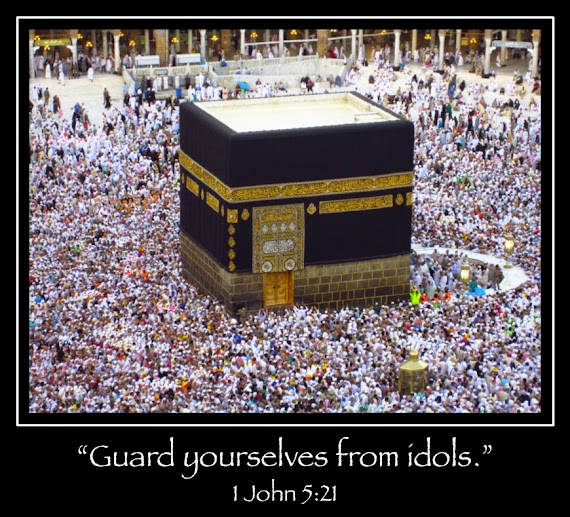
Click To Learn What Makes This An Idol

 MidnightWatcher - Prophecy in Motion
Recent Comments